WOOFMAP · CANINE ARCHIVENO. 344
Spitz and primitive types
American Akita
American Akita
✳ woofmap.comOrigin: Japan; development: United States.
WOOFMAP · CANINE ARCHIVE · NO. 344
American Akita
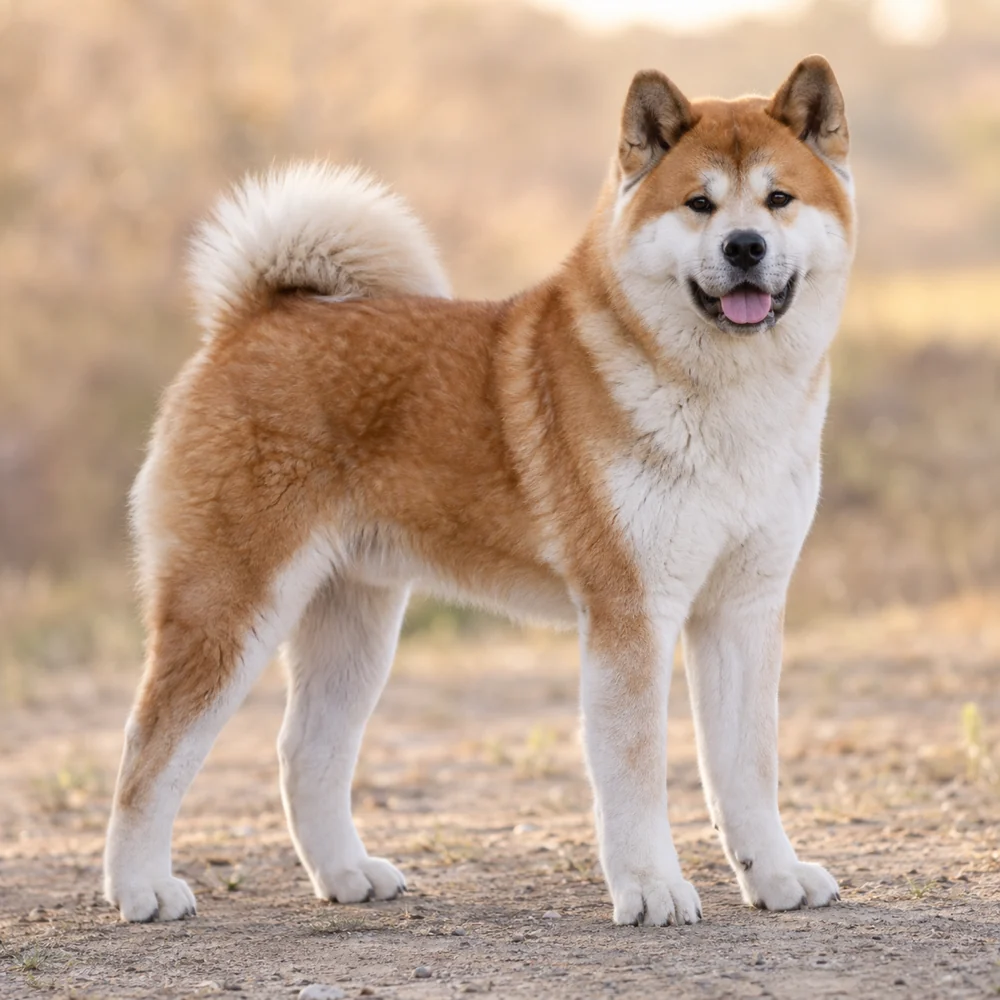
A substantial Japanese-origin breed developed into a distinct type in America.
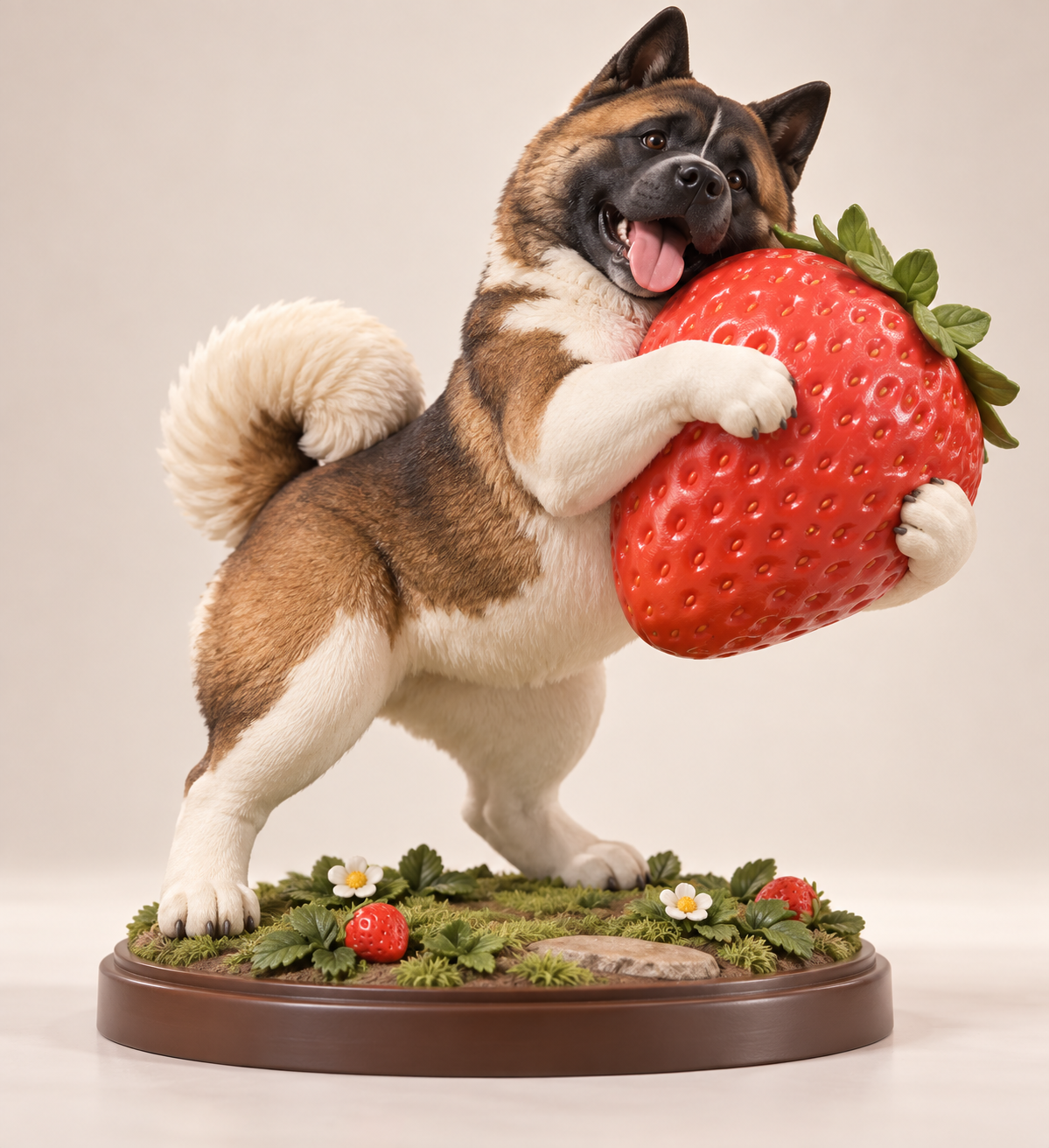
AI-generated realistic breed image, for visual reference.
This American Akita page is still waiting for a voice. Live with a American Akita? Share a natural bark, howl or whine and let others hear a little of your dog’s everyday life.
If we feature your recording, we’ll credit you or your dog using the name you choose.
A 5–15 second phone recording in a quiet setting is perfect. Capture a natural moment without startling or disturbing your dog. Audio or video with sound is welcome.
Share your dog’s voice ↗[email protected]Attach your recording, breed and preferred credit. Please confirm you recorded it and allow woofmap to feature it.
Thank you for helping us build a playful Woof Planet together. Every little woof deserves to be heard.
Spitz and primitive types
American Akita
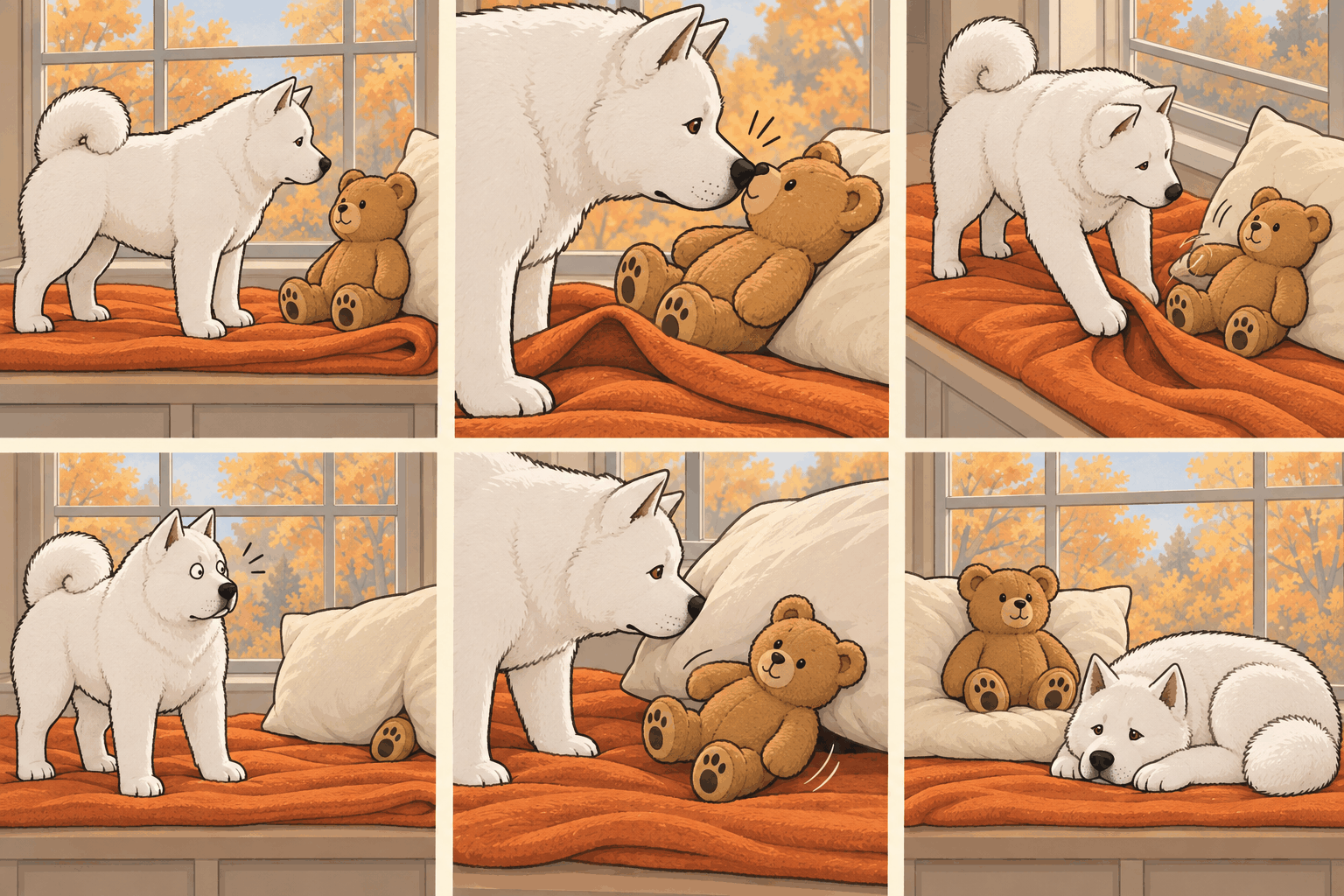
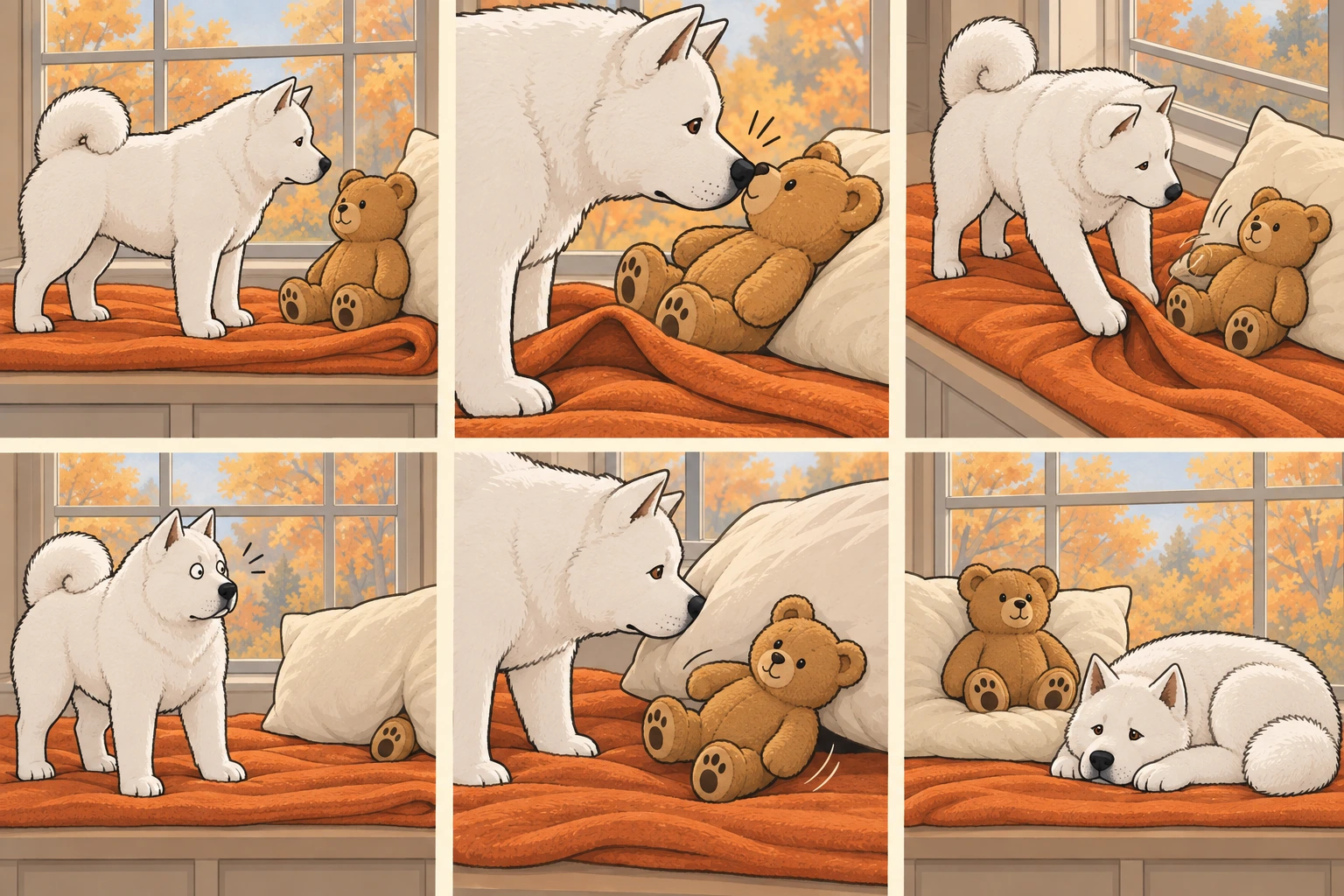
Our solid-white, mask-free protagonist nudges a bear and sets a blanket unfolding. Six wordless beats turn a tiny boop into a soft little mix-up.
Its early history overlaps with that of the Japanese Akita: medium-sized bear-hunting dogs from the Akita region were later used for fighting and crossed with other breeds. After World War II, Dewa-line Akitas were taken to the United States, where breeding produced a type distinct from the one developed in Japan. The standard now lists its utilization as a companion dog.
Large and heavy-boned, with a broad, deep chest and a body slightly longer than its height. Standard heights are 66–71 cm for males and 61–66 cm for females; the small ears stand erect and the substantial tail curls over the back or against the flank.
Look for the combination of heavy bone, a broad blunt-triangular head, deep muzzle, small forward-angled erect ears and a substantial curled tail. There is no single required colour: pinto, brindle and solid white are among those accepted. The American Akita is the distinct US-developed type, not simply another name for the Japanese Akita.
The standard describes an alert, responsive, dignified and courageous dog, and notes that it may react strongly to other dogs, particularly those of the same sex. Individuals differ, so build cooperation through gradual reward-based training and manage dog-to-dog encounters thoughtfully.
Brush the double coat regularly and remove loose undercoat more thoroughly during shedding; check ears and paws as part of routine care. Provide daily walks, sniffing opportunities and short training sessions for physical and mental engagement. Teach leash manners, recall and calm responses around other dogs with rewards, allowing space rather than forcing greetings. Its size calls for adequate room and a handler able to manage it securely.
Its strength calls for dependable leash handling, and encounters with other dogs may require extra space. A new owner should be ready for consistent training and experienced guidance when needed.
Brush through the outer coat and lift out loose undercoat, checking it more often during shedding periods. Surface brushing alone can miss the dense layer underneath.
Choose routes with room to pass, reward attention around other dogs and do not make close greetings the goal of every walk. Include sniffing and brief skills practice as well as physical activity.
SOURCE NOTES
Breed traits follow the cited official standards; everyday care advice is our editorial interpretation of coat, build and working purpose.
Coat and size varieties can share a standard. The number is an archive reference, not a rarity score. An independent educational atlas, not a registry publication. Temperament varies; consult a veterinarian about health concerns.
WOOFMAP / AMERICAN-AKITA / LITTLE MOMENTS
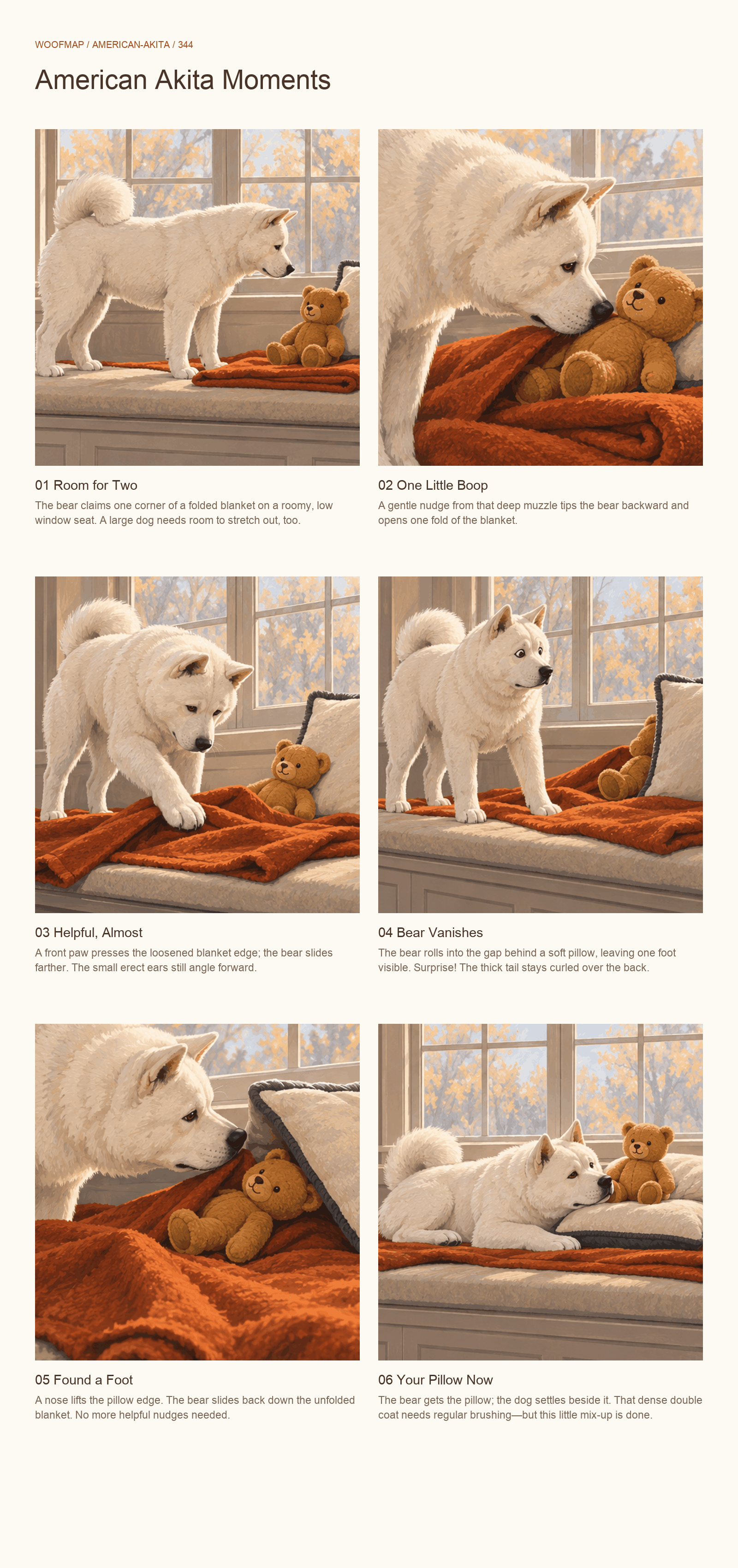
Illustrated here is the accepted solid-white, mask-free American Akita, with small forward-angled erect ears, a deep muzzle, heavy bone and a thick curled tail. The window-seat bear comedy belongs to this fictional individual.
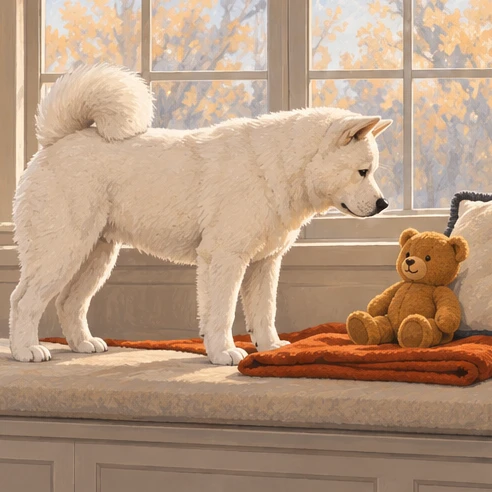
The bear claims one corner of a folded blanket on a roomy, low window seat. A large dog needs room to stretch out, too.
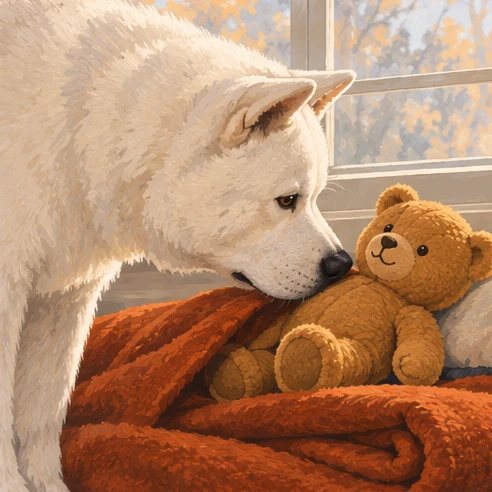
A gentle nudge from that deep muzzle tips the bear backward and opens one fold of the blanket.
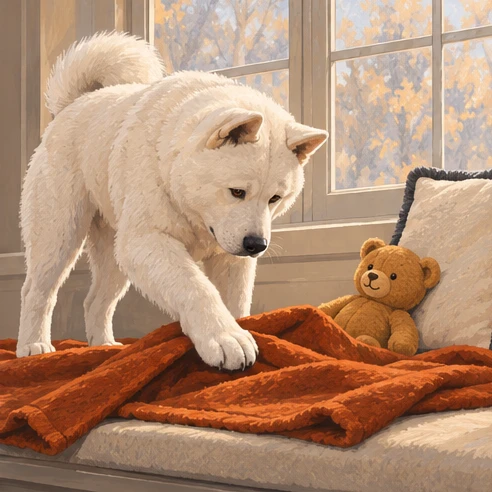
A front paw presses the loosened blanket edge; the bear slides farther. The small erect ears still angle forward.
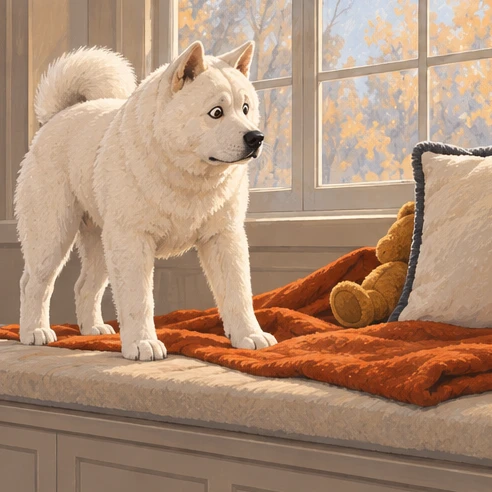
The bear rolls into the gap behind a soft pillow, leaving one foot visible. Surprise! The thick tail stays curled over the back.
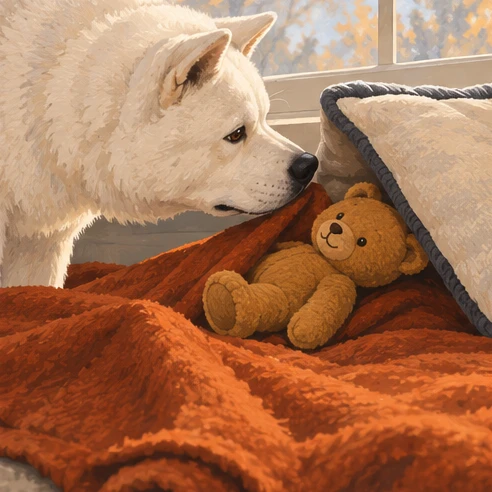
A nose lifts the pillow edge. The bear slides back down the unfolded blanket. No more helpful nudges needed.
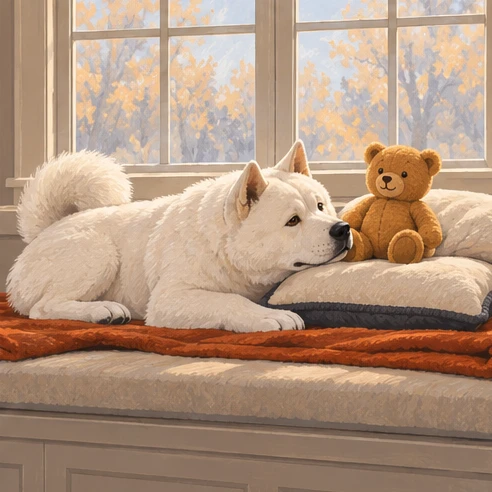
The bear gets the pillow; the dog settles beside it. That dense double coat needs regular brushing—but this little mix-up is done.
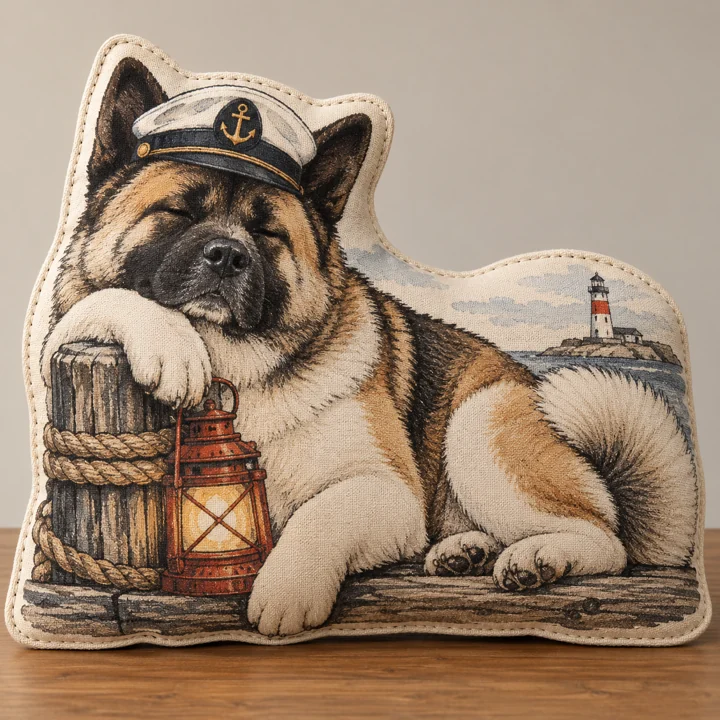
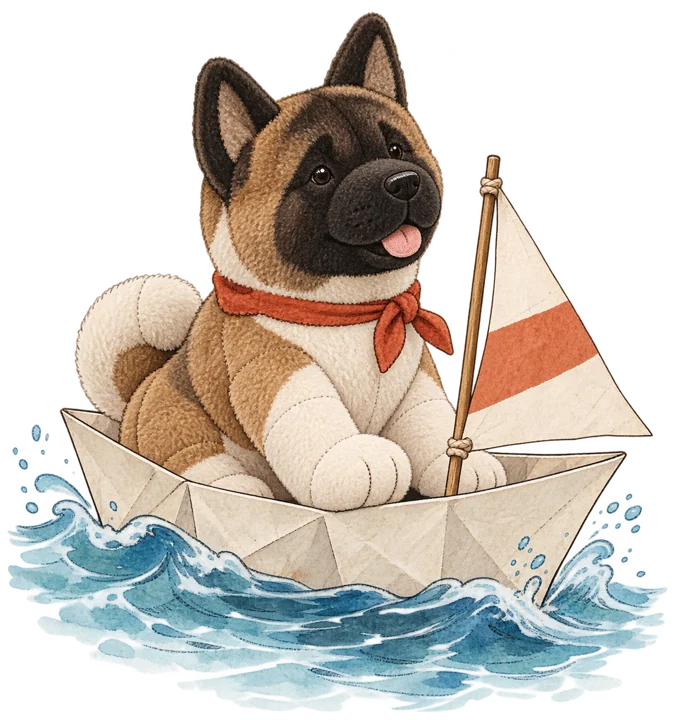
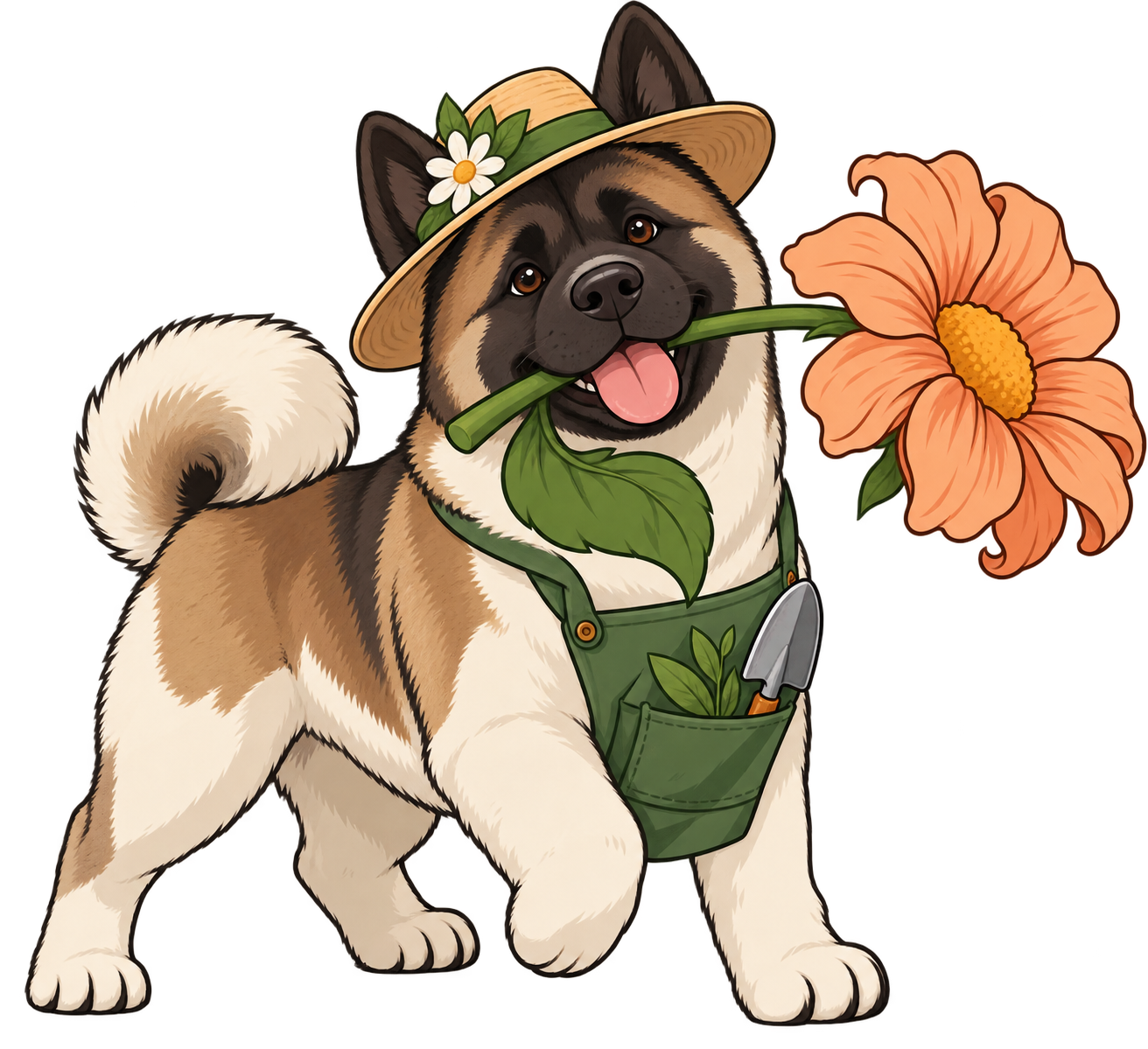
Eight transparent PNGs to save individually. Switch captions on or off for your chats.
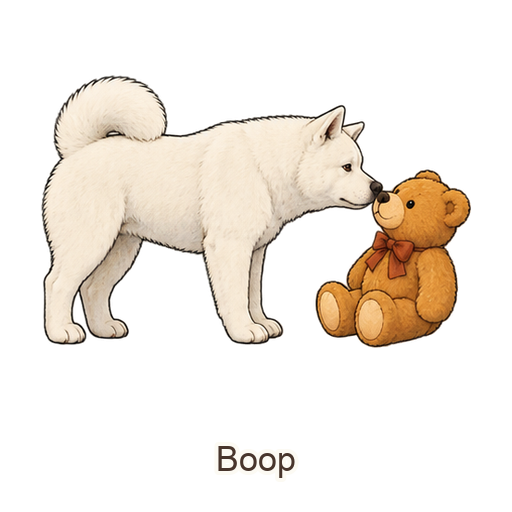 Boop
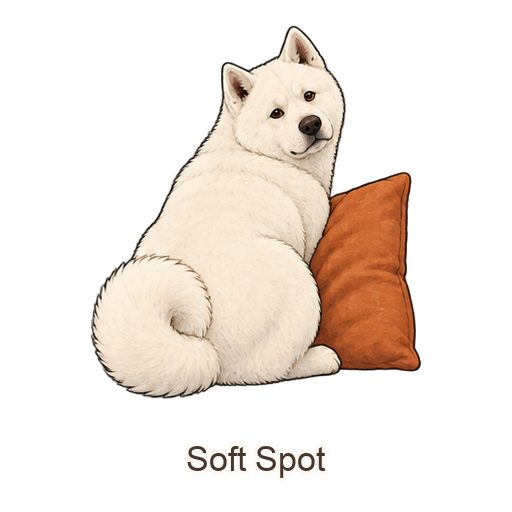 Soft Spot
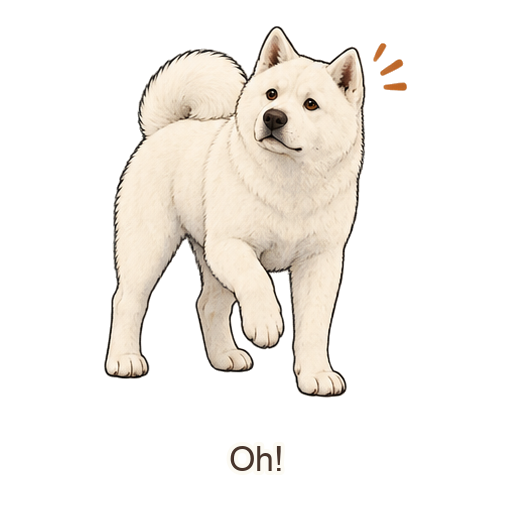 Oh!
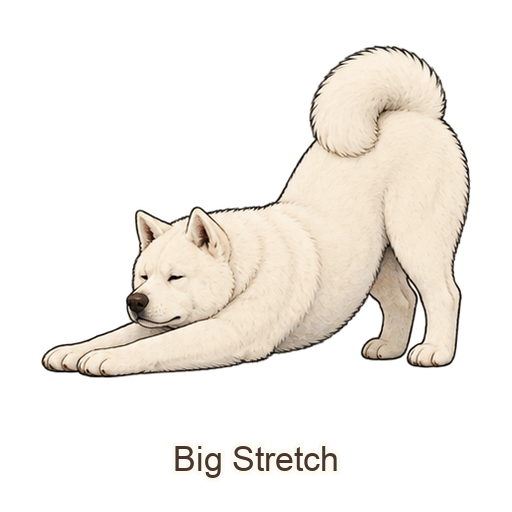 Big Stretch
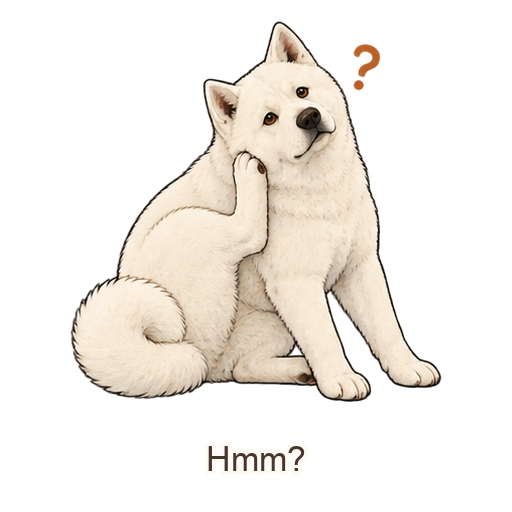 Hmm?
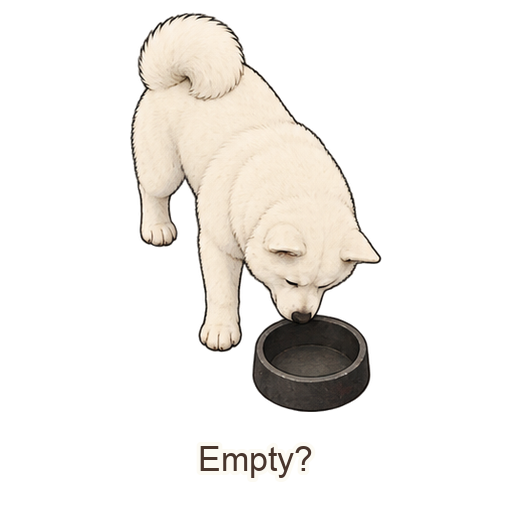 Empty?
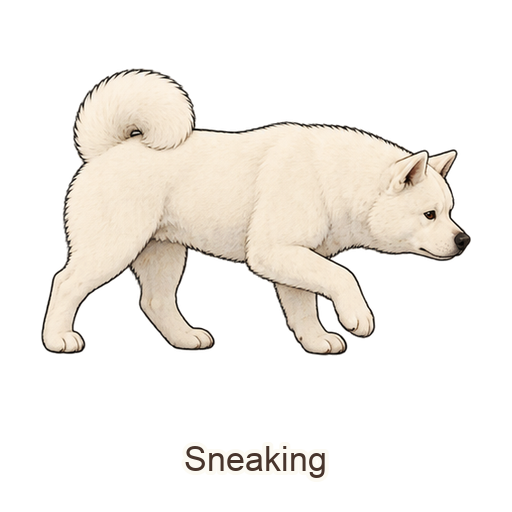 Sneaking
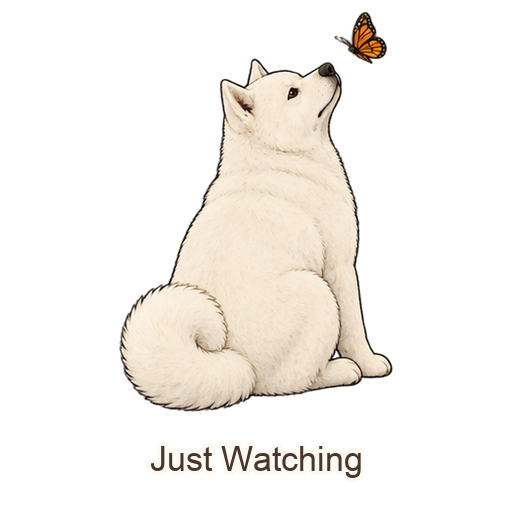 Just Watching
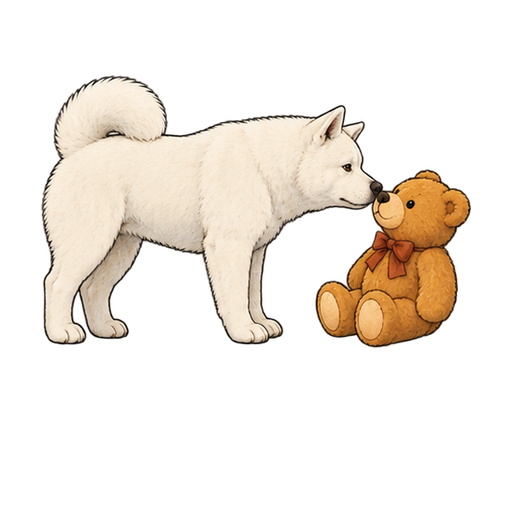 Boop
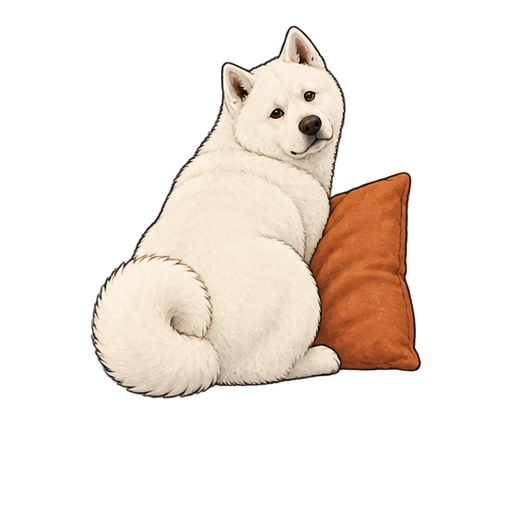 Soft Spot
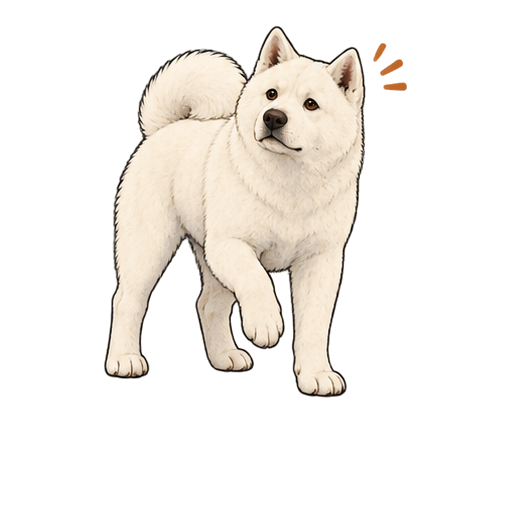 Oh!
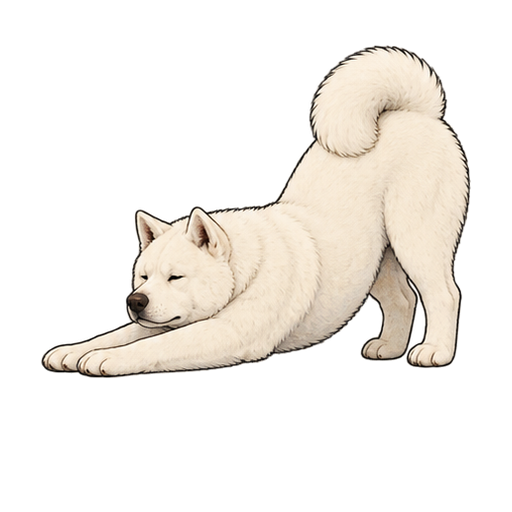 Big Stretch
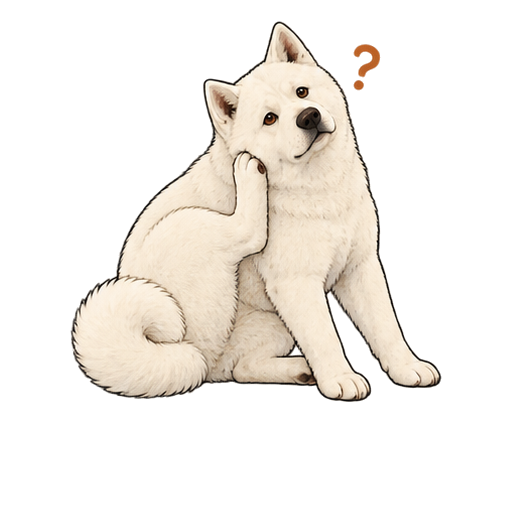 Hmm?
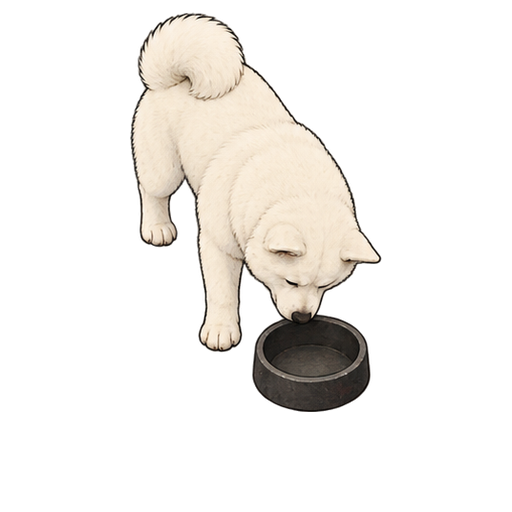 Empty?
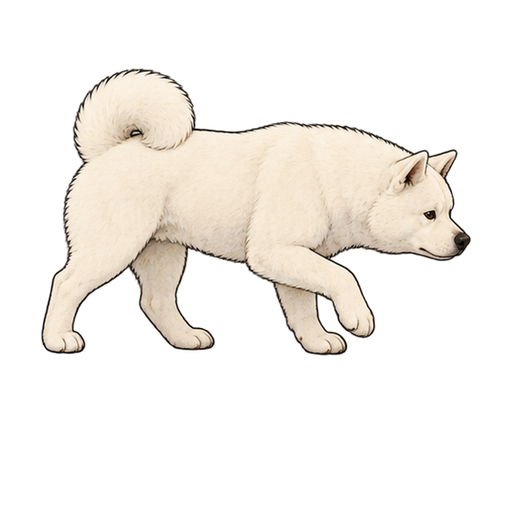 Sneaking
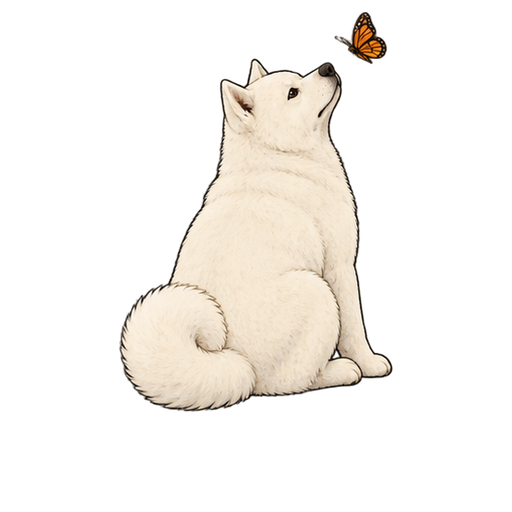 Just Watching
Original woofmap artwork, assisted by GPT Image 2. Free for personal chats and non-commercial sharing with credit to woofmap.com. Fictional moods do not predict every dog’s temperament; see this page’s factual sources.
Combine the available parts, choose a name and take a little joy home.
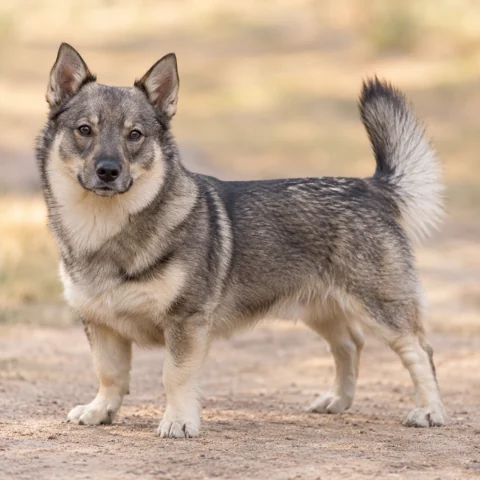 AI realistic image
Spitz and primitive types
Swedish Vallhund
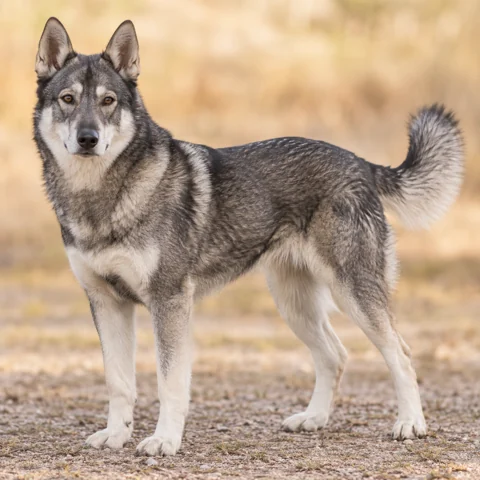 AI realistic image
Spitz and primitive types
Jämthund
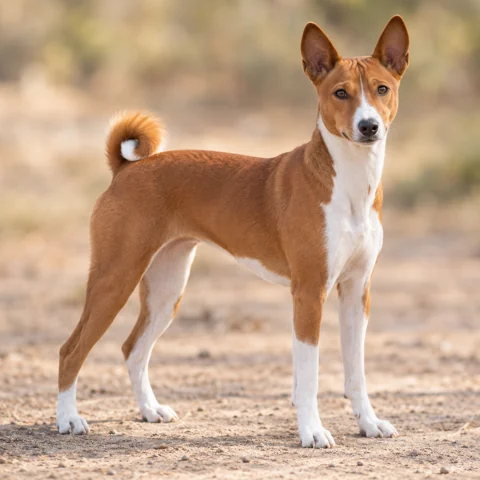 AI realistic image
Spitz and primitive types
Basenji