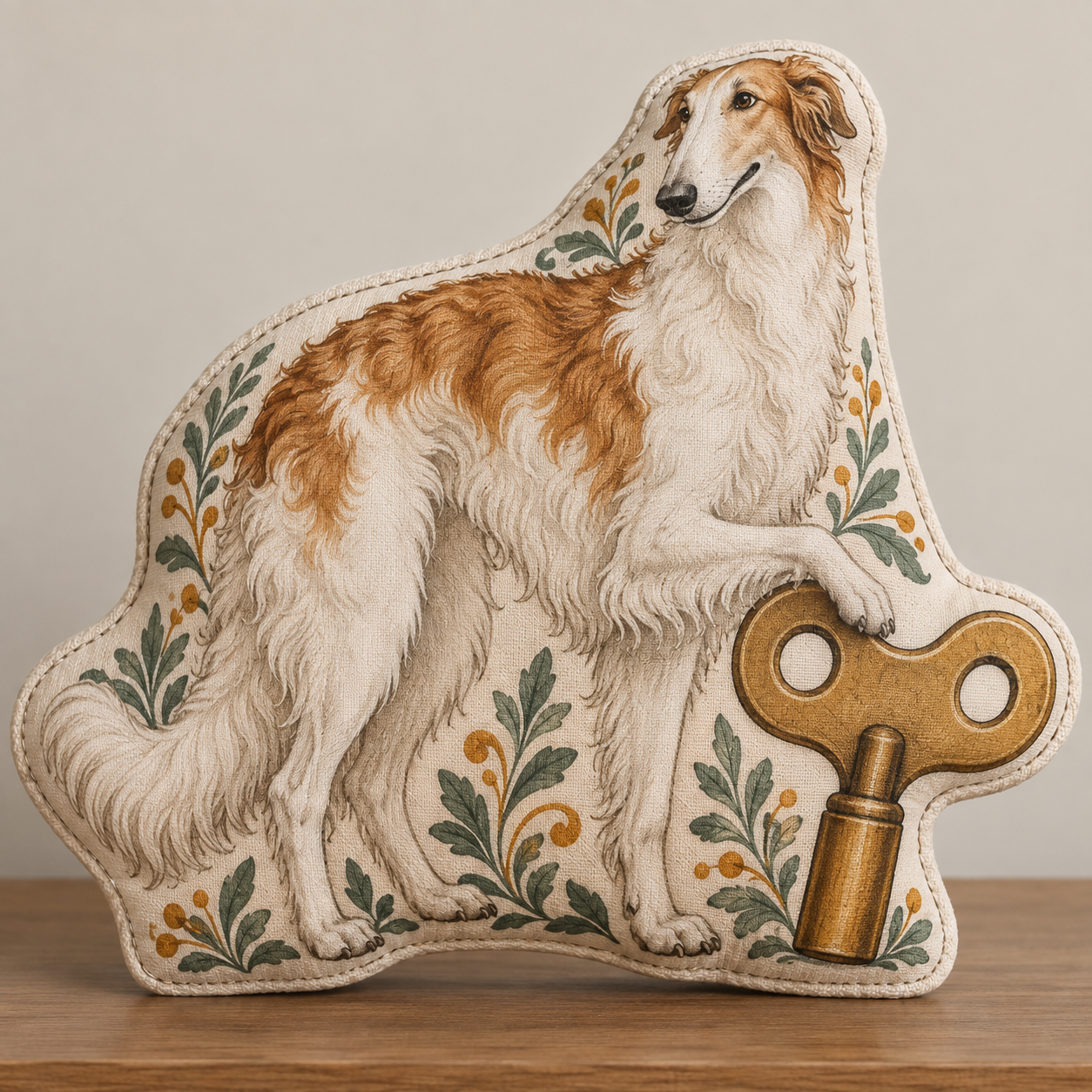
WOOFMAP · CANINE ARCHIVENO. 193
Sighthounds
Borzoi
Borzoi - Russian Hunting Sighthound
✳ woofmap.comRussia
WOOFMAP · CANINE ARCHIVE · NO. 193
Borzoi - Russian Hunting Sighthound
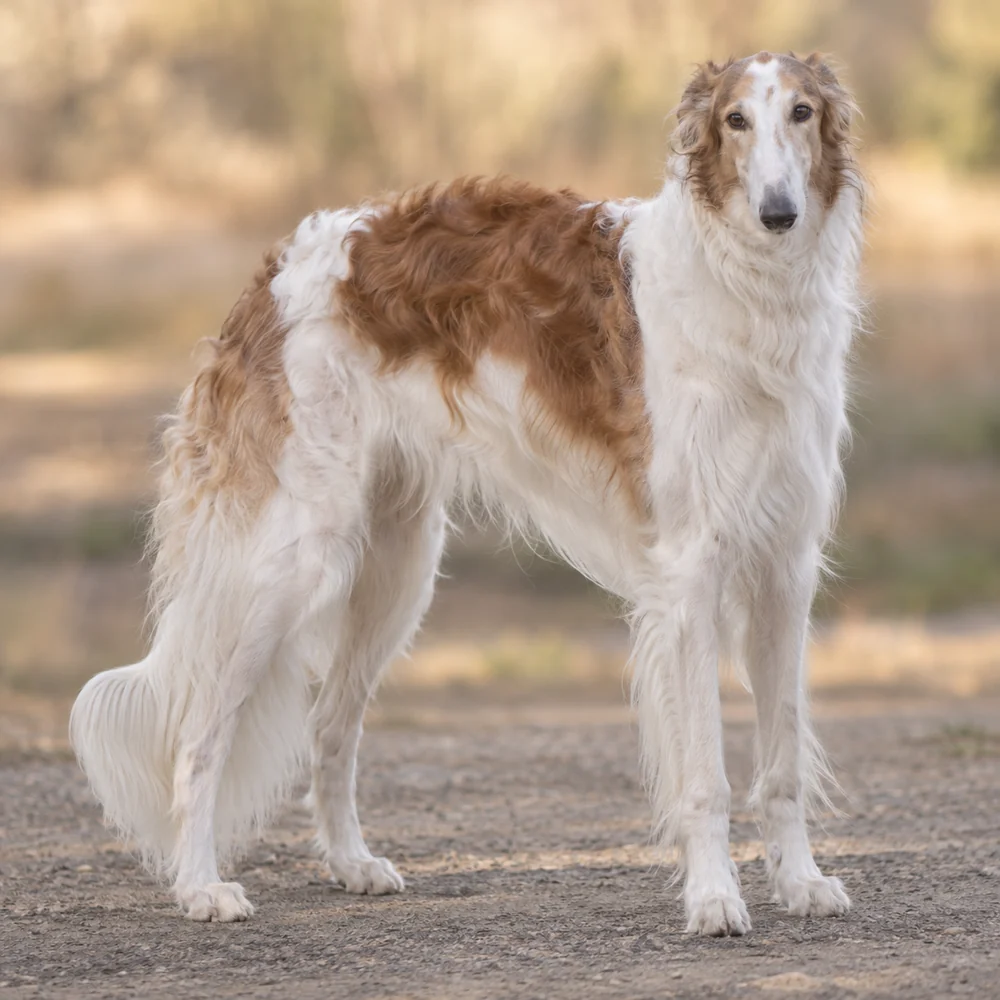
A flowing-coated Russian sighthound built for the chase.
AI-generated realistic breed image, for visual reference.
This Borzoi page is still waiting for a voice. Live with a Borzoi? Share a natural bark, howl or whine and let others hear a little of your dog’s everyday life.
If we feature your recording, we’ll credit you or your dog using the name you choose.
A 5–15 second phone recording in a quiet setting is perfect. Capture a natural moment without startling or disturbing your dog. Audio or video with sound is welcome.
Share your dog’s voice ↗[email protected]Attach your recording, breed and preferred credit. Please confirm you recorded it and allow woofmap to feature it.
Thank you for helping us build a playful Woof Planet together. Every little woof deserves to be heard.
Sighthounds
Borzoi - Russian Hunting Sighthound
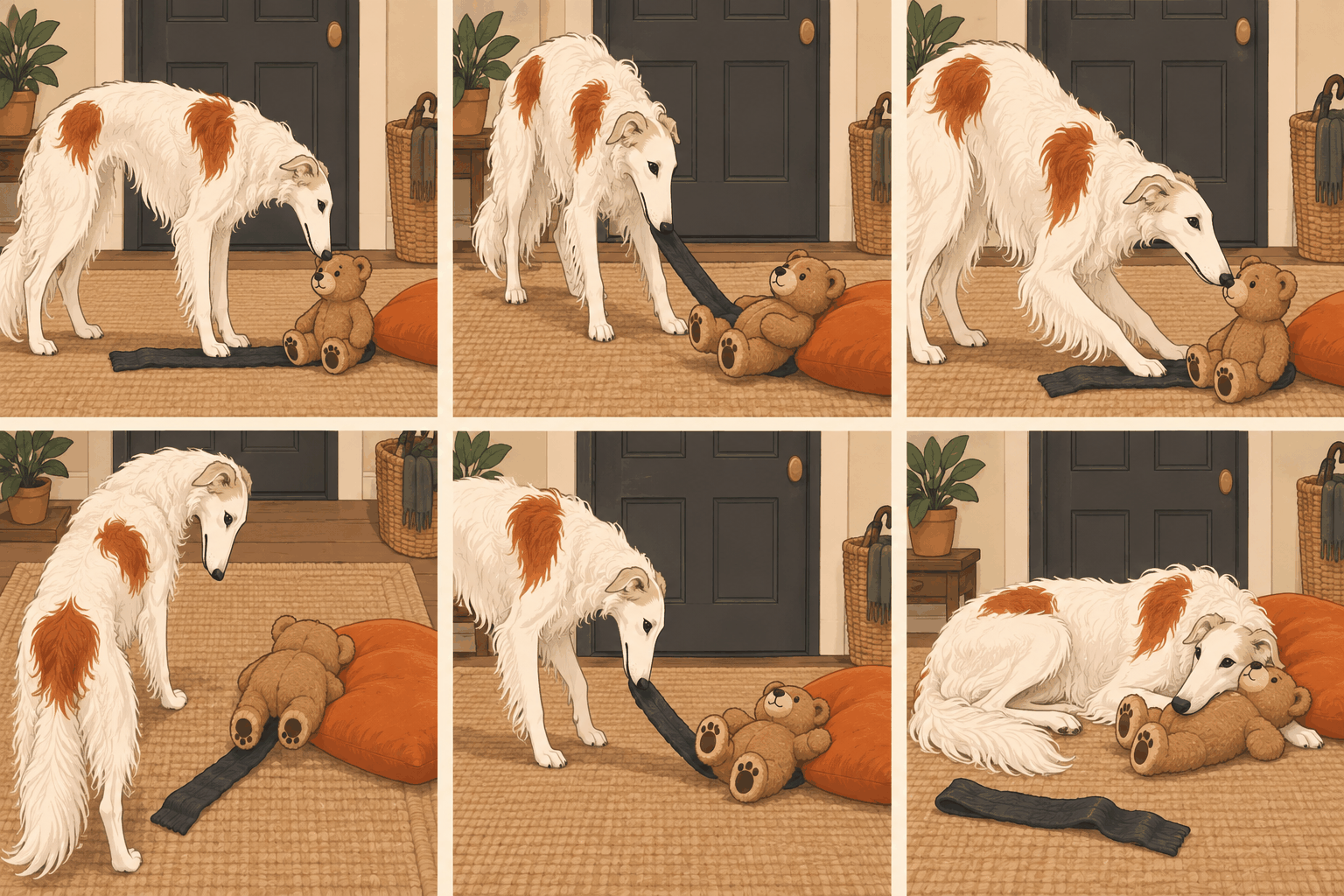
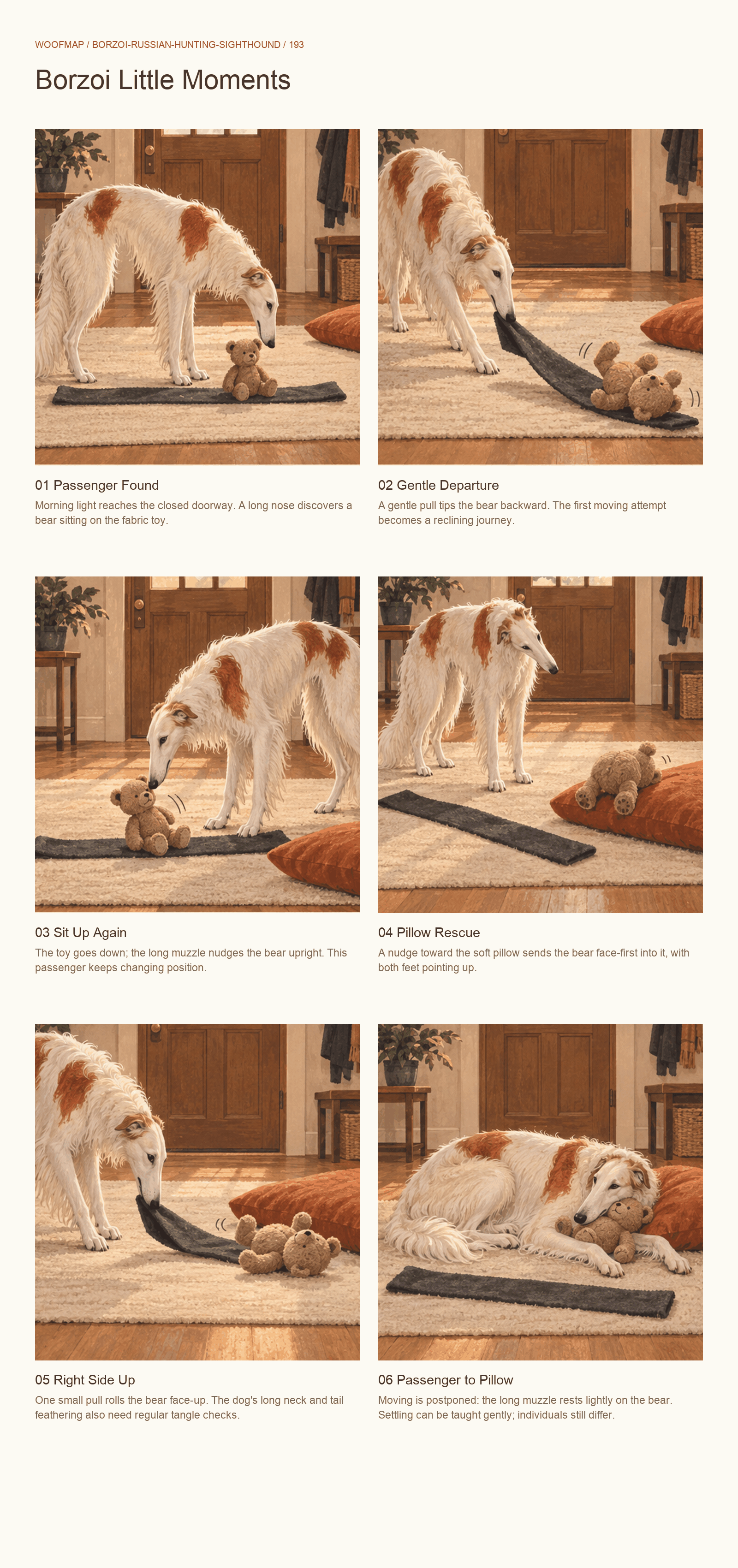
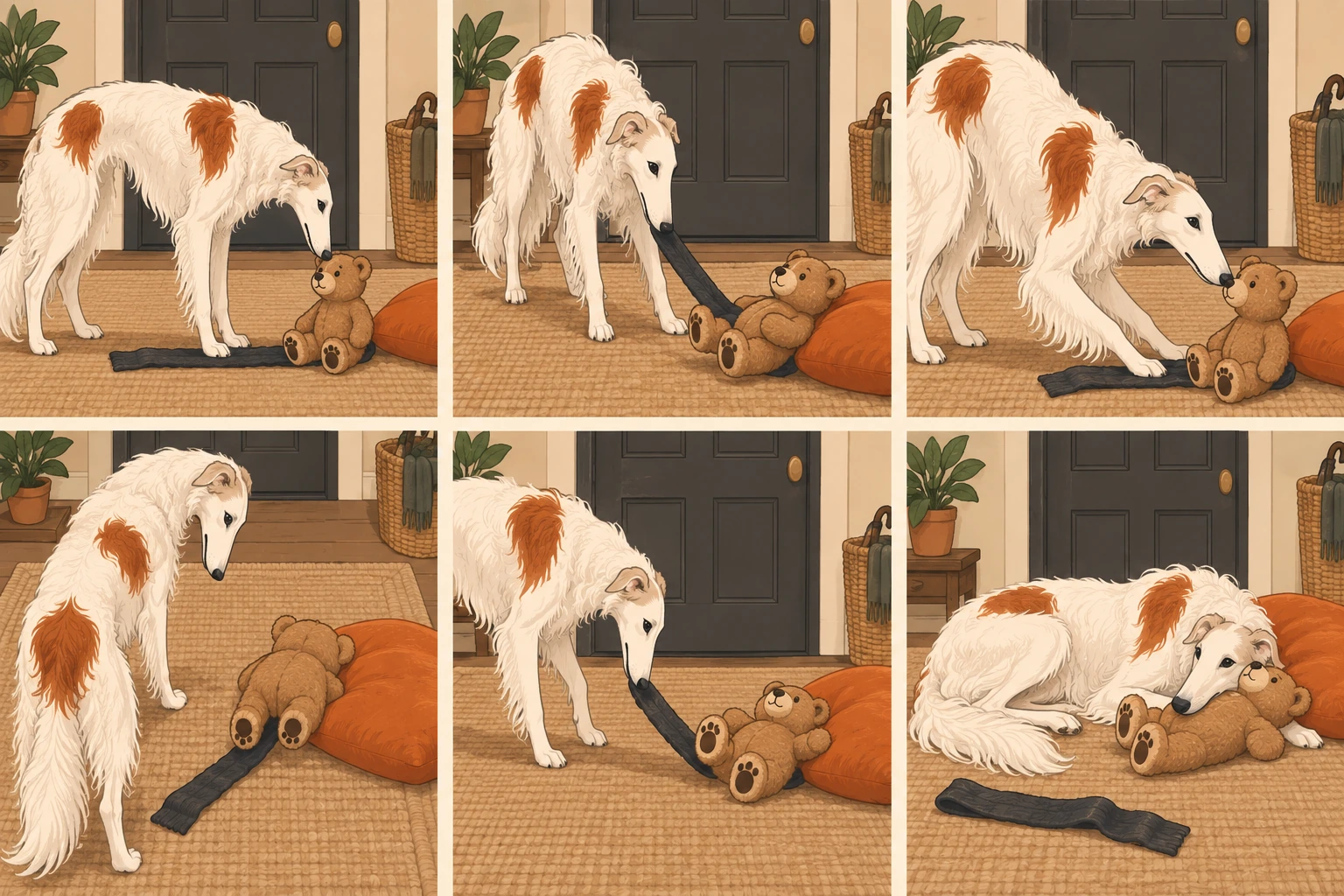
One fabric toy, one stuffed bear: six increasingly muddled moving attempts end in a shared rest.
The standard traces its beginnings to the 15th century, when Tatar sighthounds of Arab origin were crossed with the strong hunting dogs used by Russians. Later crosses involved Polish, Courland, Greyhound and other sighthounds; a standard adopted in 1888 unified the breed type. Bred chiefly to pursue hare and fox, the Borzoi was also used in wolf hunts and now takes part in coursing and racing.
Tall, lean and strong, the body is slightly longer than high, with a smoothly arched back and loin. Desirable height is 75–85 cm for males and 68–78 cm for females; the ears are small and laid back, and the long tail is sickle- or sabre-shaped.
Look beyond the long coat: the very long head, smoothly arched topline, deep chest, tucked-up belly and feathered tail belong together. This standard covers one breed, not separate size or colour varieties; the nose is black regardless of coat colour.
The standard describes a calm temperament, keen visual response and an attitude to people ranging from neutral to friendly. A dog that walks or trots quietly can switch to a full gallop in pursuit, so reward-based training should include attention and safe management. Responses to people and other animals vary by individual.
Brush the feathering on the neck, legs and tail regularly and check for tangles. Provide secure opportunities to run and engaging activities suited to a sight-driven hunter. Use a lead around small animals rather than assuming a calm dog will not chase. Train gently and consistently, including recall and settling at home.
The breed was used to pursue hare and fox, so safety around small pets cannot be assumed. Assess the individual, introduce animals cautiously and manage access with separation or a lead.
Pay particular attention to the longer feathering on the neck, underside, backs of the legs and tail to prevent knots. The shorter hair on the head and ears still merits a quick check for debris.
Walks are useful, but a dog developed for fast pursuit also benefits from secure running and engaging activities. In open areas, plan for possible chasing and favour reliable enclosures.
SOURCE NOTES
Breed traits follow the cited official standards; everyday care advice is our editorial interpretation of coat, build and working purpose.
Coat and size varieties can share a standard. The number is an archive reference, not a rarity score. An independent educational atlas, not a registry publication. Temperament varies; consult a veterinarian about health concerns.
WOOFMAP / BORZOI-RUSSIAN-HUNTING-SIGHTHOUND / LITTLE MOMENTS
This pack depicts a white Borzoi with red patches and a long, silky, wavy coat. Its doorway bear-moving adventure is fictional; moods are individual, not breed guarantees.
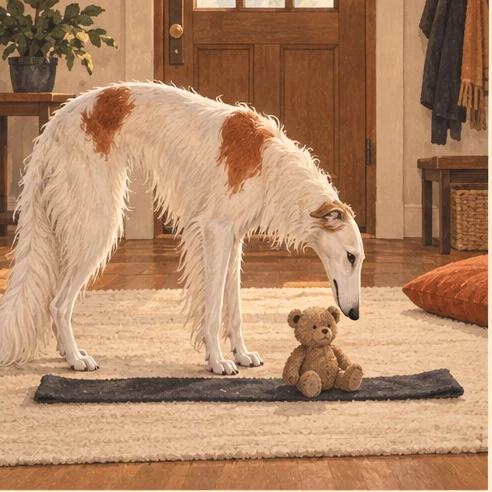
Morning light reaches the closed doorway. A long nose discovers a bear sitting on the fabric toy.
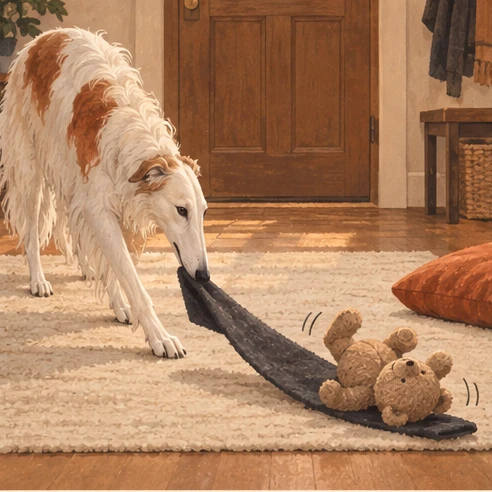
A gentle pull tips the bear backward. The first moving attempt becomes a reclining journey.
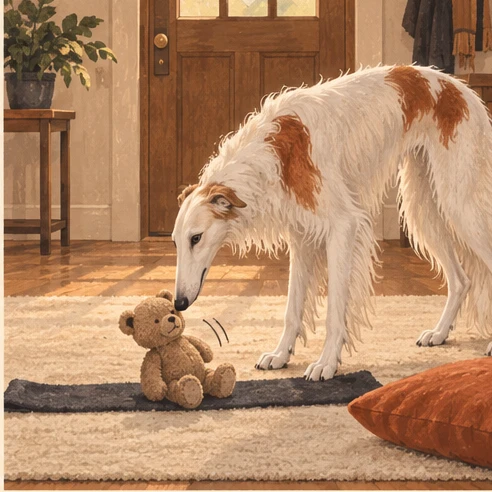
The toy goes down; the long muzzle nudges the bear upright. This passenger keeps changing position.
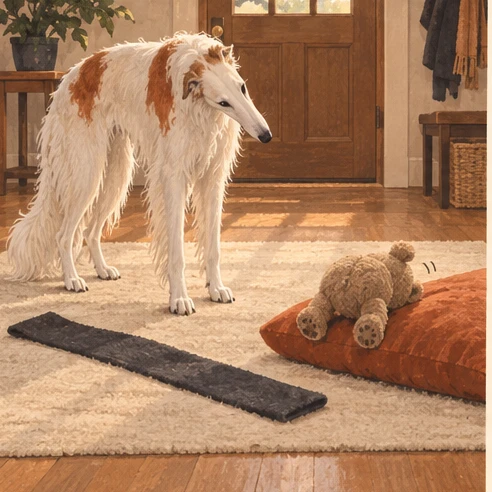
A nudge toward the soft pillow sends the bear face-first into it, with both feet pointing up.
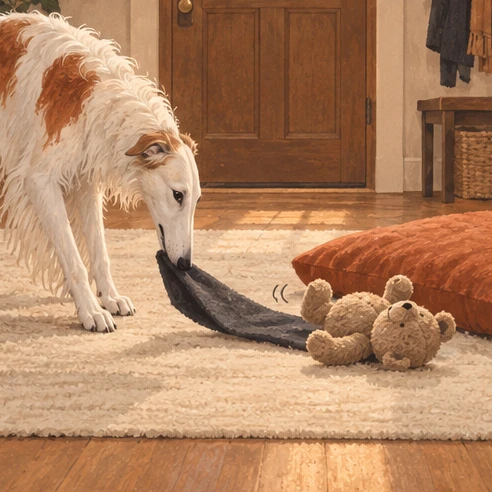
One small pull rolls the bear face-up. The dog's long neck and tail feathering also need regular tangle checks.
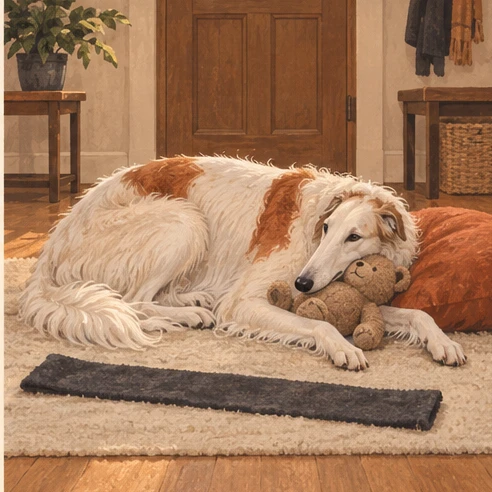
Moving is postponed: the long muzzle rests lightly on the bear. Settling can be taught gently; individuals still differ.
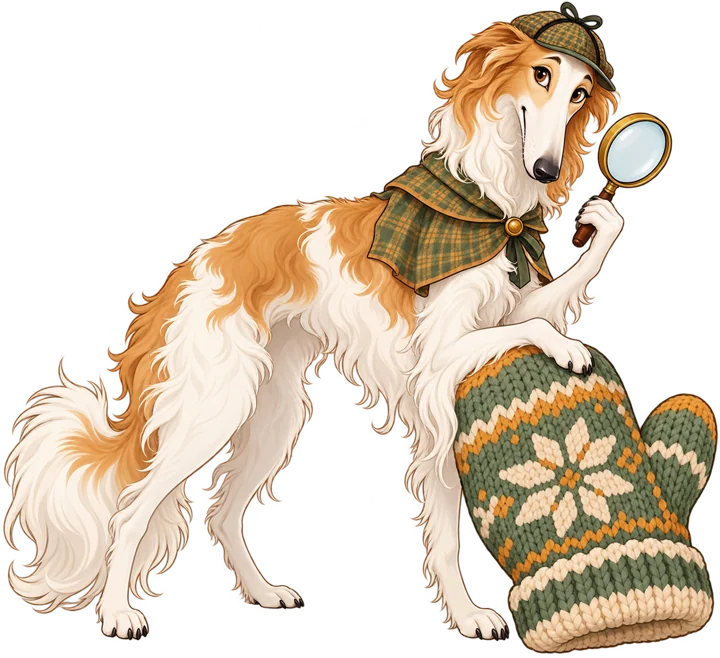

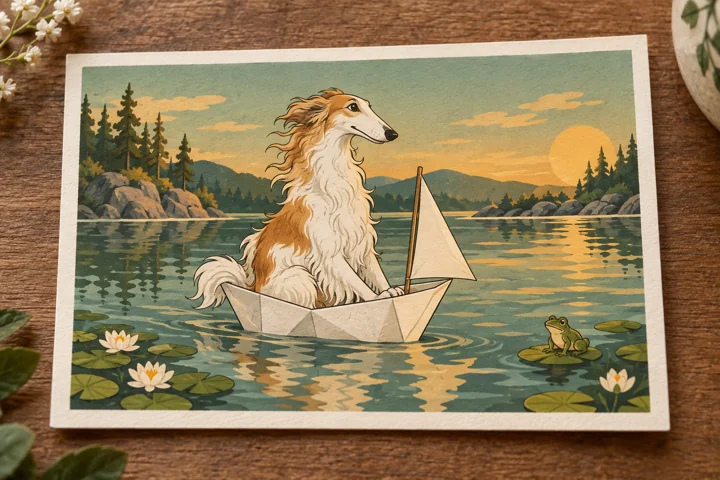
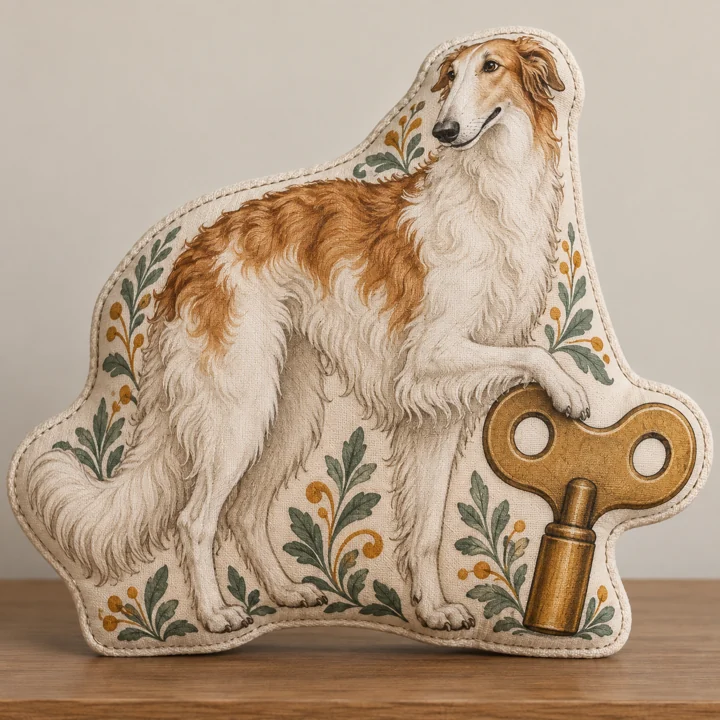
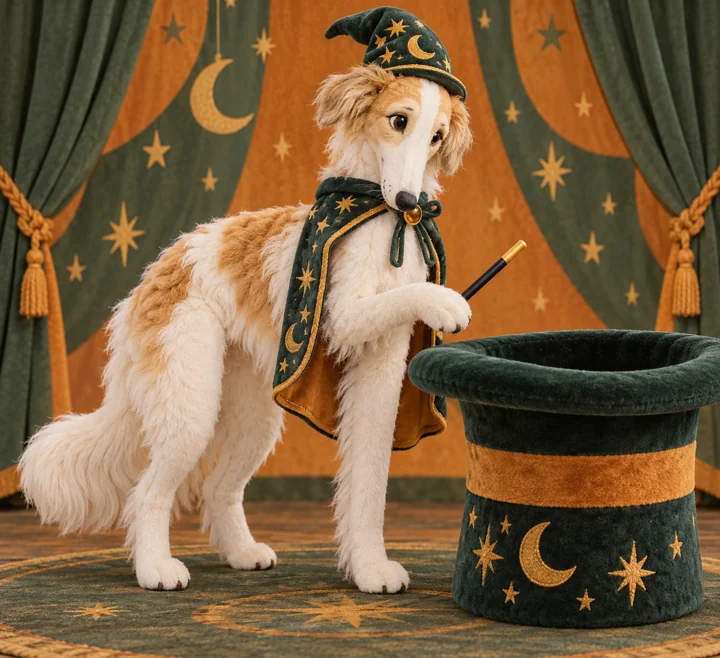
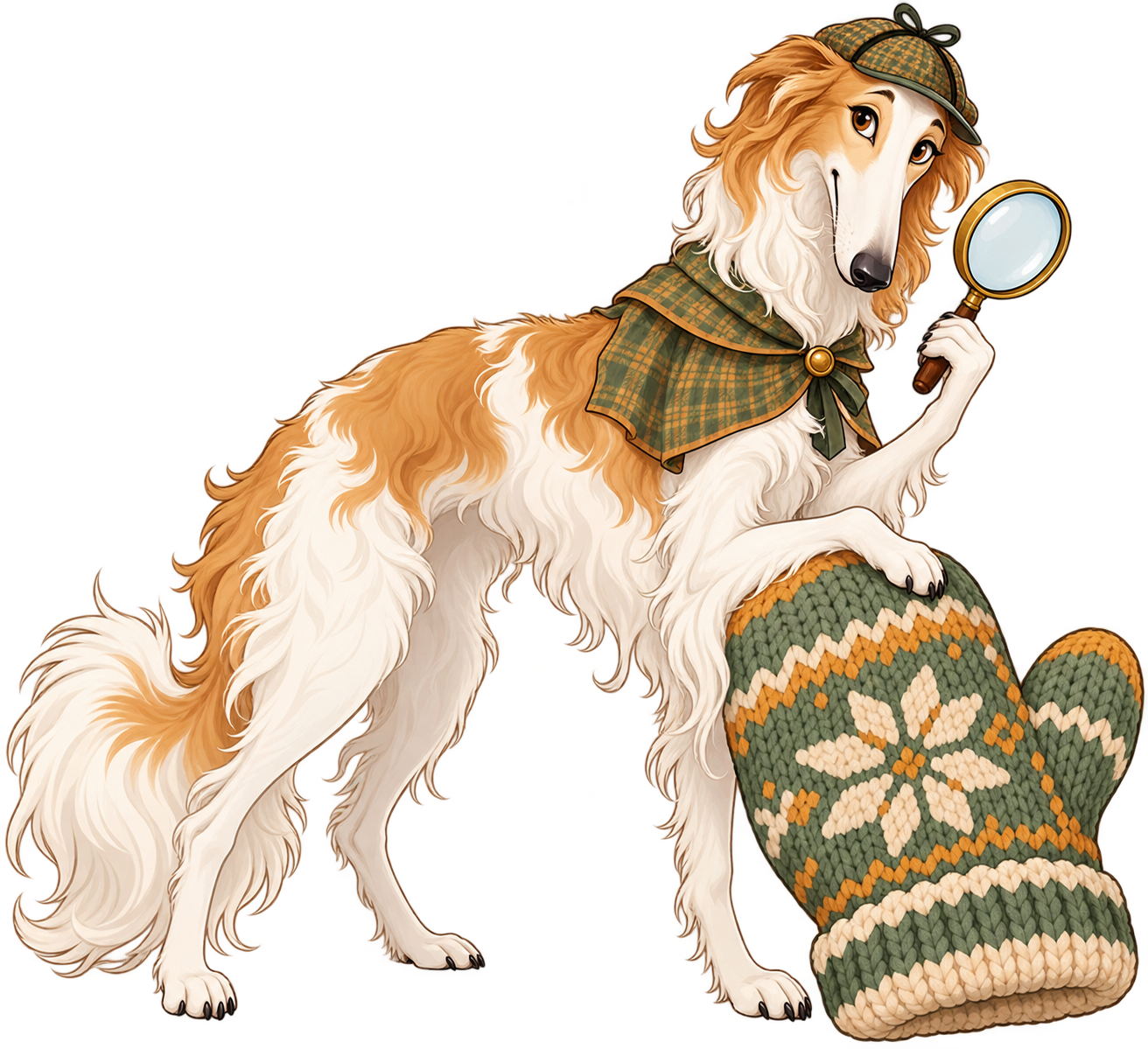
Eight transparent PNGs to save individually. Switch captions on or off for your chats.
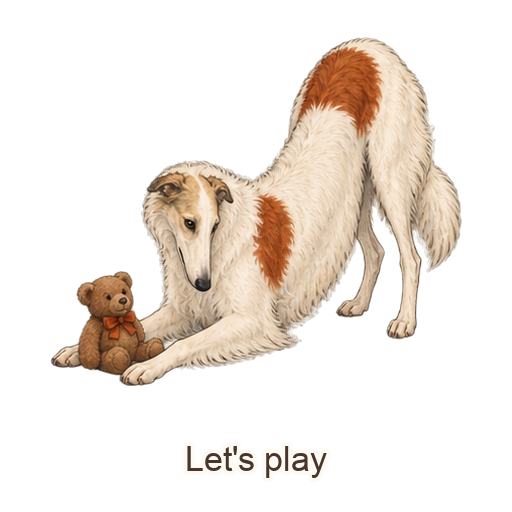 Let's play
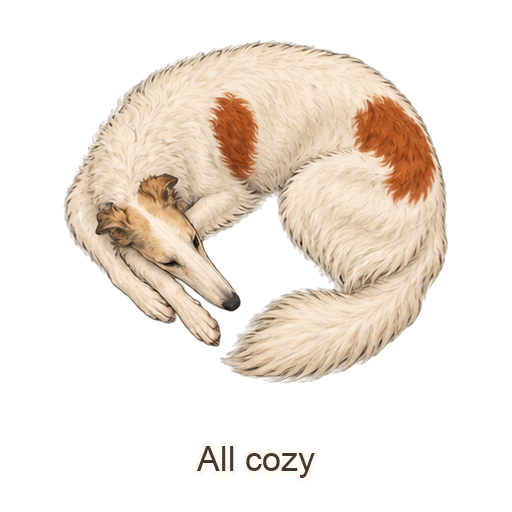 All cozy
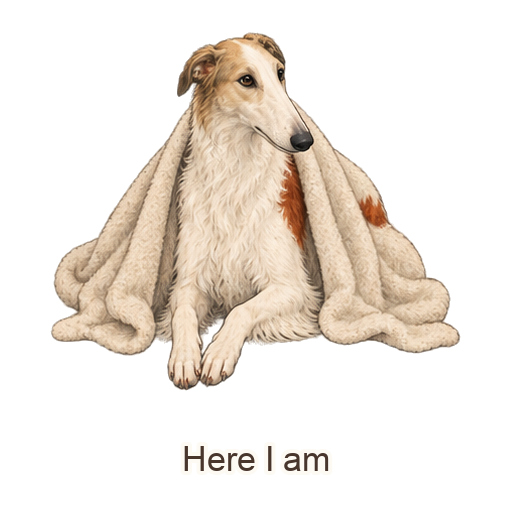 Here I am
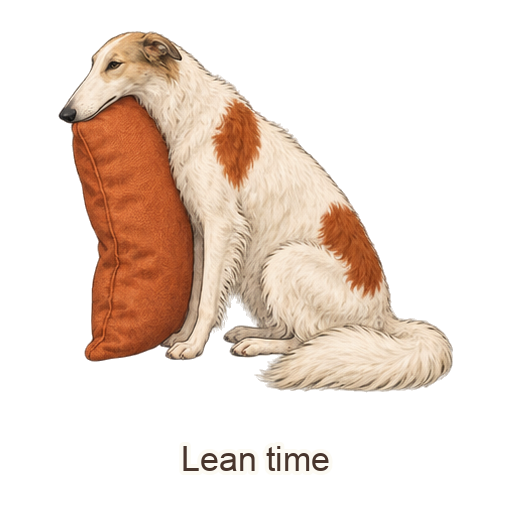 Lean time
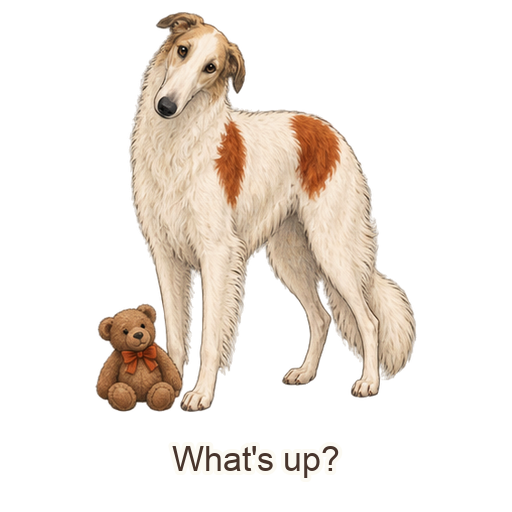 What's up?
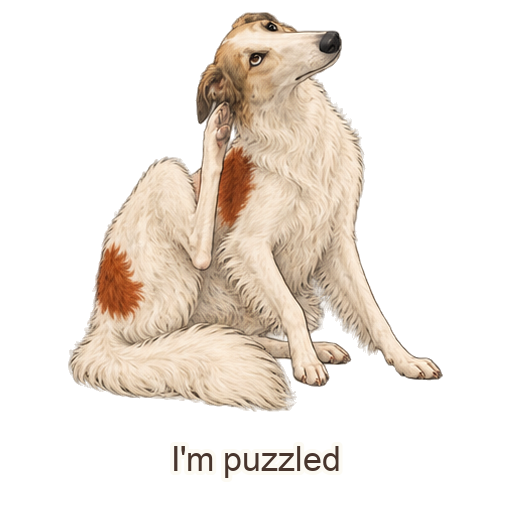 I'm puzzled
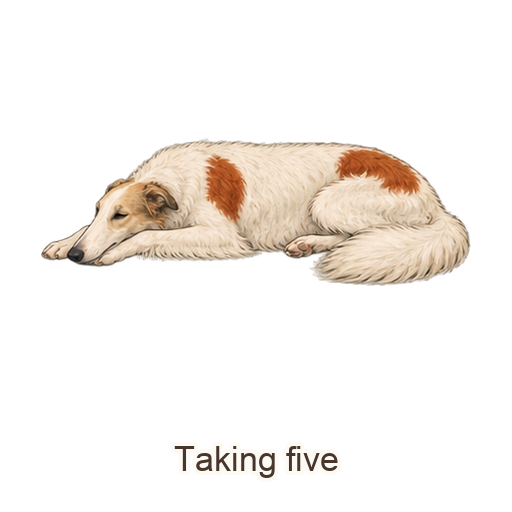 Taking five
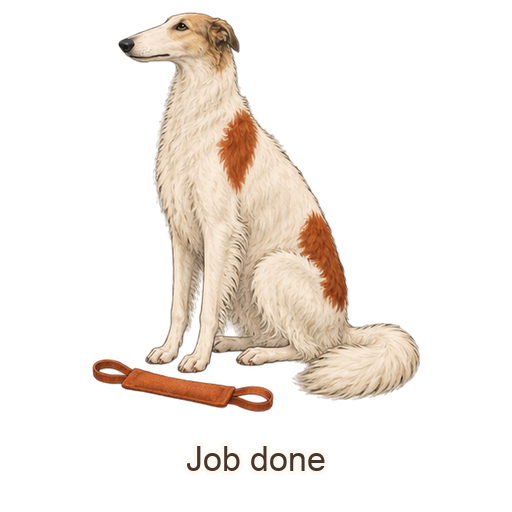 Job done
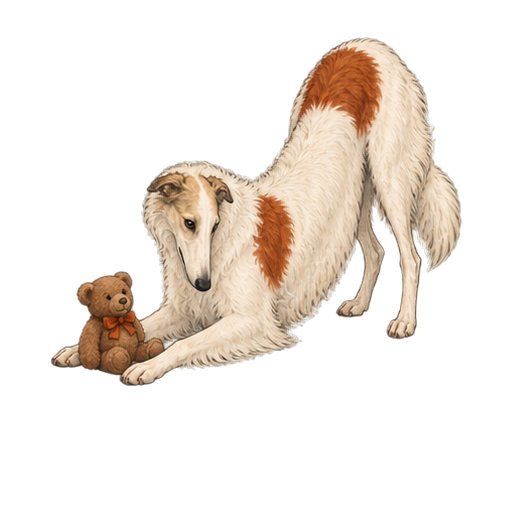 Let's play
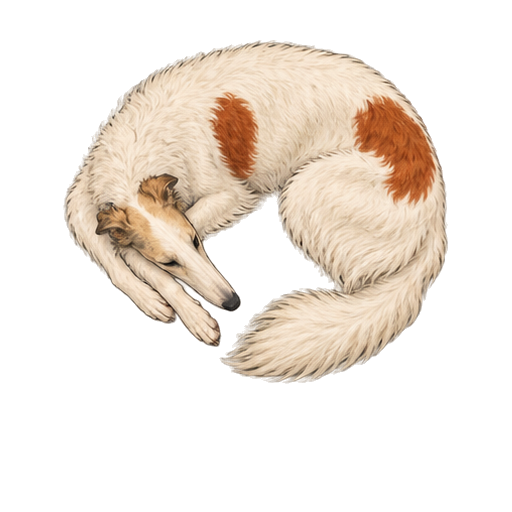 All cozy
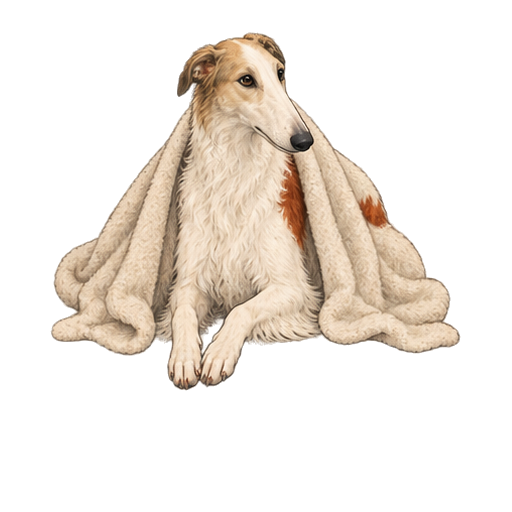 Here I am
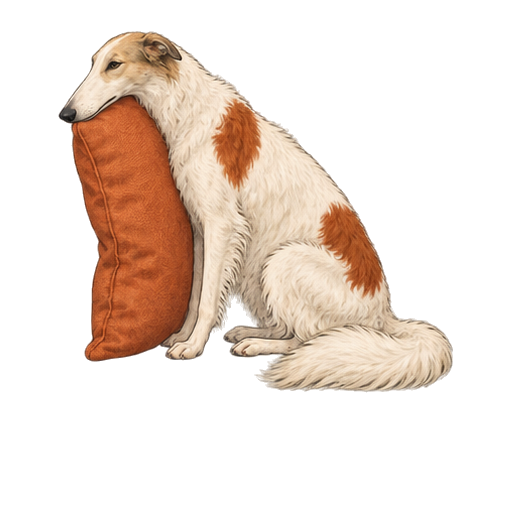 Lean time
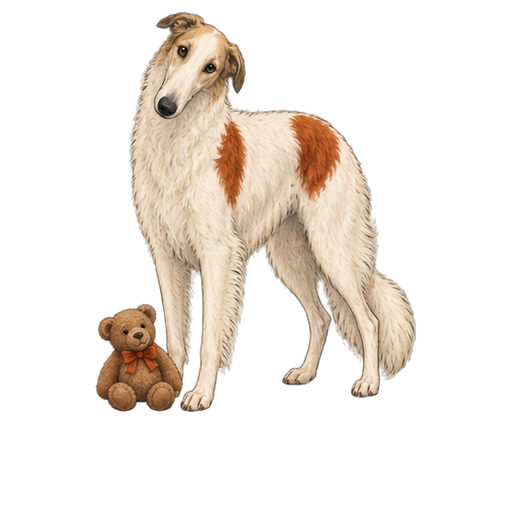 What's up?
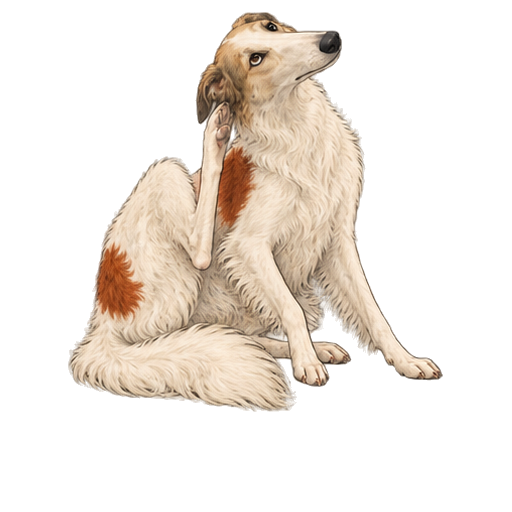 I'm puzzled
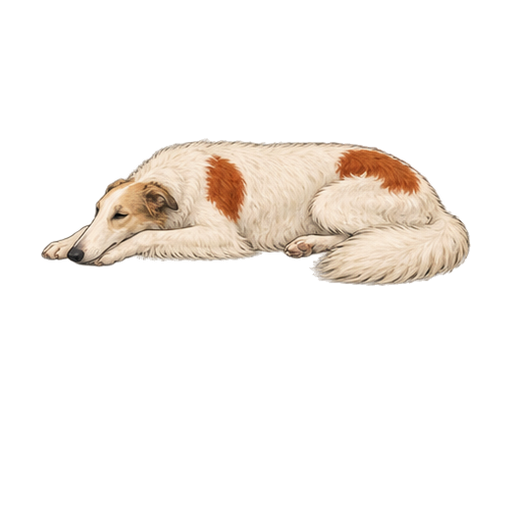 Taking five
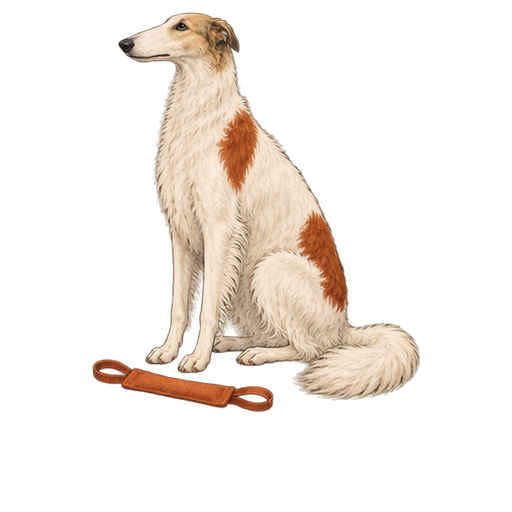 Job done
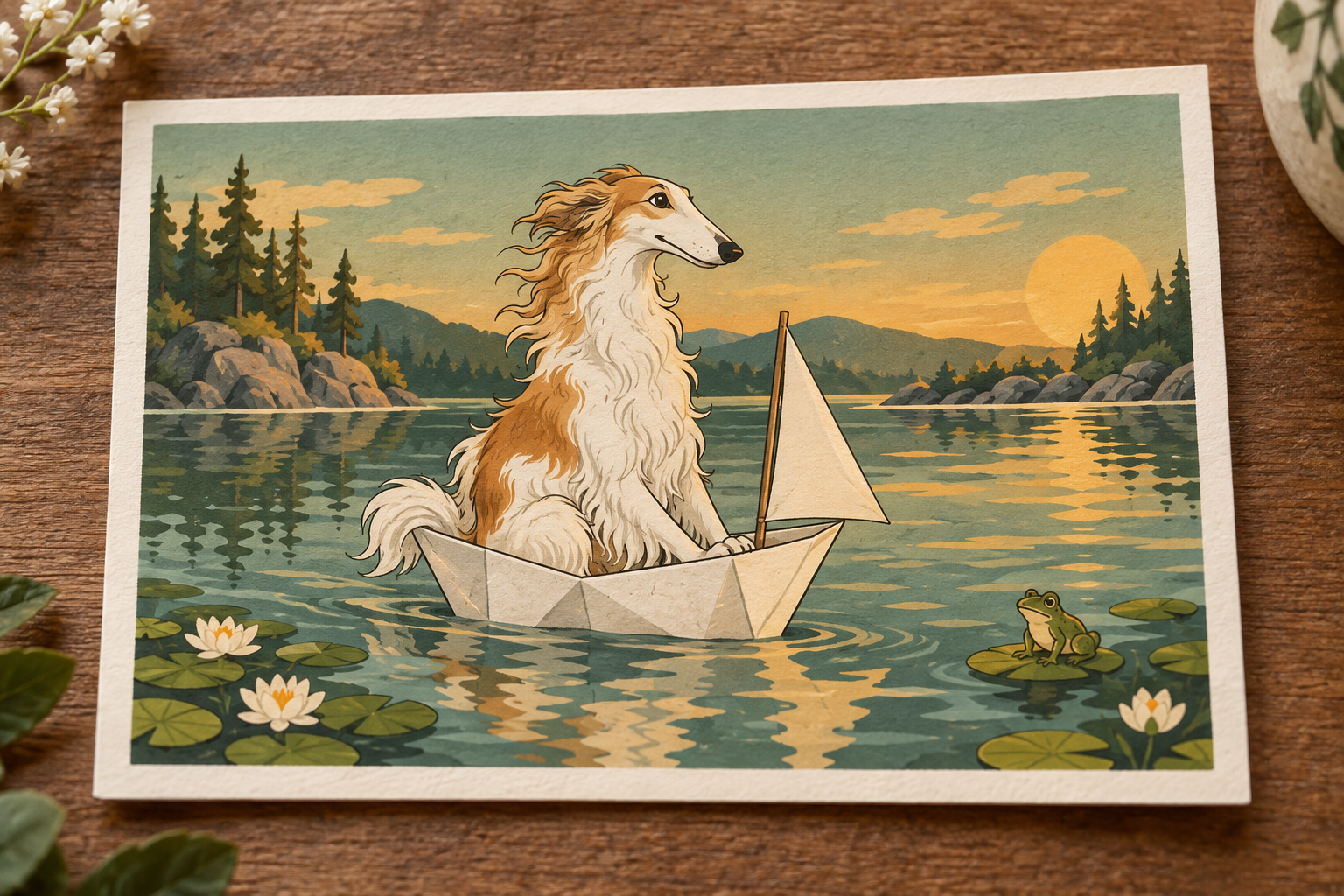
Original woofmap artwork, assisted by GPT Image 2. Free for personal chats and non-commercial sharing with credit to woofmap.com. Fictional moods do not predict every dog’s temperament; see this page’s factual sources.
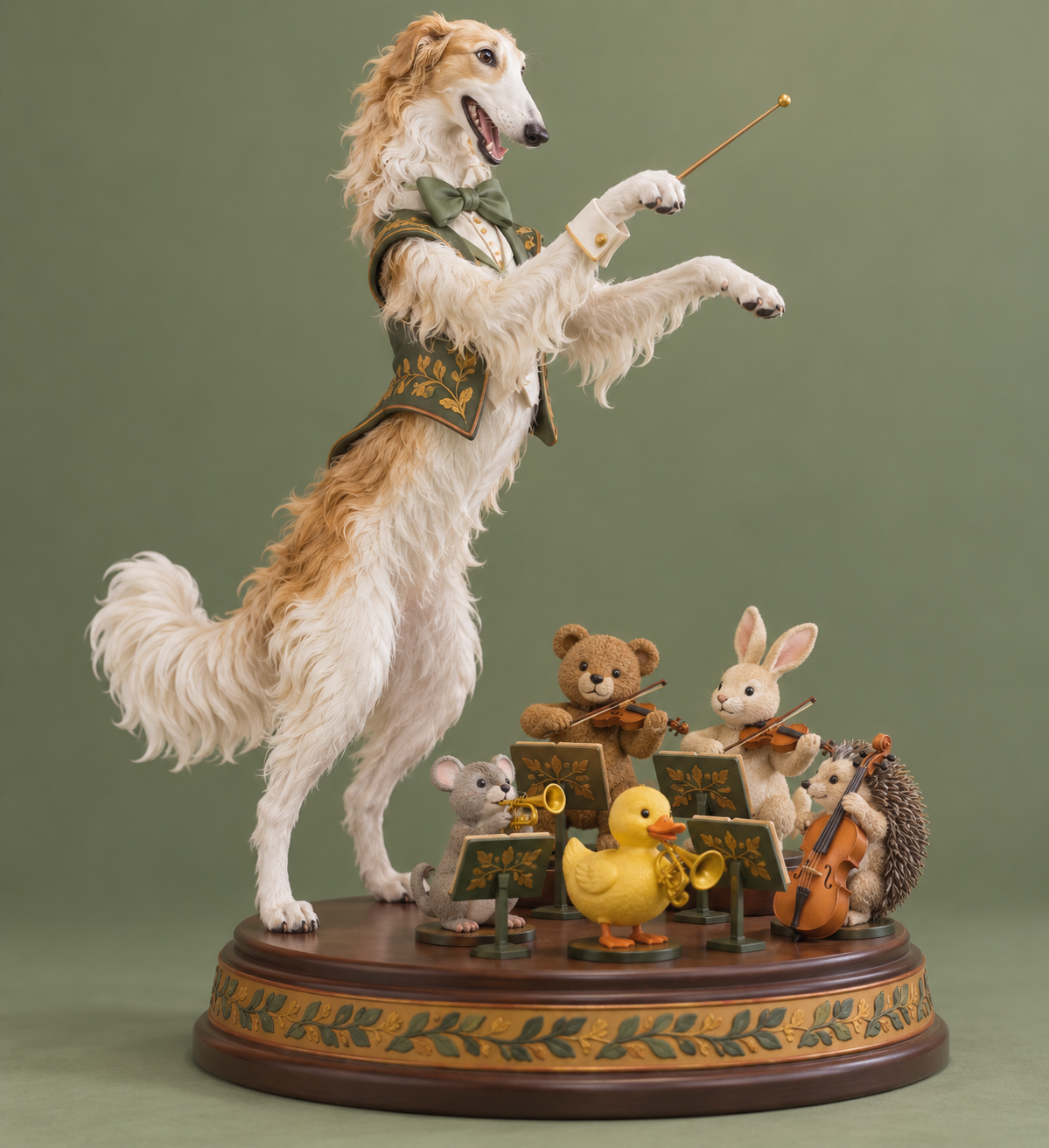
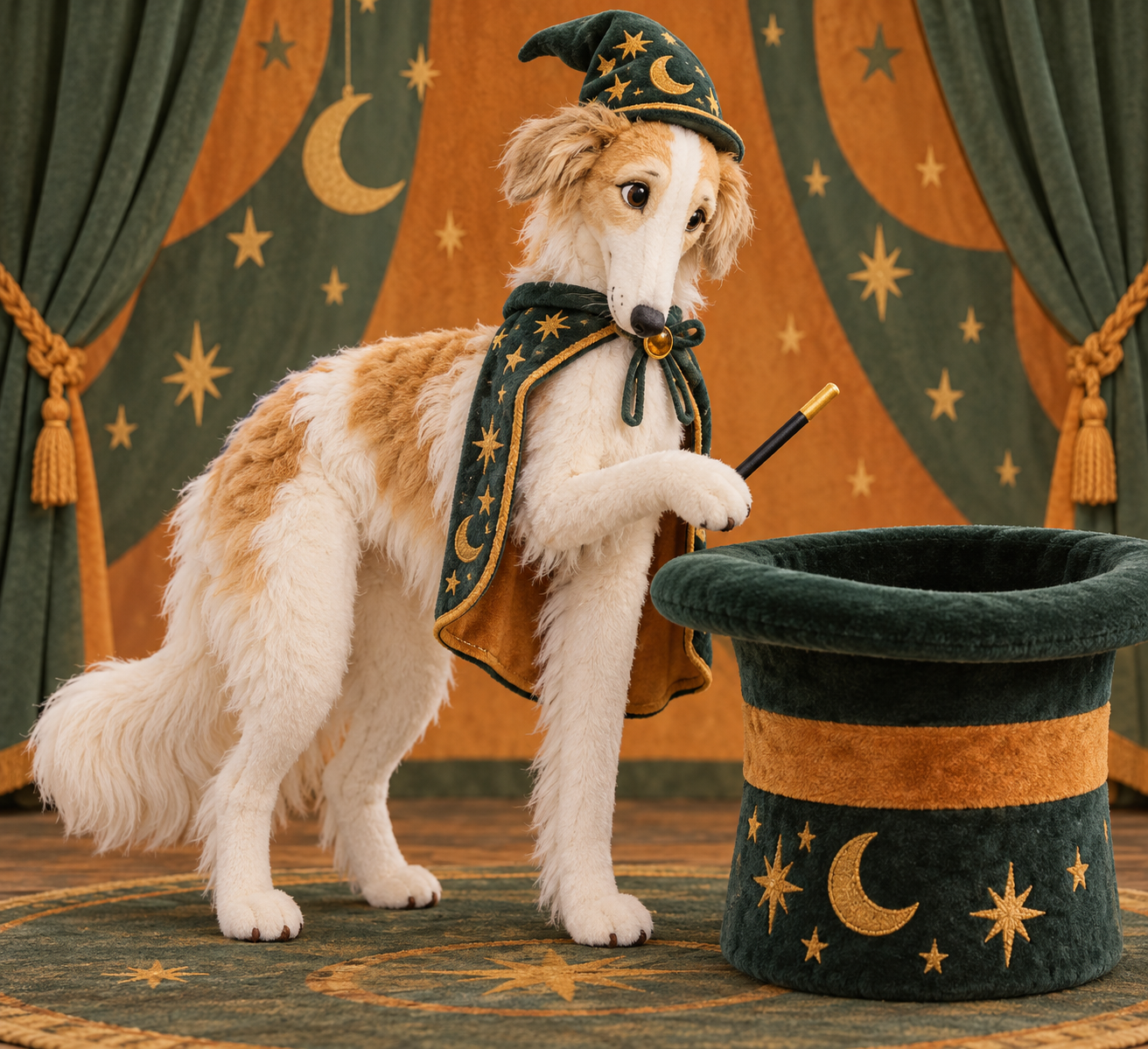
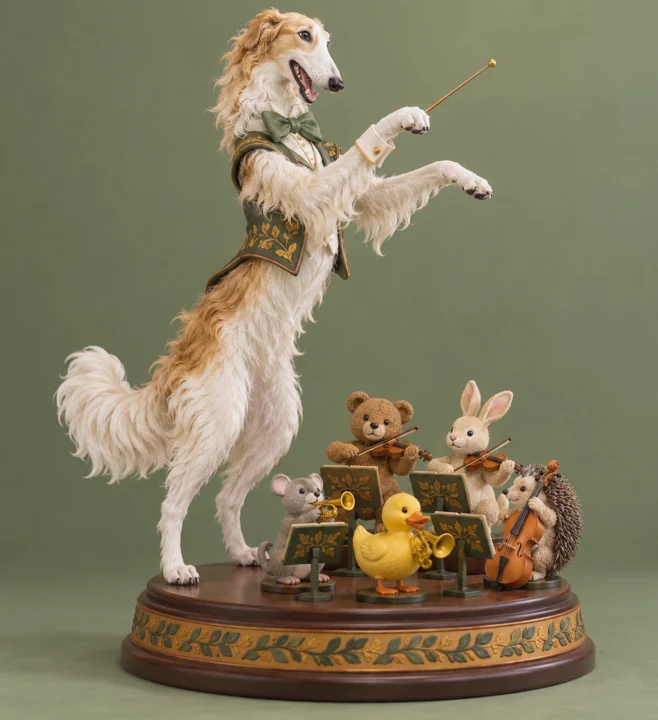
Combine the available parts, choose a name and take a little joy home.