Border Collie vs Australian Shepherd: differences and which suits you
Border Collies and Australian Shepherds both need mental work and activity. Border Collies are responsive and focused workers; Australian Shepherd profiles emphasise herding and guarding instincts. Similar colouring does not mean identical needs, and intelligence is not a substitute for teaching.
Both suit owners who schedule scent work, learning and rest. Avoid endlessly increasing ball-chasing arousal with a Border Collie; practise calm visitor manners and supervised interactions with an Aussie. Assess sustained training capacity before choosing either for easy companionship.
Everyday care and appearance
Border Collie vs Australian Shepherd: differences and which suits you
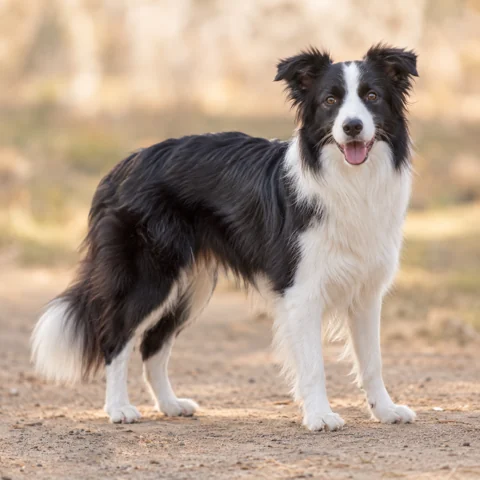
Athletic body slightly longer than tall, smooth movement and a focused gaze.
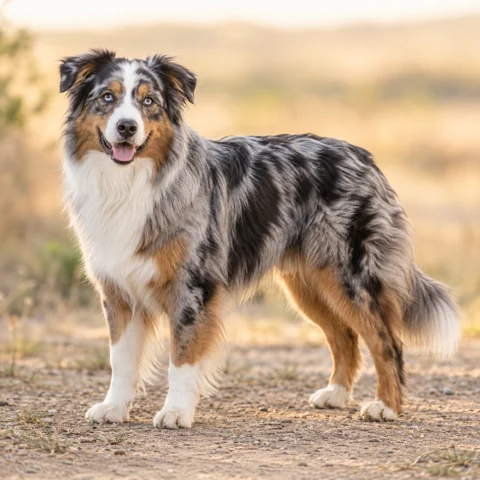
Medium-sized and moderately boned, this agile, solid dog is slightly longer than tall; preferred heights are 51–58 cm for males and 46–53 cm for females. The triangular ears fold forward or to the side when alert, and the tail may be naturally long, naturally short or docked where permitted.
Coat
Moderately long or smooth coat with dense soft undercoat; many colours, with white not predominant.
The medium-length, weather-resistant coat is straight to wavy, with an undercoat that varies by climate. Accepted colors are blue merle, black, red merle and red, each with or without white or tan markings.
Temperament and training
Alert, responsive and keen to work; needs clear rules and practice settling.
The standard describes an intelligent, loyal worker with strong herding and guarding instincts and the stamina to work all day. It is generally even-tempered but may be reserved at first meetings; individuals differ, so patient, reward-based training and a predictable routine help teach both engagement and rest.
Exercise, grooming and daily care
Combine sniffing, learning and rest; ever more intense ball chasing does not replace purposeful work.
Brush the medium-length coat regularly, checking feathering behind the ears and legs for tangles; brush more often during heavier shedding. Offer movement and mental work through walks, scent games and progressive training. Use reward-based practice for recall, settling and visitor manners, mindful of herding and guarding instincts. Supervise interactions with children and other animals so chasing or gathering behavior does not become a habit.
Common questions
Which is easier to care for: Border Collie or Australian Shepherd?
Both suit owners who schedule scent work, learning and rest. Avoid endlessly increasing ball-chasing arousal with a Border Collie; practise calm visitor manners and supervised interactions with an Aussie. Assess sustained training capacity before choosing either for easy companionship.
Can either live in an apartment?
Apartment suitability depends on routine and stimulus management, not floor area alone. Lift doors, running children and pets can prompt chasing. Both need settling, safe lead handling, alone-time practice and grooming.
Sources and limits
Recommendations are editorial interpretations of the breed profiles, not guarantees about an individual dog. Age, breeding, socialisation, training and health matter; consider the individual dog, your time and budget.