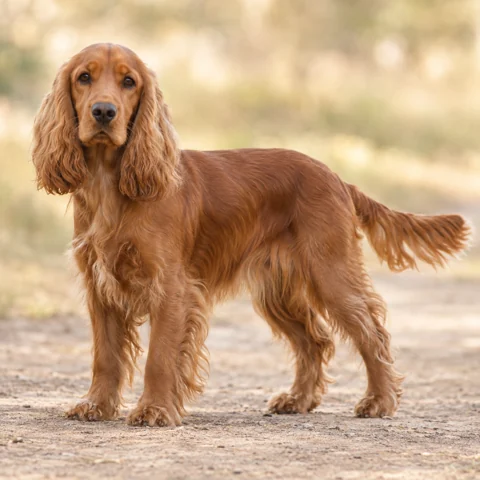
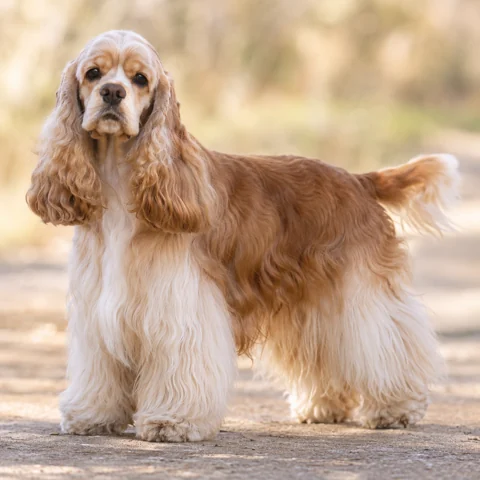
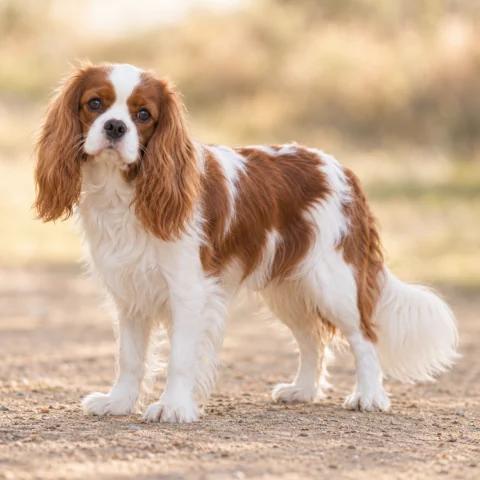
| Size and build | Sturdy and compact, it is approximately as tall at the withers as it is long from withers to tail root; males stand about 39–41 cm and females 38–39 cm. The ears are low-set with leathers reaching the nose tip, and the tail is set slightly below the back and carried no higher than back level. | Sturdy and compact, the body is slightly longer than tall, with a topline sloping gently toward muscular hindquarters; the long ears sit no higher than the lower eye line, and the standard describes a docked tail carried level with or just above the back. Ideal adult height is 15 inches for dogs and 14 inches for bitches, with half an inch of variation either way; colour varieties do not denote different sizes. |
|---|
| Coat | The coat is flat and silky, never curly, with feathering on the legs and body. Accepted colours are black, red, golden, liver, black and tan, liver and tan; black, orange, liver or lemon with white, with or without ticking; black-white-tan or liver-white-tan; and blue, orange, lemon or liver roan, plus blue or liver roan and tan; solid colours allow only a little white on the chest. | Hair is short and fine on the head, medium-length and silky on the body, and flat or slightly wavy, with feathering on the ears, chest, abdomen and legs. Accepted varieties are black, any solid colour other than black, and parti-colour, including roans; specified tan points are allowed. |
|---|
| Temperament and training | The standard describes a merry, gentle, affectionate yet exuberant dog, busy on scent and fearless in heavy cover. Use sniffing opportunities as rewards in positive training; arousal levels and social behaviour still vary between individuals. | The standard calls for an even temperament without timidity and a merry dog keen to work. Gentle, consistent reward-based training can channel that willingness to cooperate; responses to visitors, other animals and unfamiliar places vary by individual. |
|---|
| Exercise, grooming and daily care | Comb the ear, belly and leg feathering regularly to prevent tangles. After outings, check ears and coat for grass seeds and keep them clean and dry. Provide walks, scent searches and retrieving games. Reward recall and calm settling, and use a lead around wildlife. | Brush the feathering on the ears, chest, abdomen and legs regularly, checking for debris after outings; trim to preserve the natural outline. Provide walks, scent games and retrieving activities suited to a flushing dog. Reward-based recall and calm grooming practice help manage outdoor distractions. A home should have time for companionship as well as coat upkeep and activity. |
|---|