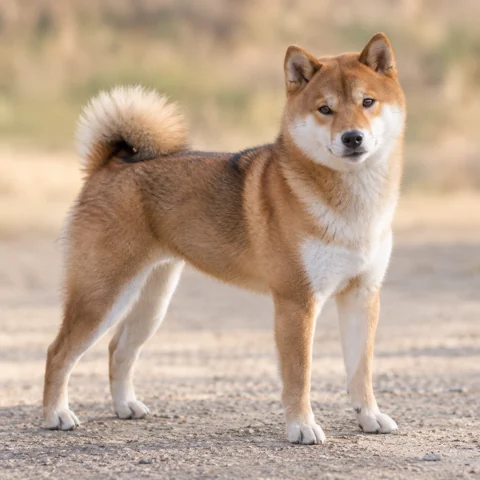
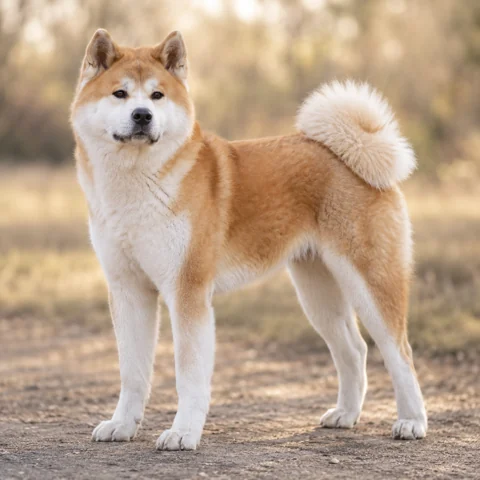
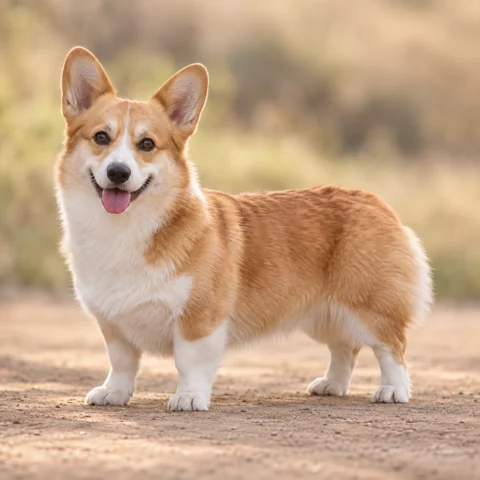
Shibas and Akitas share erect ears, curled tails and double coats, but Akitas are large dogs and Shibas are smaller. They are distinct breeds, not sizes of one breed. Assess lead handling, travel and distance from unfamiliar dogs for the individual.
Explore a Shiba if manageable transport size matters; explore an Akita if you can safely handle a large dog and provide space. Both need gradual socialisation and reward-based training. Independence does not remove the need for company or guidance.
A compact body, erect ears and curled tail form its distinctive silhouette.
Large, sturdy and balanced, the Akita is slightly longer than tall, particularly in bitches. Standard withers height is 67 cm for dogs and 61 cm for bitches, with a 3 cm tolerance either way; the small ears stand erect and the thick, high-set tail curls over the back.
Coat
Straight harsh outer coat and soft undercoat; red, black and tan or sesame with pale urajiro markings.
The straight, harsh outer coat covers a soft, dense undercoat, with longer hair on the tail. Accepted colours are red fawn, sesame, brindle and white; all except white require pale urajiro markings.
Temperament and training
The standard describes faithfulness, alertness and keen senses; independence calls for patient training.
The standard describes a composed, faithful, docile and receptive temperament, though individuals vary. Patient reward-based teaching and predictable rules can help an Akita learn household routines; those traits do not guarantee ease with every stranger or dog.
Exercise, grooming and daily care
Brush the undercoat during seasonal shedding; exercise in secure areas and practise reward-based recall.
Brush the double coat regularly and more often when it sheds, paying attention to the thick tail. Provide walks, scent-based activities and suitable play, reflecting its hunting ancestry and present companion role. Teach leash manners and settling with rewards and consistent boundaries. Allow space for a large dog and manage introductions to unfamiliar people and dogs.
Common questions
Which is easier to care for: Shiba or Akita?
Explore a Shiba if manageable transport size matters; explore an Akita if you can safely handle a large dog and provide space. Both need gradual socialisation and reward-based training. Independence does not remove the need for company or guidance.
Can either live in an apartment?
Check building rules, lifts and walking routes. A smaller Shiba still needs exercise and doorway safety; assess handling an Akita in narrow corridors, around visitors and in vehicles. Both require shedding cleanup.
Sources and limits
Recommendations are editorial interpretations of the breed profiles, not guarantees about an individual dog. Age, breeding, socialisation, training and health matter; consider the individual dog, your time and budget.