WOOFMAP · CANINE ARCHIVENO. 274
Spitz and primitive types
Greenland Dog
Greenland Dog
✳ woofmap.comGreenland; under the patronage of Denmark.
WOOFMAP · CANINE ARCHIVE · NO. 274
Greenland Dog
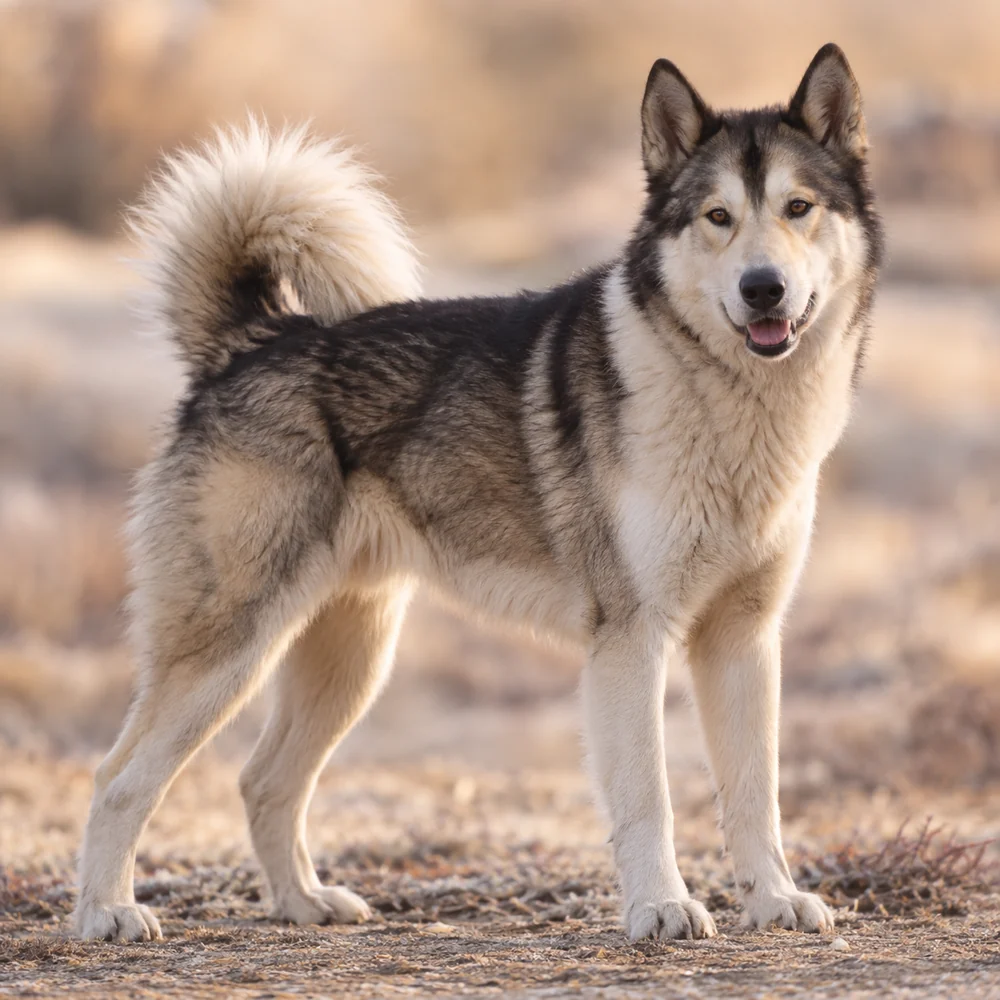
An Arctic sled dog built for strength and endurance.
AI-generated realistic breed image, for visual reference.
This Greenland Dog page is still waiting for a voice. Live with a Greenland Dog? Share a natural bark, howl or whine and let others hear a little of your dog’s everyday life.
If we feature your recording, we’ll credit you or your dog using the name you choose.
A 5–15 second phone recording in a quiet setting is perfect. Capture a natural moment without startling or disturbing your dog. Audio or video with sound is welcome.
Share your dog’s voice ↗[email protected]Attach your recording, breed and preferred credit. Please confirm you recorded it and allow woofmap to feature it.
Thank you for helping us build a playful Woof Planet together. Every little woof deserves to be heard.
Spitz and primitive types
Greenland Dog
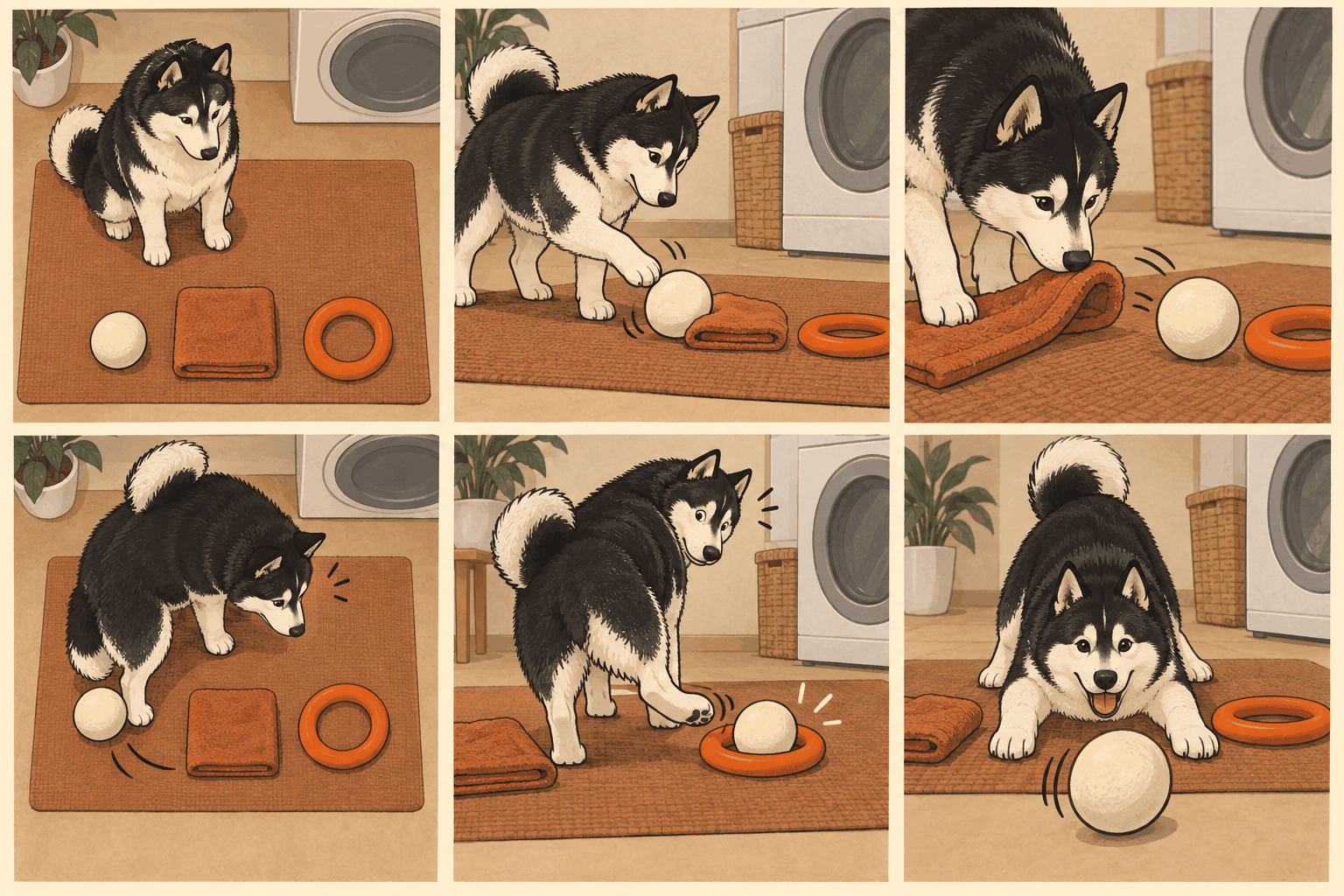
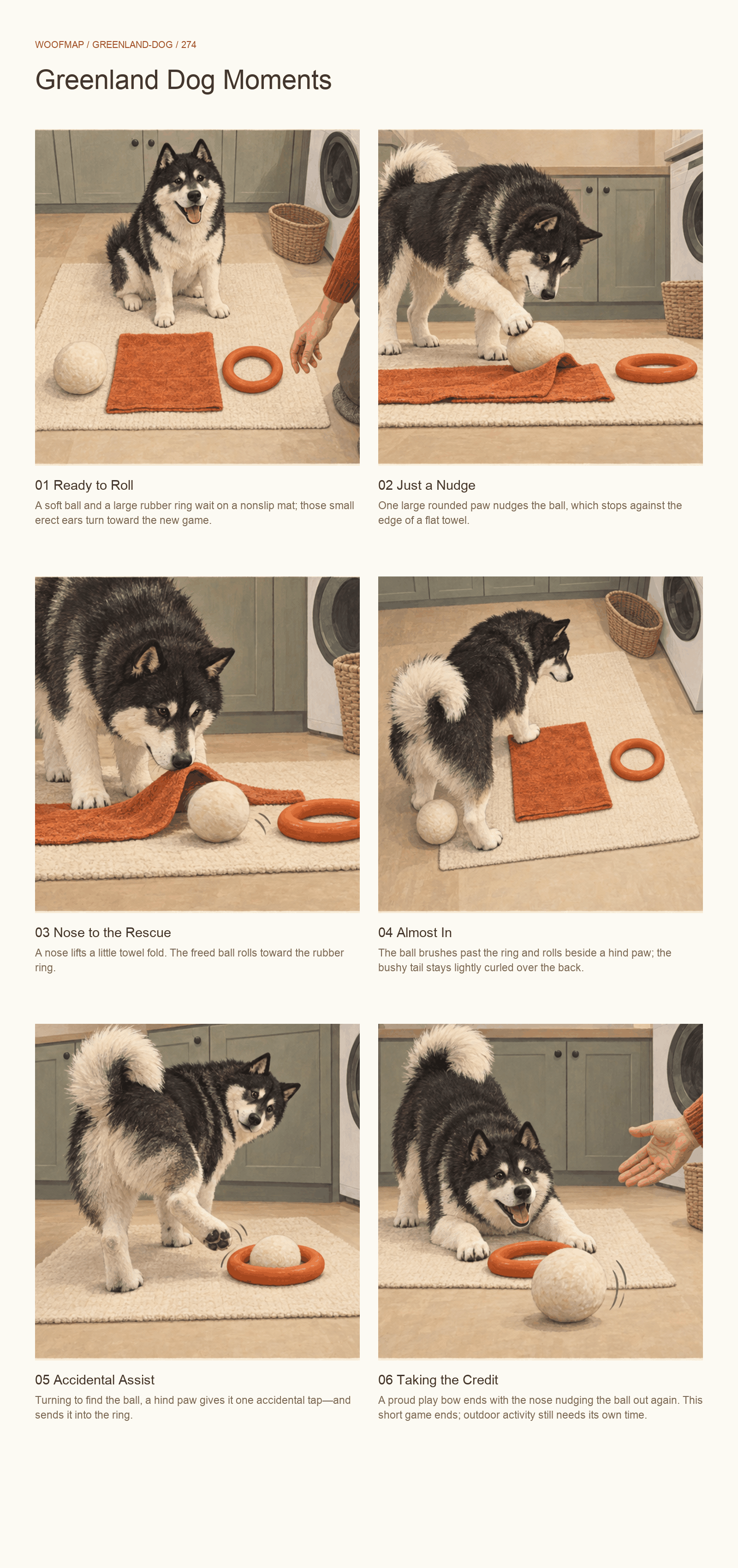
One soft ball, one rubber ring and one flat towel turn a tiny indoor game into a rolling joke. This brief play break does not replace substantial outdoor activity.
One of the world’s oldest breeds, the Greenland Dog has been the Inuit people’s only sled dog since ancient times. Breeding selection emphasized sturdy strength, hardiness and endurance, while also considering appearance. The standard also describes it accompanying people through woods or mountains while pulling or carrying their gear.
Strong and compact, the body is slightly longer than it is tall, with substantial bone and muscle. Males stand at least 60 cm at the withers and females at least 55 cm; the small ears are erect, and the bushy tail curves or curls lightly over the back.
Look for a strong, compact, slightly rectangular body, small upright triangular ears and a thick tail carried over the back. Its double coat comes in many permitted colours, so no single colour pattern defines the breed. The standard specifies one breed, not separate size or coat varieties.
The standard describes an energetic, mentally strong and bold dog, passionate and tireless in sled work. It is generally friendly toward people, including strangers, but is not suited to guarding; its hunting instinct can be strong. Individuals vary, so guide behaviour with clear expectations and reward-based training.
Brush the dense double coat regularly and remove loose undercoat more often during shedding. This energetic working dog needs substantial outdoor activity and can benefit from suitable pulling or carrying tasks. Use reward-based, gradual training that accounts for its strength and working independence. Manage it securely on outings, particularly where its hunting instinct may be triggered.
Not as a primary reason for choosing one: the standard says it is friendly to strangers and unsuitable as a guard dog. Consider instead whether you can meet a strong sled dog’s activity and training needs.
Brush out loose hair and check areas where it collects in the dense coat. The undercoat usually needs more attention during shedding; a double coat is not maintenance-free.
Do not assume so: it was bred for sustained, demanding sled work. Provide varied outdoor activity and suitable task-based games, and keep it securely managed around potential prey.
SOURCE NOTES
Breed traits follow the cited official standards; everyday care advice is our editorial interpretation of coat, build and working purpose.
Coat and size varieties can share a standard. The number is an archive reference, not a rarity score. An independent educational atlas, not a registry publication. Temperament varies; consult a veterinarian about health concerns.
WOOFMAP / GREENLAND-DOG / LITTLE MOMENTS
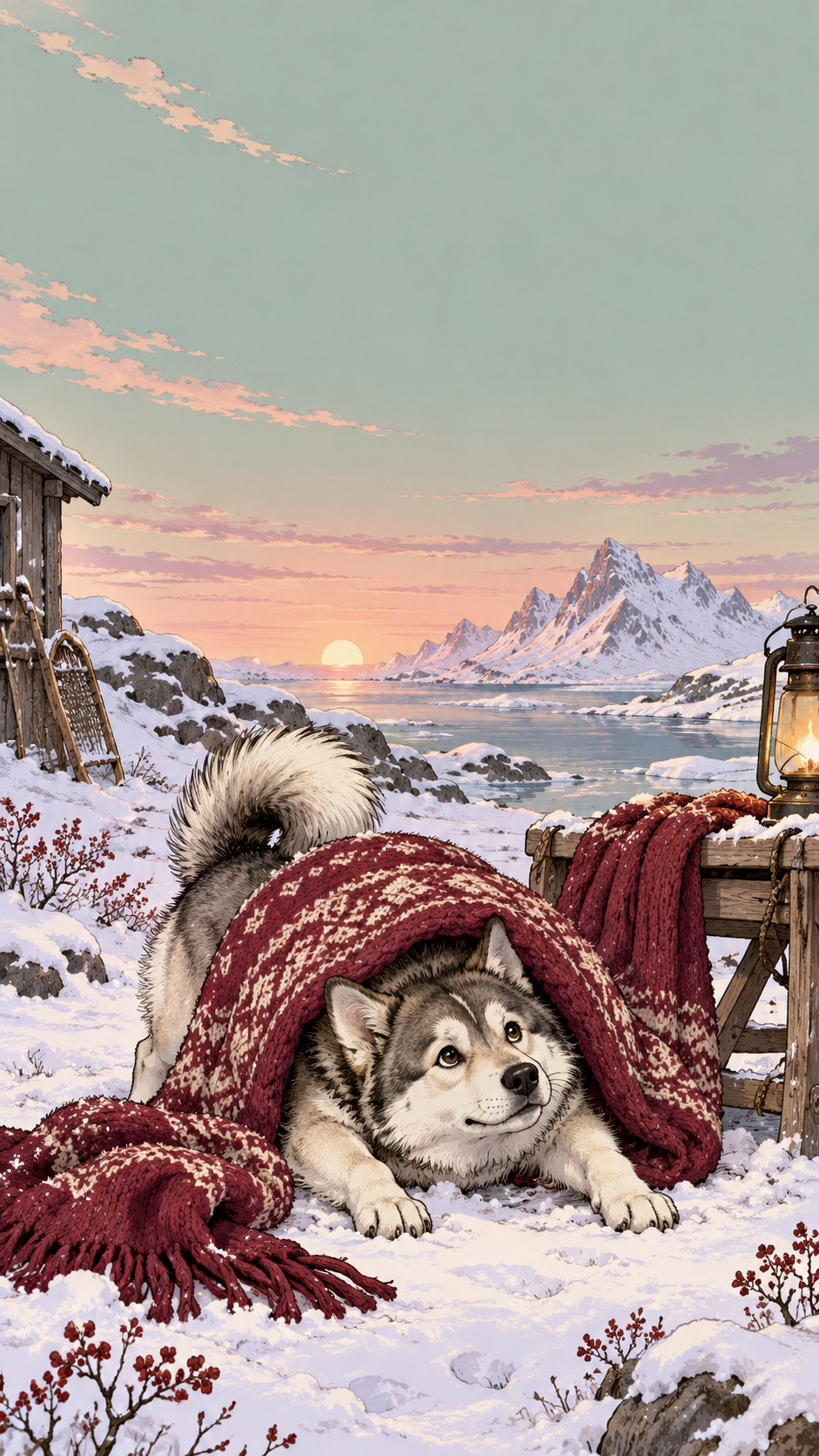
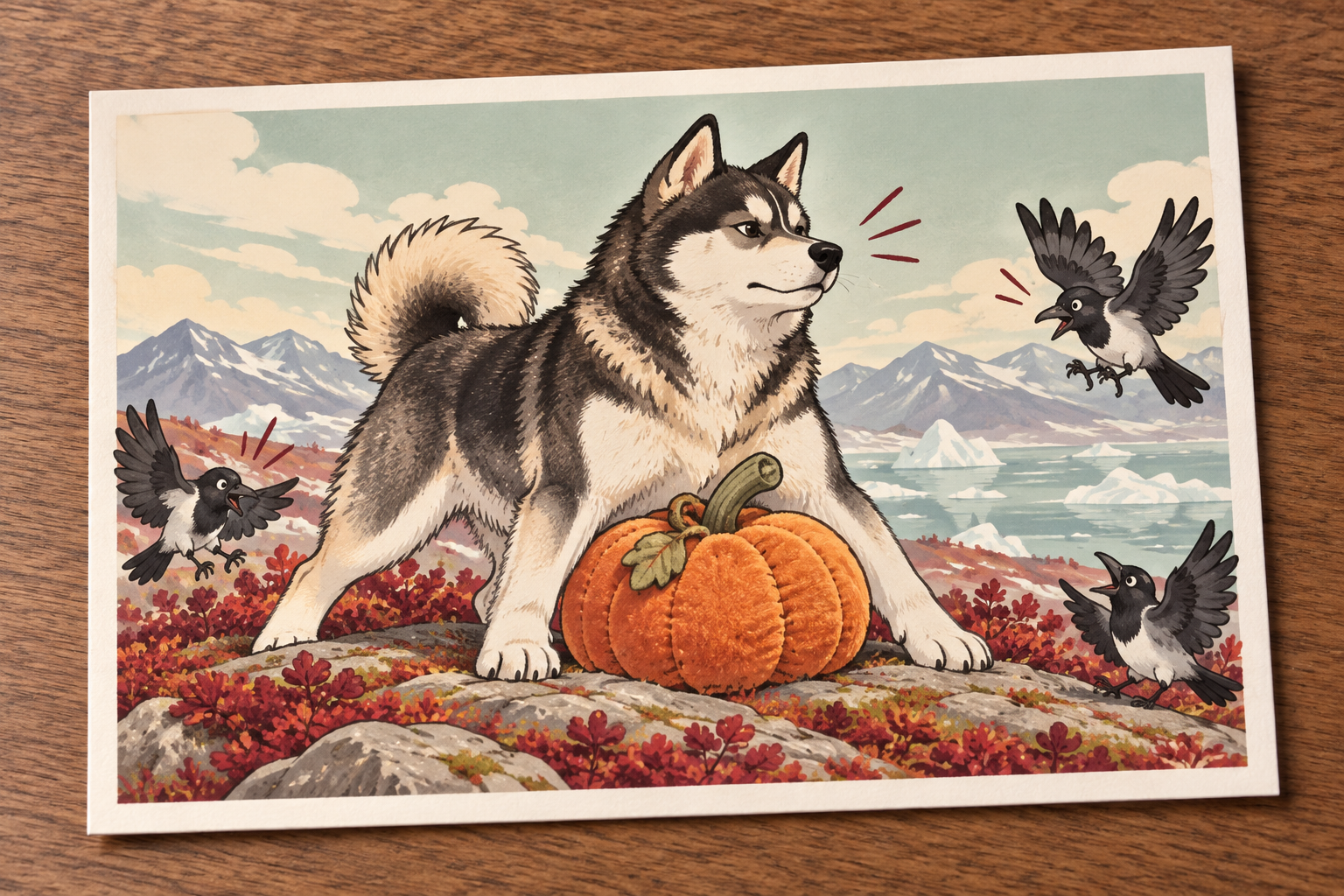
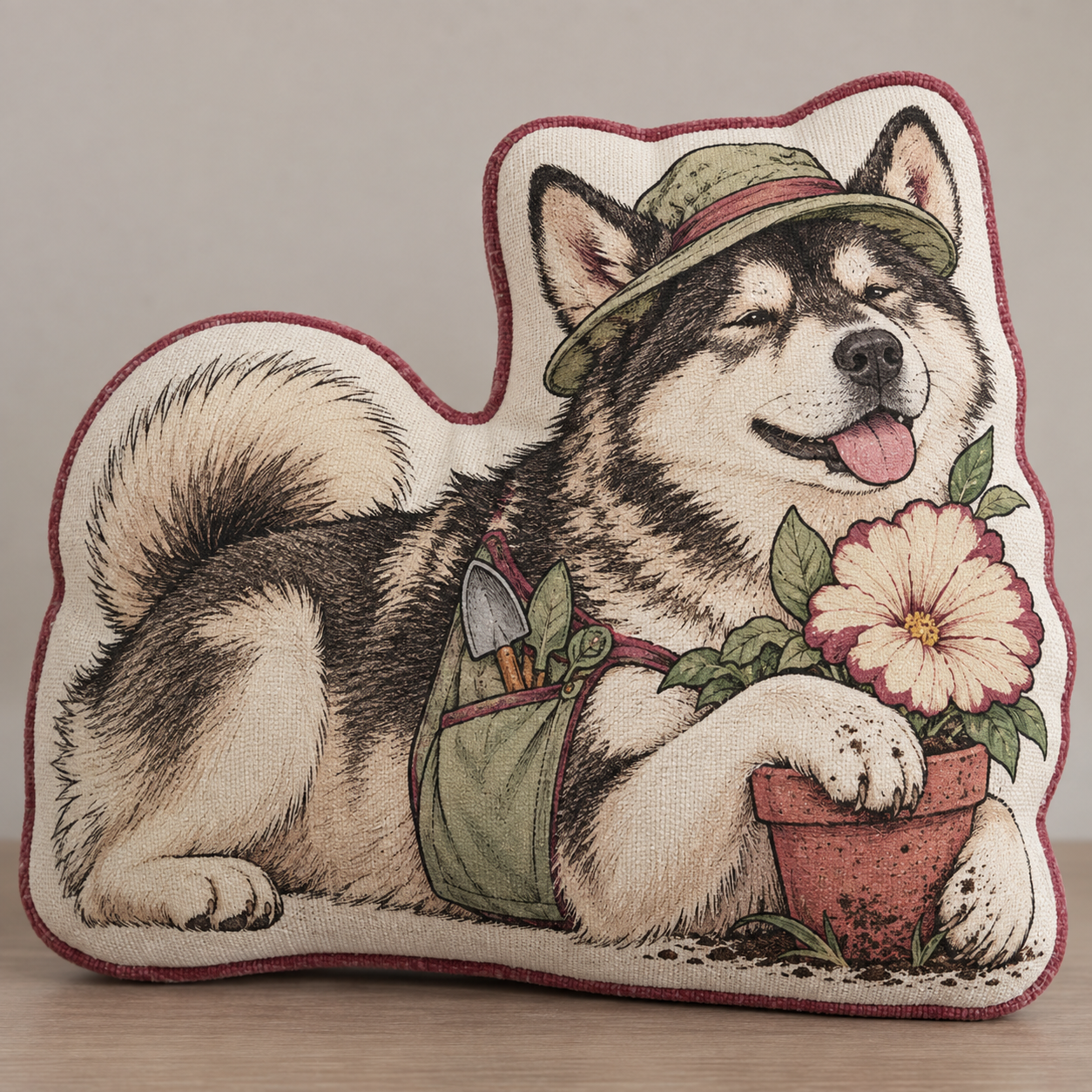
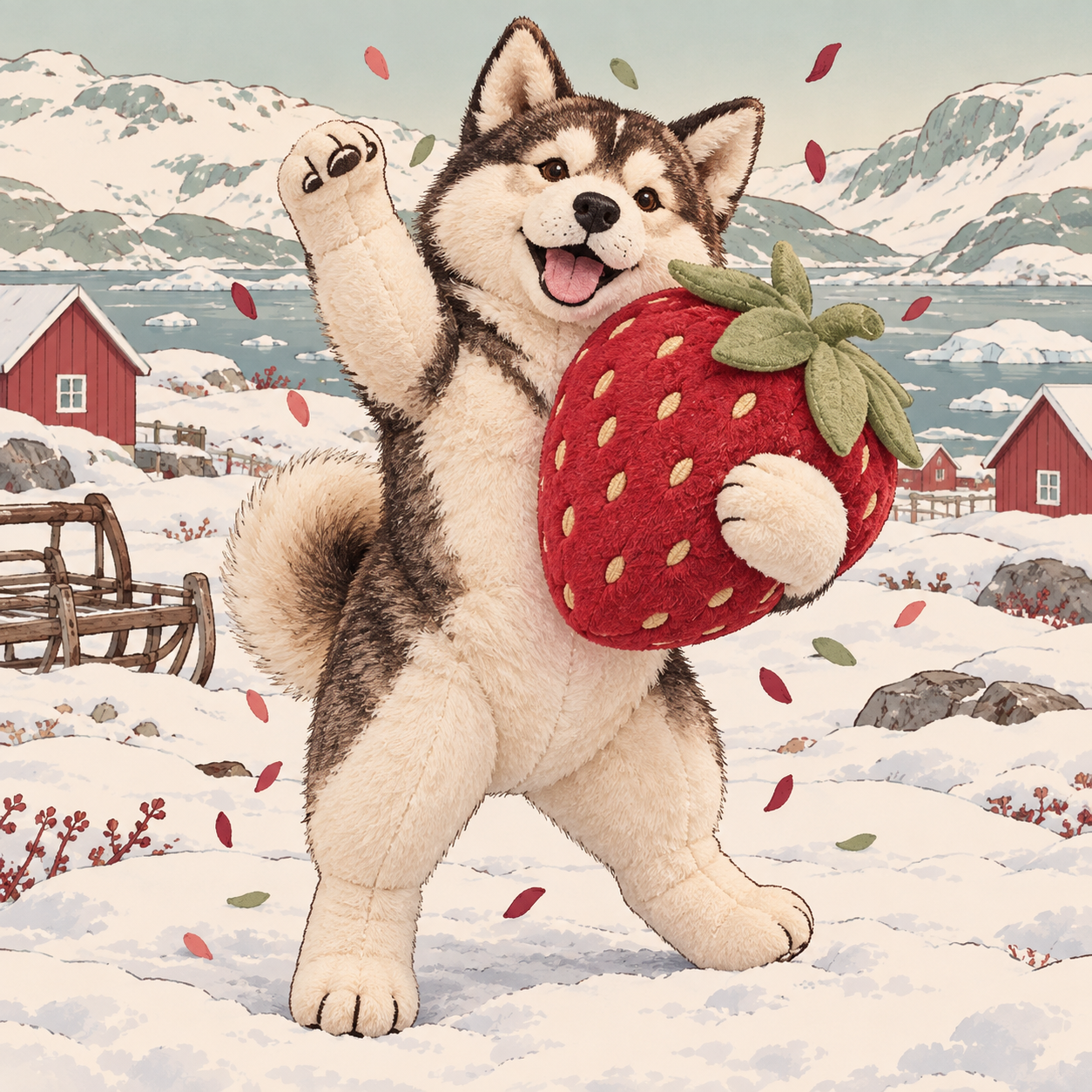
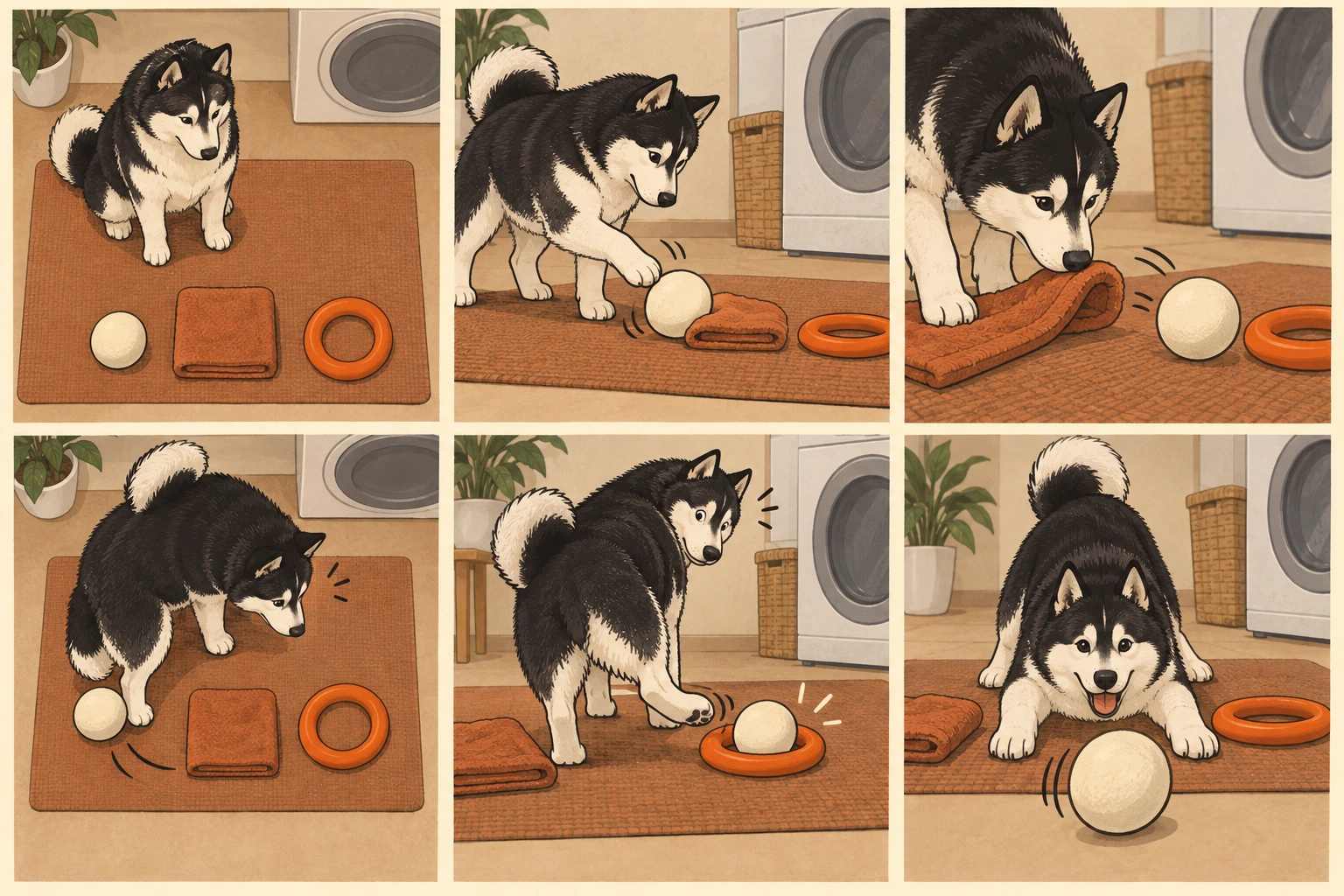
This pack illustrates a black-and-white parti-colour Greenland Dog with small erect ears, a sturdy slightly rectangular body, a dense double coat and a bushy tail lightly curled over its back. Other colours are permitted; the moods belong to this fictional individual.
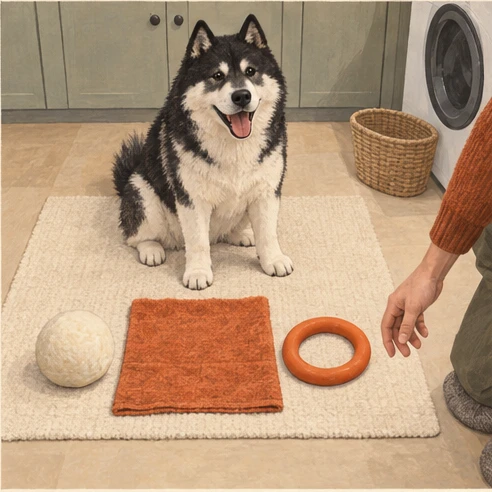
A soft ball and a large rubber ring wait on a nonslip mat; those small erect ears turn toward the new game.
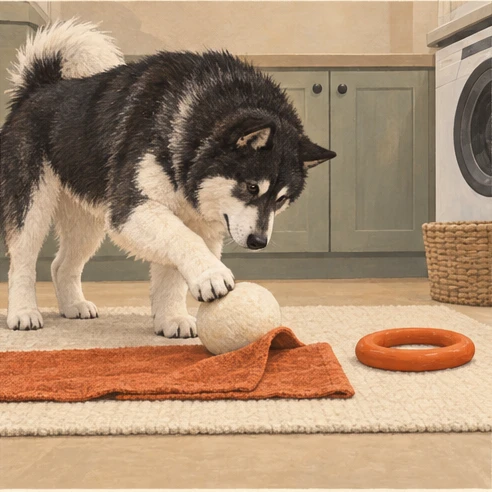
One large rounded paw nudges the ball, which stops against the edge of a flat towel.
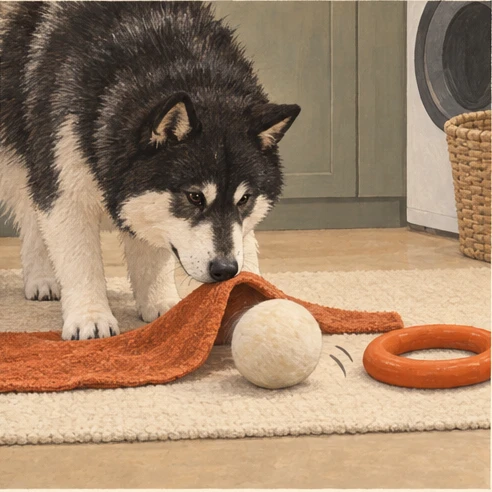
A nose lifts a little towel fold. The freed ball rolls toward the rubber ring.
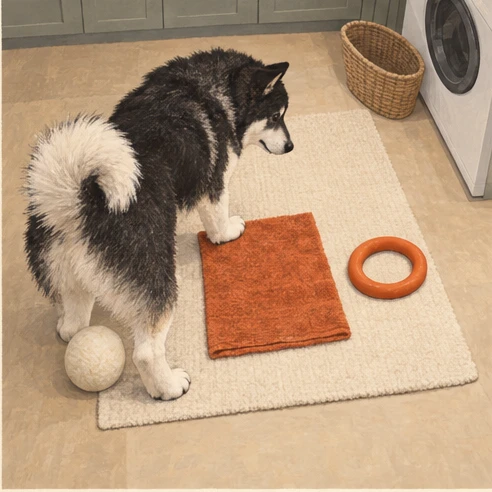
The ball brushes past the ring and rolls beside a hind paw; the bushy tail stays lightly curled over the back.
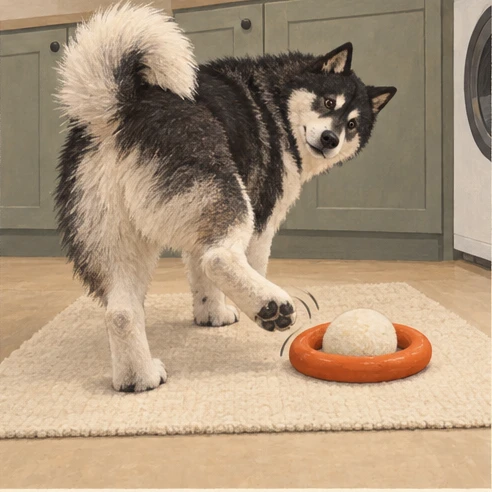
Turning to find the ball, a hind paw gives it one accidental tap—and sends it into the ring.
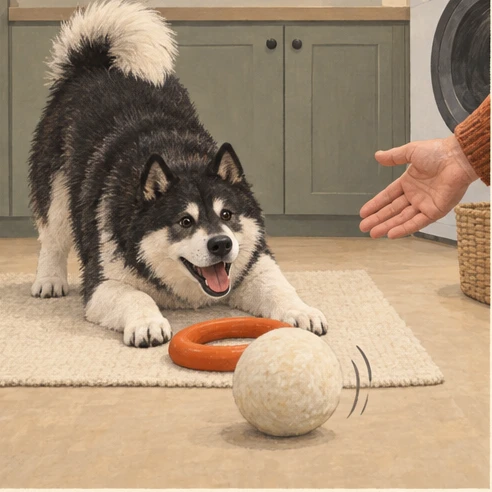
A proud play bow ends with the nose nudging the ball out again. This short game ends; outdoor activity still needs its own time.
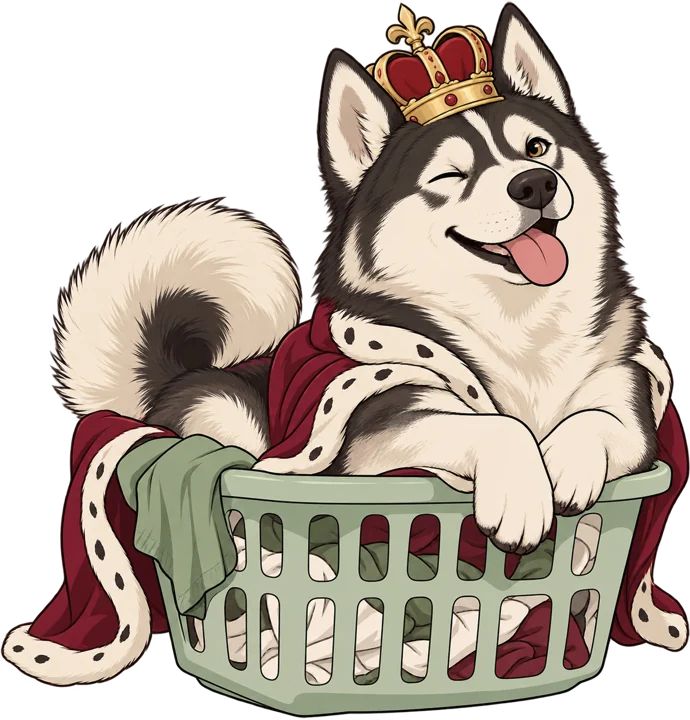
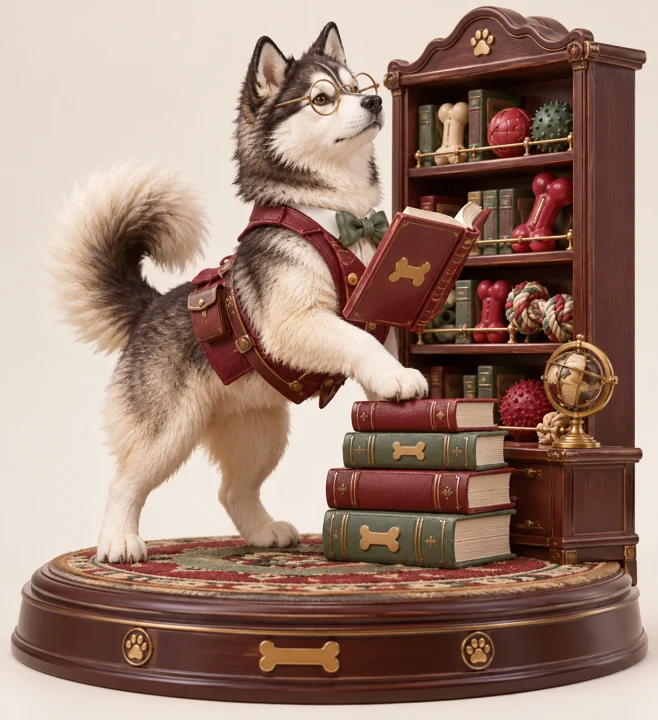
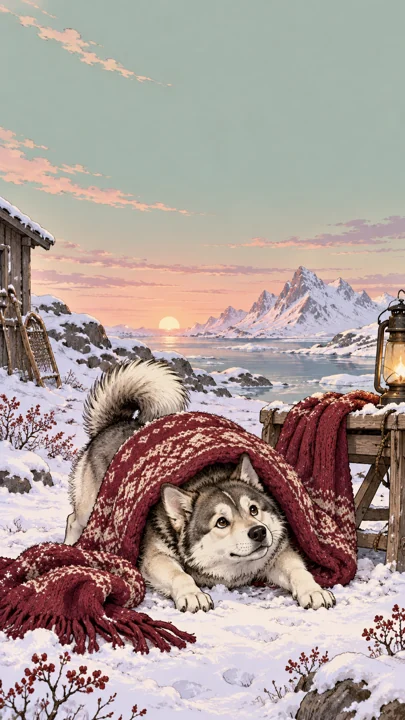
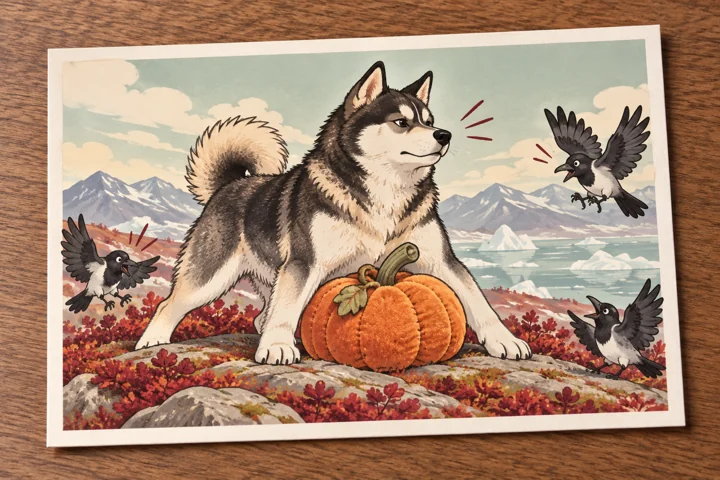
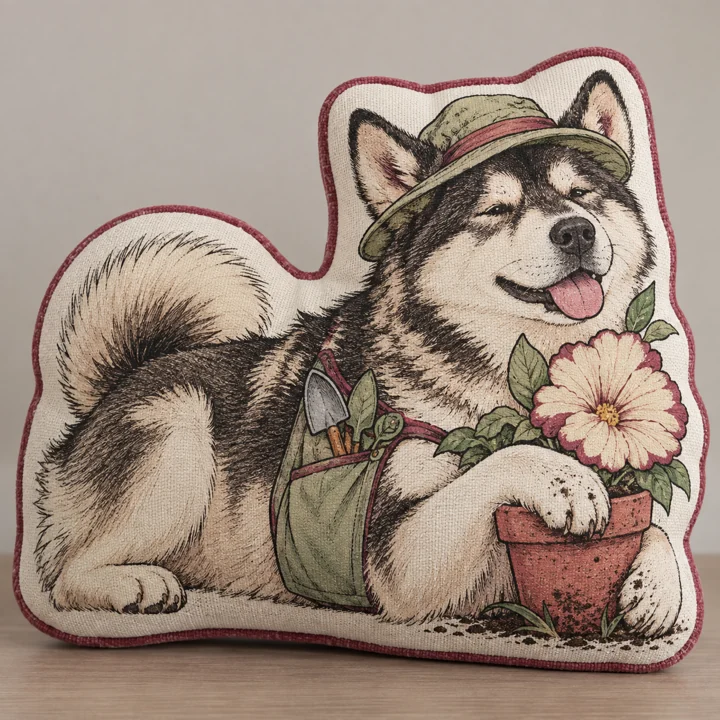
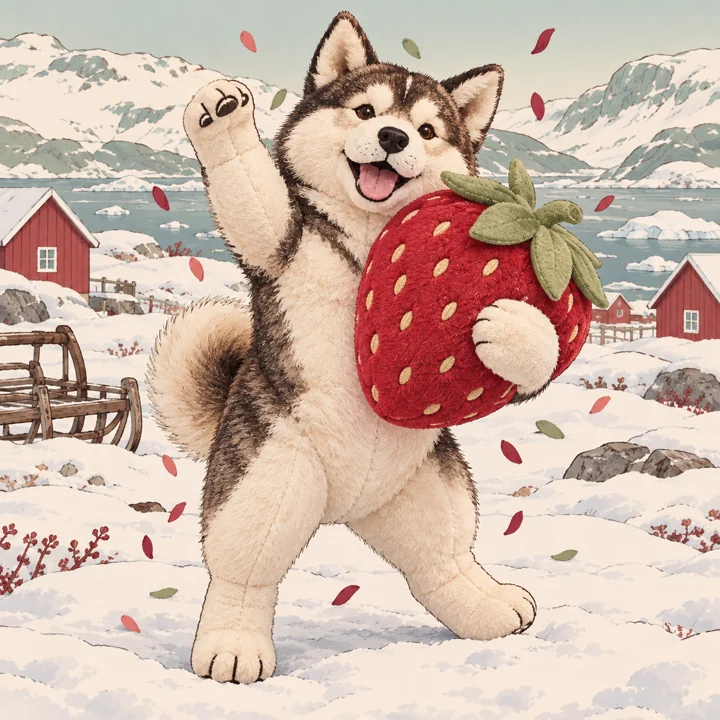
Eight transparent PNGs to save individually. Switch captions on or off for your chats.
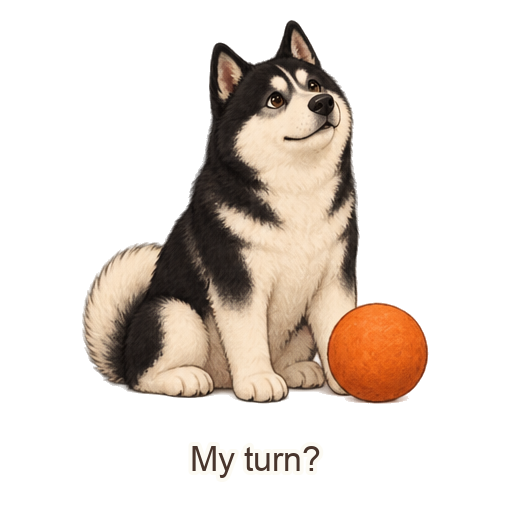 My turn?
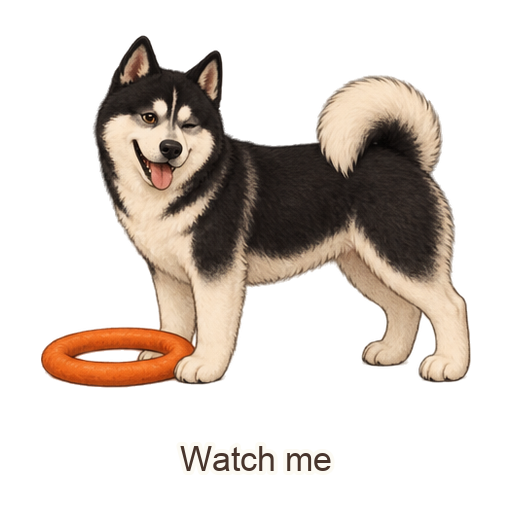 Watch me
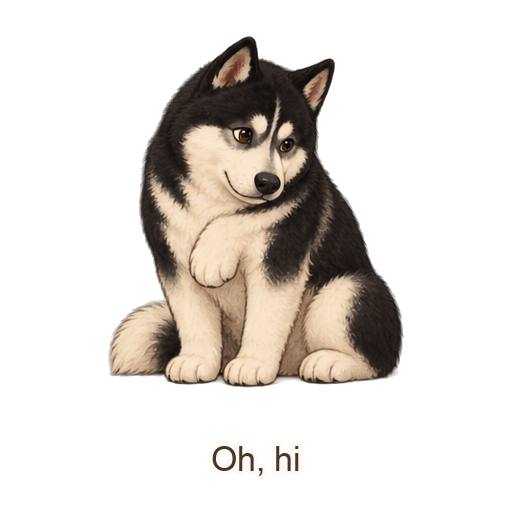 Oh, hi
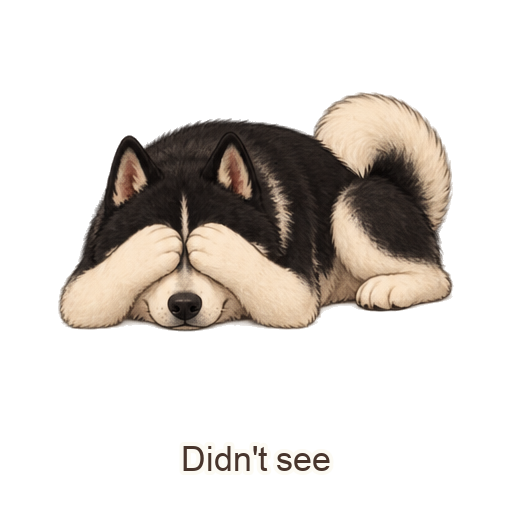 Didn't see
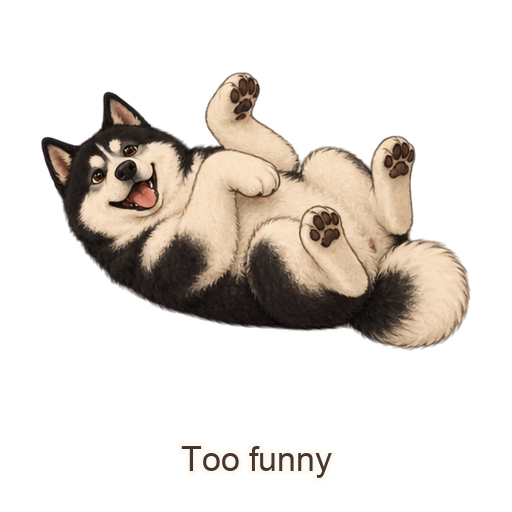 Too funny
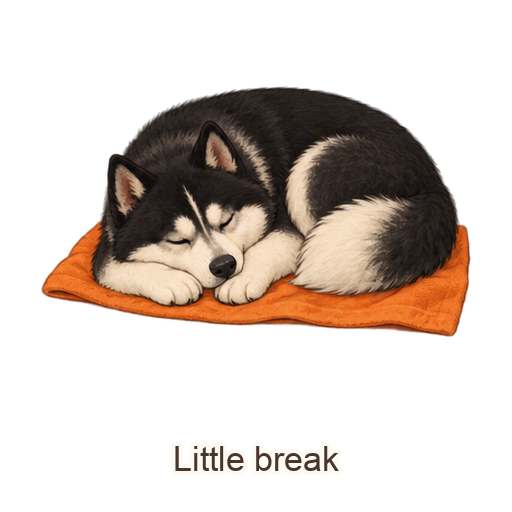 Little break
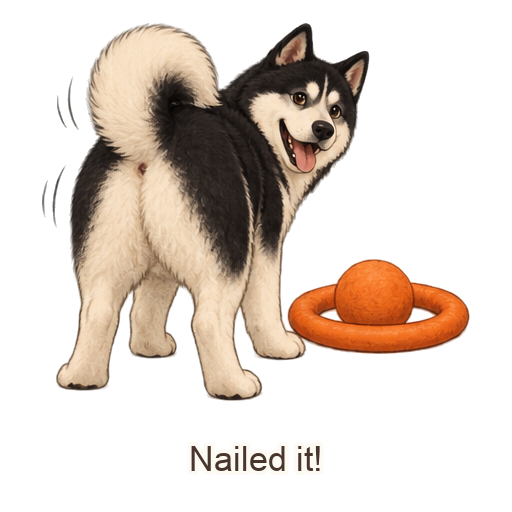 Nailed it!
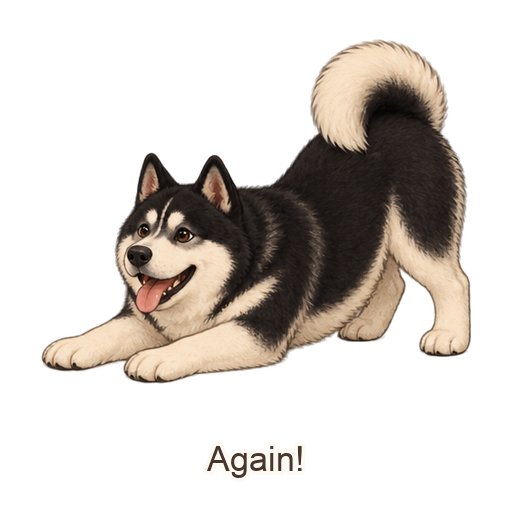 Again!
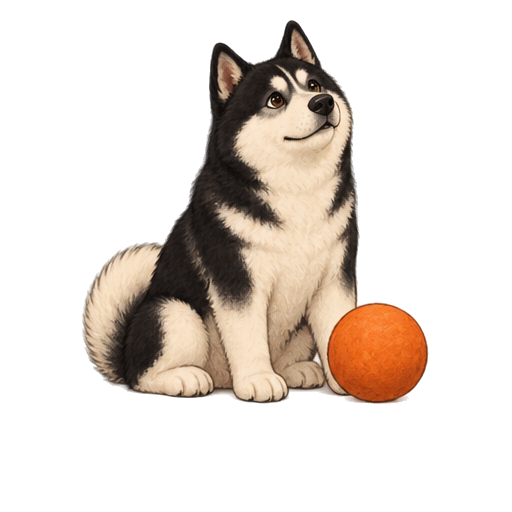 My turn?
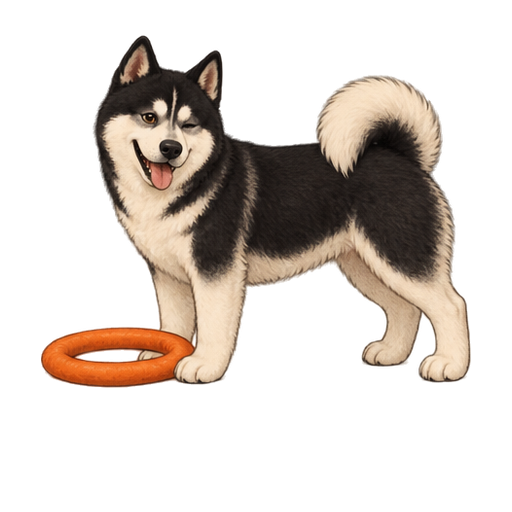 Watch me
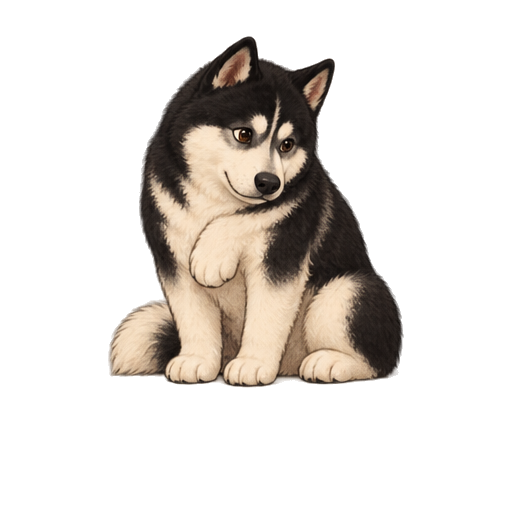 Oh, hi
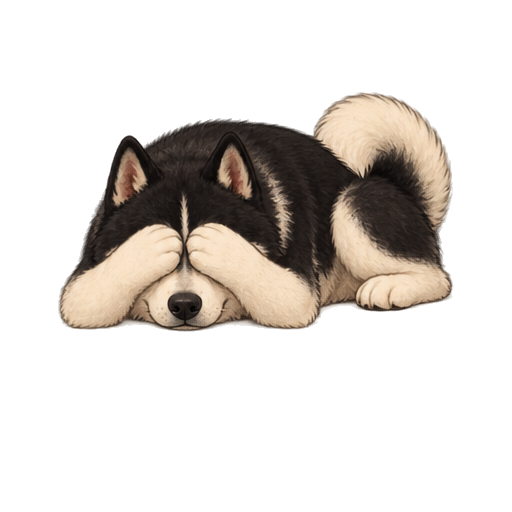 Didn't see
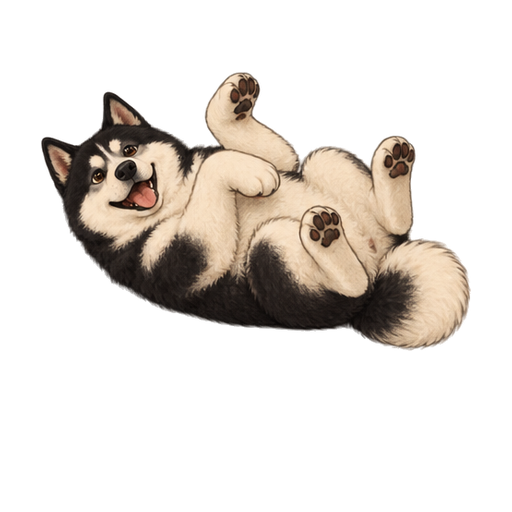 Too funny
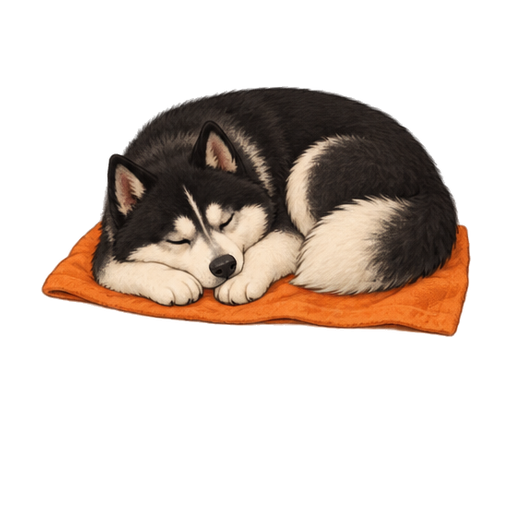 Little break
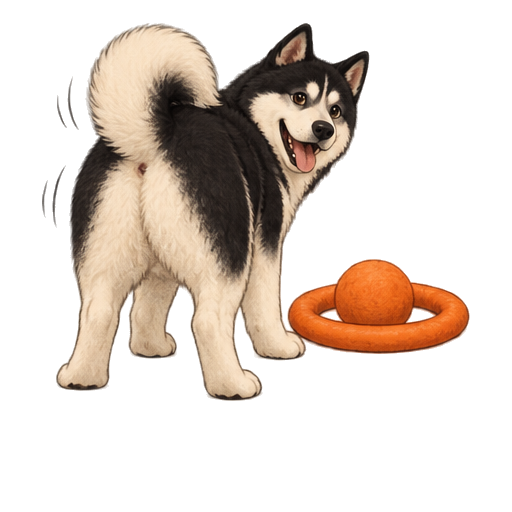 Nailed it!
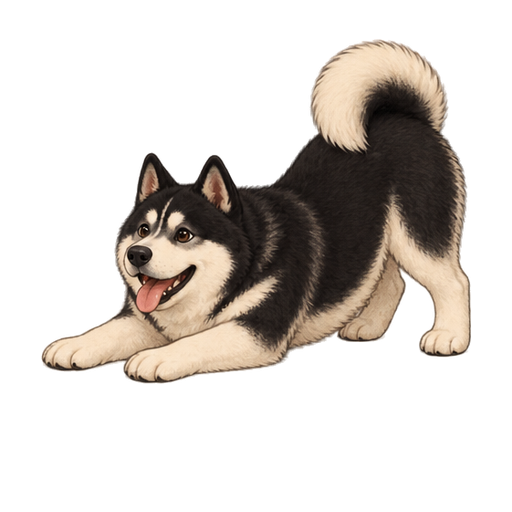 Again!
Original woofmap artwork, assisted by GPT Image 2. Free for personal chats and non-commercial sharing with credit to woofmap.com. Fictional moods do not predict every dog’s temperament; see this page’s factual sources.
Combine the available parts, choose a name and take a little joy home.
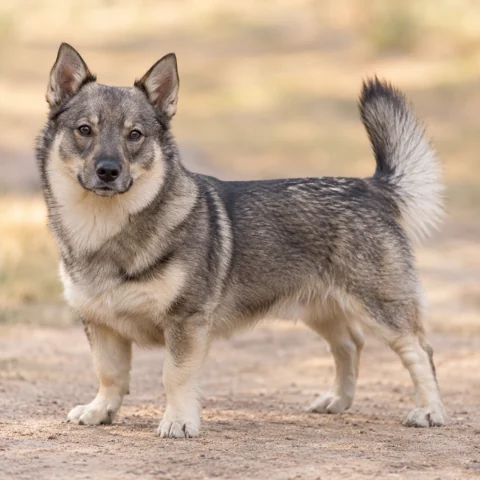 AI realistic image
Spitz and primitive types
Swedish Vallhund
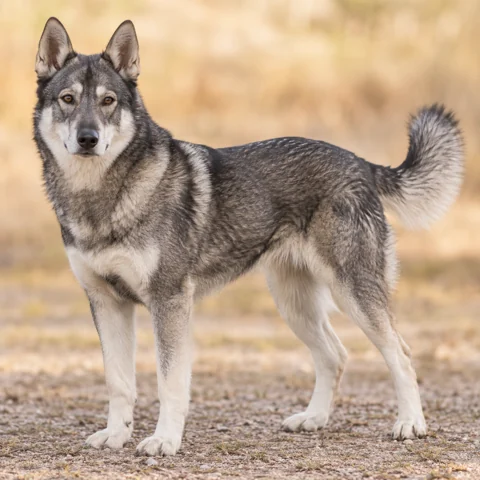 AI realistic image
Spitz and primitive types
Jämthund
 AI realistic image
Spitz and primitive types
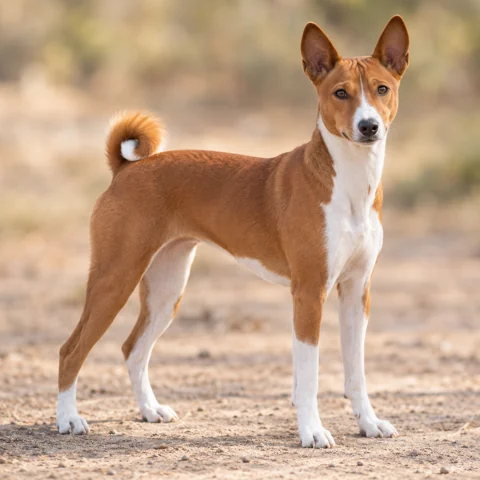
Basenji