WOOFMAP · CANINE ARCHIVENO. 314
Retrievers, flushing dogs and water dogs
Nederlandse Kooikerhondje
Nederlandse Kooikerhondje
✳ woofmap.comThe Netherlands
WOOFMAP · CANINE ARCHIVE · NO. 314
Nederlandse Kooikerhondje
The little decoy dog whose waving tail draws ducks in.
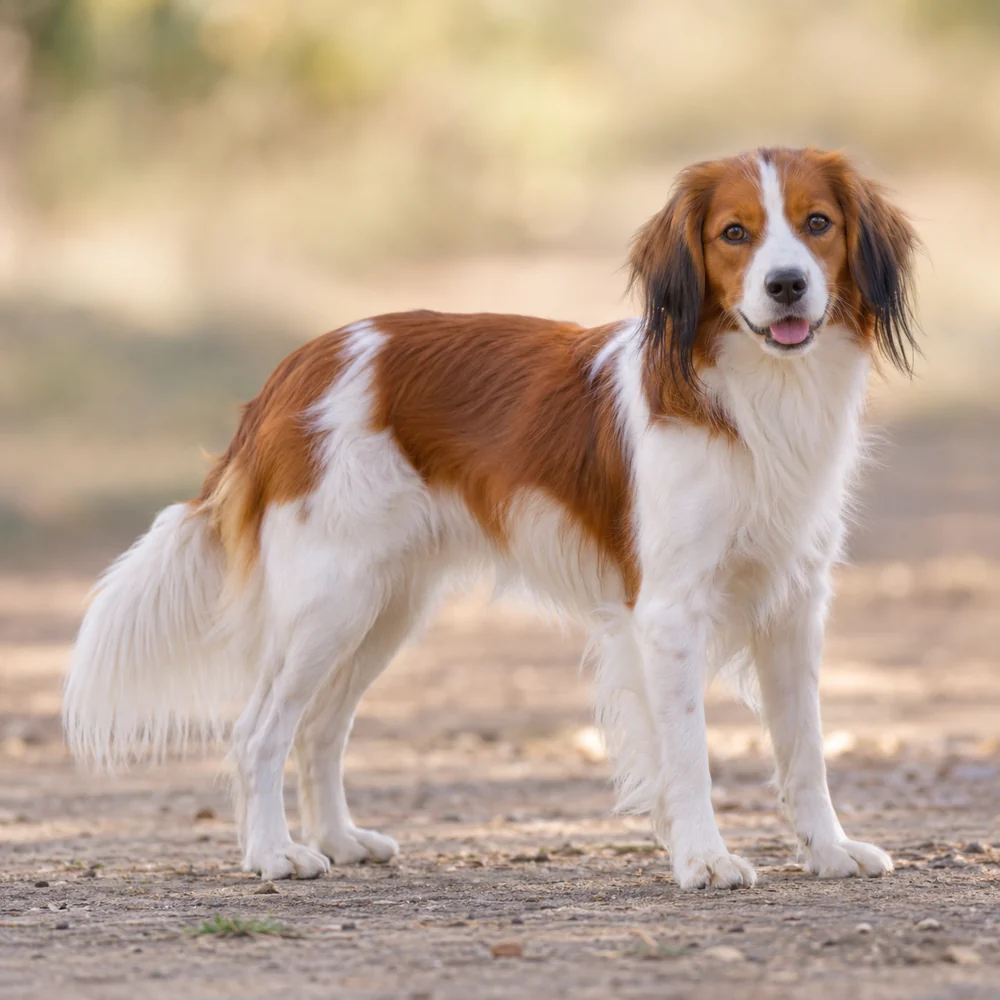
AI-generated realistic breed image, for visual reference.
This Nederlandse Kooikerhondje page is still waiting for a voice. Live with a Nederlandse Kooikerhondje? Share a natural bark, howl or whine and let others hear a little of your dog’s everyday life.
If we feature your recording, we’ll credit you or your dog using the name you choose.
A 5–15 second phone recording in a quiet setting is perfect. Capture a natural moment without startling or disturbing your dog. Audio or video with sound is welcome.
Share your dog’s voice ↗[email protected]Attach your recording, breed and preferred credit. Please confirm you recorded it and allow woofmap to feature it.
Thank you for helping us build a playful Woof Planet together. Every little woof deserves to be heard.
Retrievers, flushing dogs and water dogs
Nederlandse Kooikerhondje
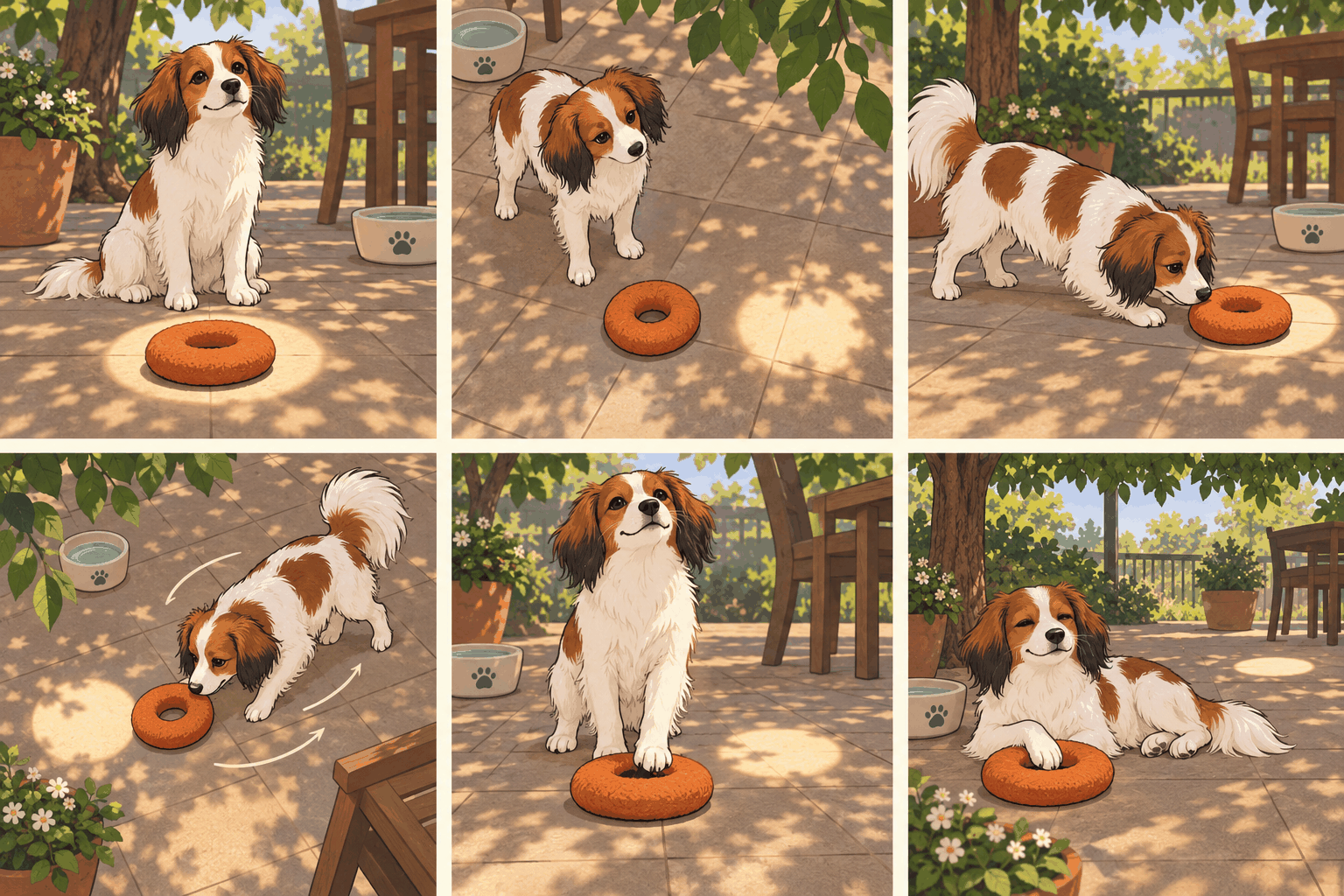
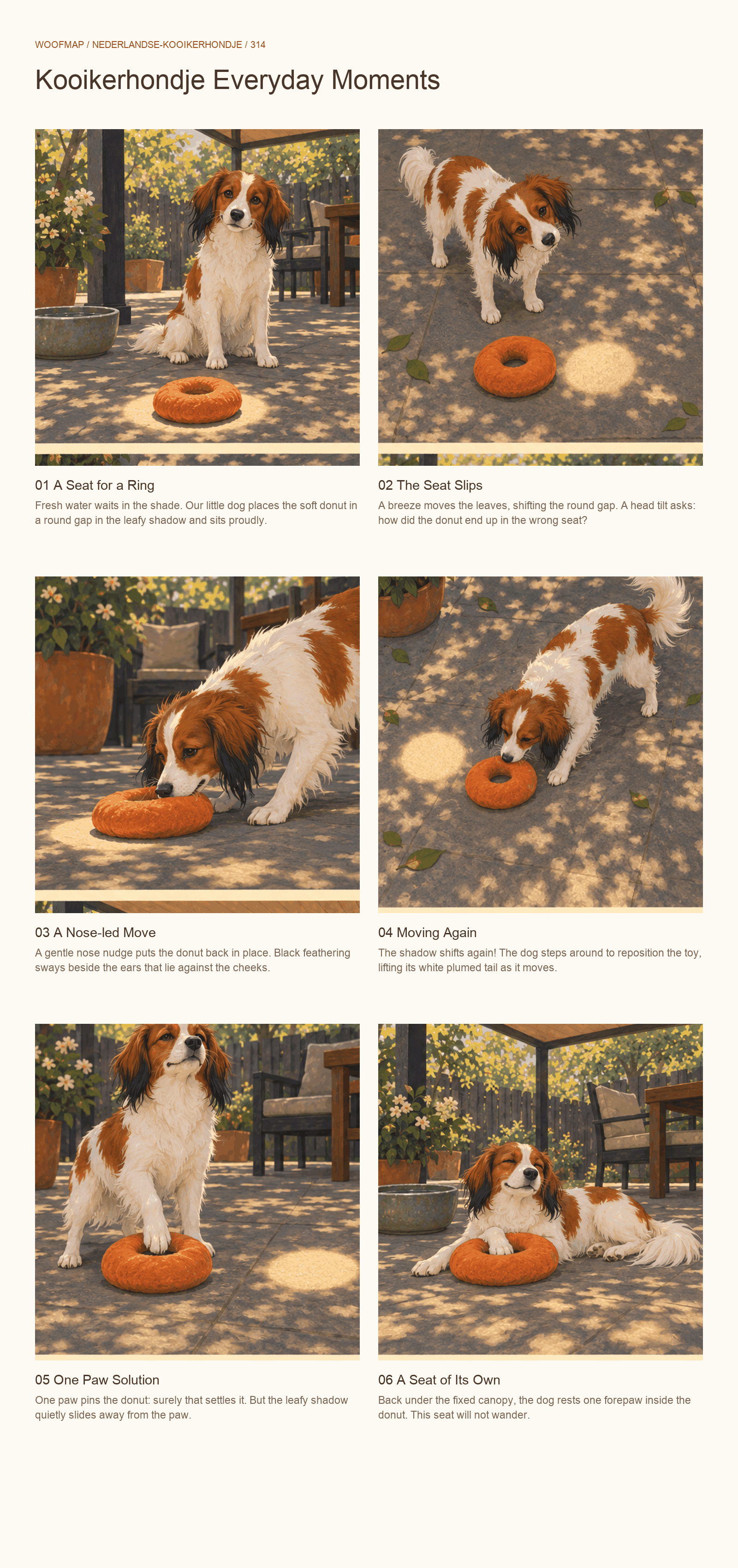
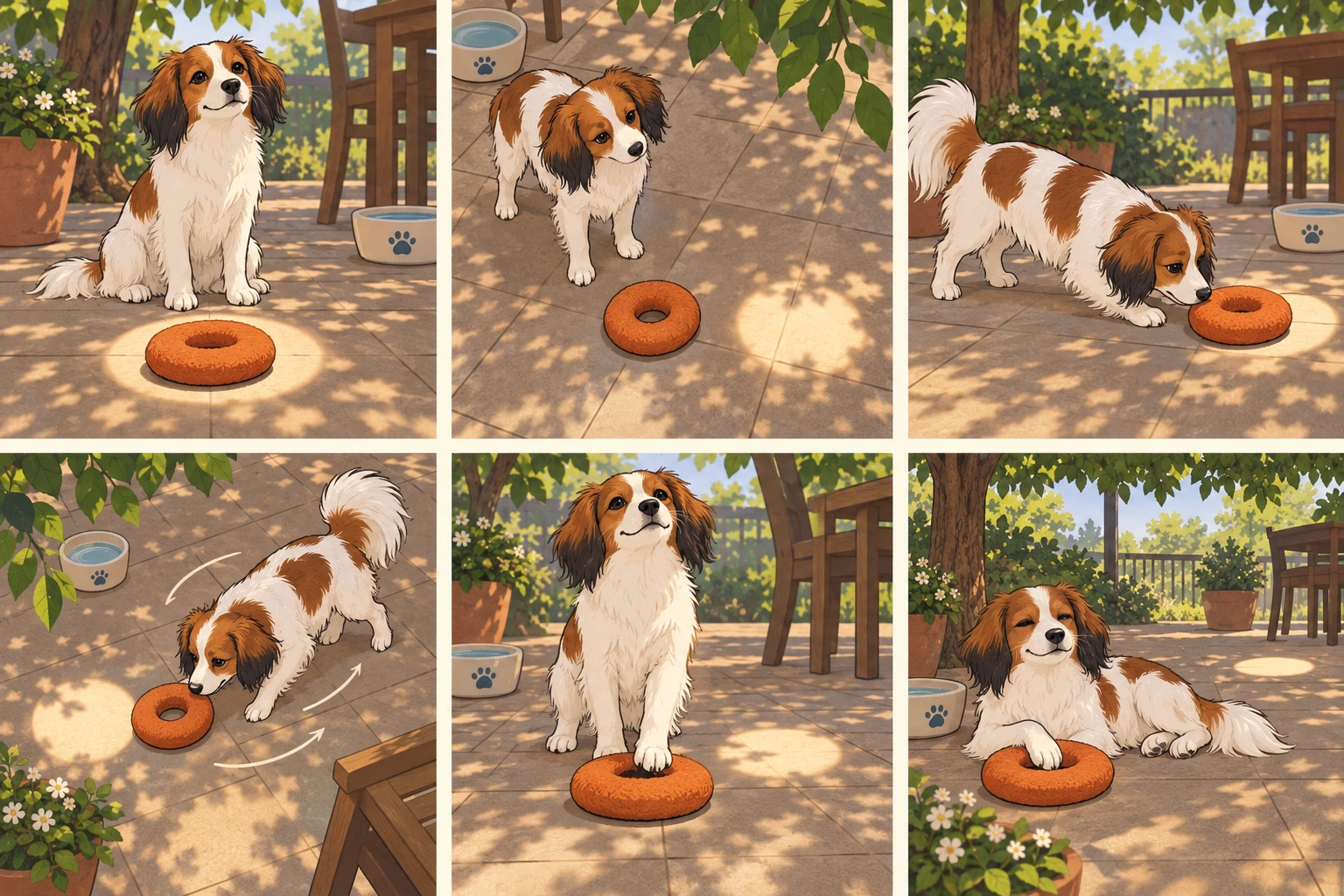
A six-beat wordless gag: the leafy shadow shifts, the toy follows, and a seat that cannot wander finally solves the problem.
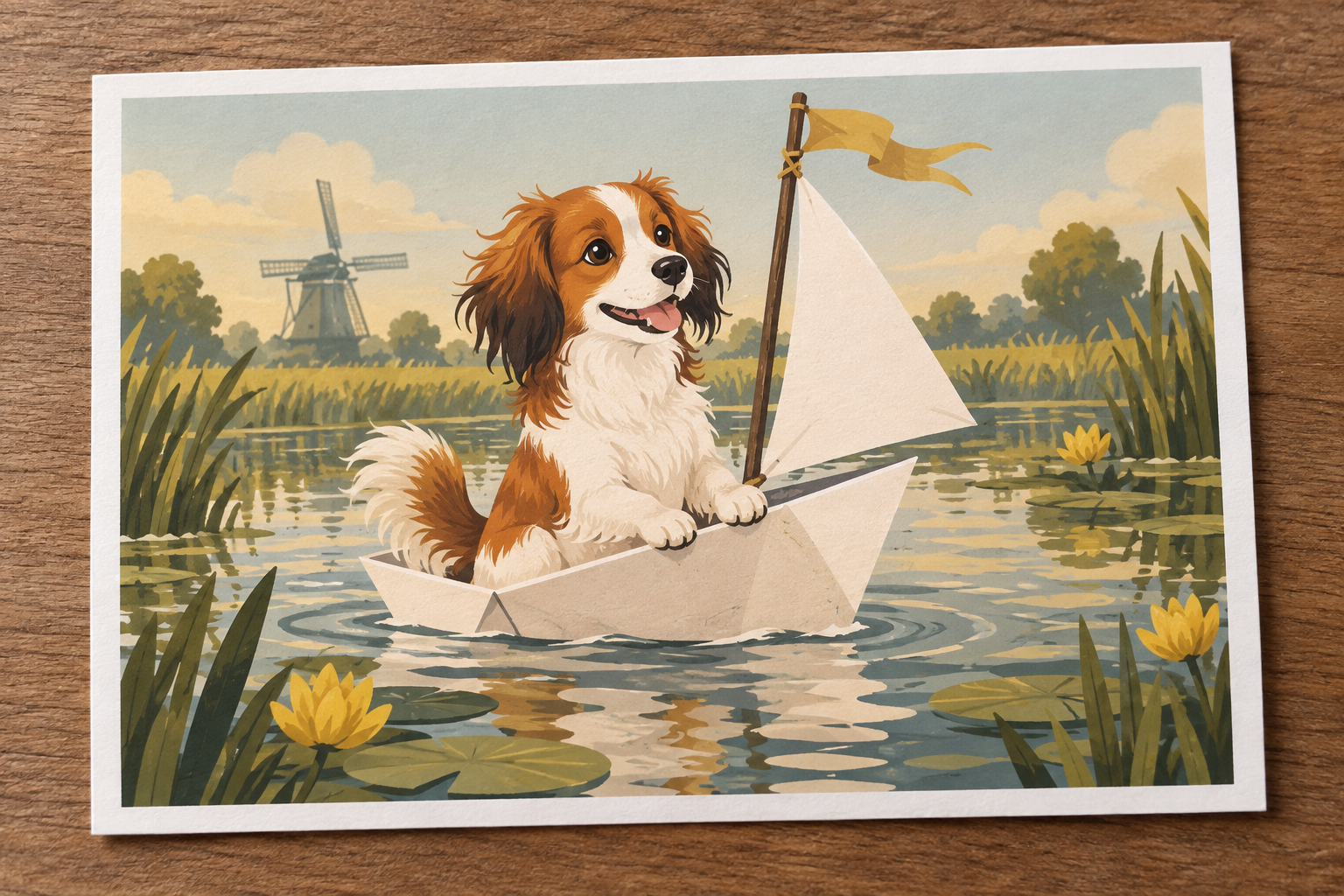
In Dutch duck decoys, it moved between screens and lured curious ducks down a trapping pipe with its waving tail rather than hunting them. Baroness Van Hardenbroek van Ammerstol began recreating the breed in 1942, with a Friesland bitch named Tommy as its founding bitch. The breed was officially recognized in 1971.
Harmoniously built and nearly square, it may be slightly longer than tall. Ideal withers height is 40 cm for males and 38 cm for females, with a permitted tolerance of 2 cm above or 3 cm below; the ears lie against the cheeks, and the feathered tail reaches the hock and rises in action.
Look for a nearly square small dog with clear orange-red patches on white and a visible blaze reaching the nose. Its drop ears lie against the cheeks, often with prized black “earrings,” while the plumed tail lifts gaily in action. This standard specifies no separate size or coat varieties.
The standard describes a lively, agile, self-confident dog with stamina, alertness and enthusiasm for work, without being noisy. Its historical vermin-catching role calls for thoughtful management around small, fast-moving animals and positive, consistent training. Individuals can differ in sociability and intensity.
Brush the medium-length coat and feathering regularly, checking ears, legs and tail for debris after outings; the standard presents it naturally untrimmed. Provide walks, scent exploration and problem-solving games for an energetic working dog. Reward-based recall and calm-waiting practice are useful, alongside a lead where small animals may appear. A home should make room for companionship, activity and consistent boundaries, not assume its small size means little to do.
It can suit someone ready to provide engagement and patient, consistent training. Its compact build does not remove the need for reliable recall practice and management around small animals.
The standard calls for a natural, untrimmed presentation; routine brushing and removing caught debris matter more than shaping the coat. Its developed undercoat means owners should expect some shedding.
Pair walks with sniffing, search games and short training sessions rather than relying on yard access alone. Choose controlled settings for recall practice and stay alert to wildlife outdoors.
SOURCE NOTES
Breed traits follow the cited official standards; everyday care advice is our editorial interpretation of coat, build and working purpose.
Coat and size varieties can share a standard. The number is an archive reference, not a rarity score. An independent educational atlas, not a registry publication. Temperament varies; consult a veterinarian about health concerns.
WOOFMAP / NEDERLANDSE-KOOIKERHONDJE / LITTLE MOMENTS
Illustrated with orange-red patches on pure white, a straight medium-length natural coat and black ear-tip feathering—not a separate coat variety. One fictional dog's shady summer toy adventure does not define the breed's temperament.
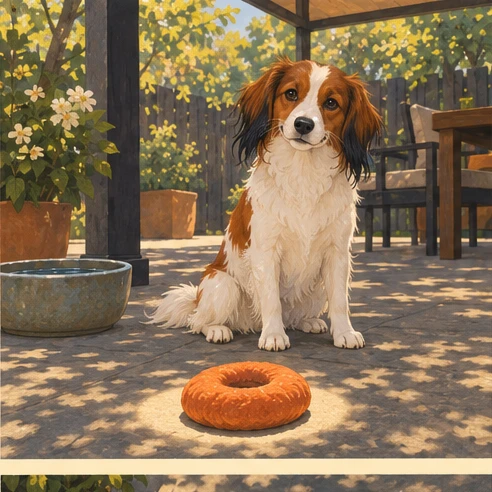
Fresh water waits in the shade. Our little dog places the soft donut in a round gap in the leafy shadow and sits proudly.
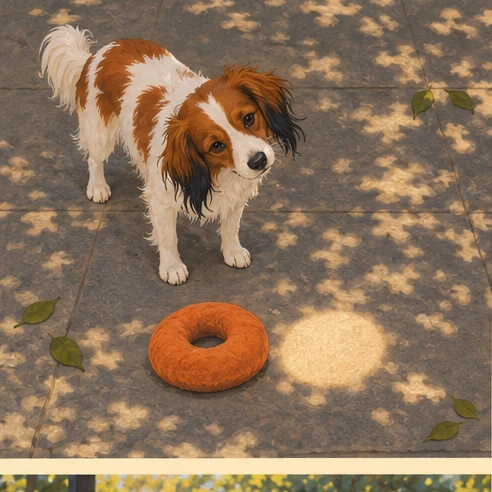
A breeze moves the leaves, shifting the round gap. A head tilt asks: how did the donut end up in the wrong seat?
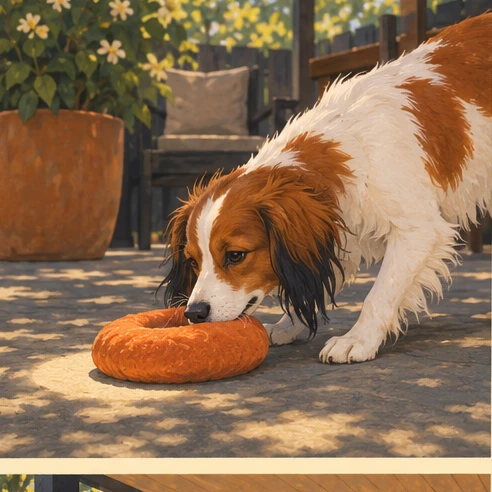
A gentle nose nudge puts the donut back in place. Black feathering sways beside the ears that lie against the cheeks.
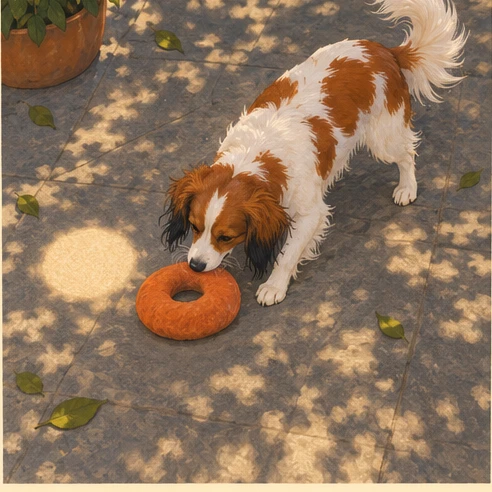
The shadow shifts again! The dog steps around to reposition the toy, lifting its white plumed tail as it moves.
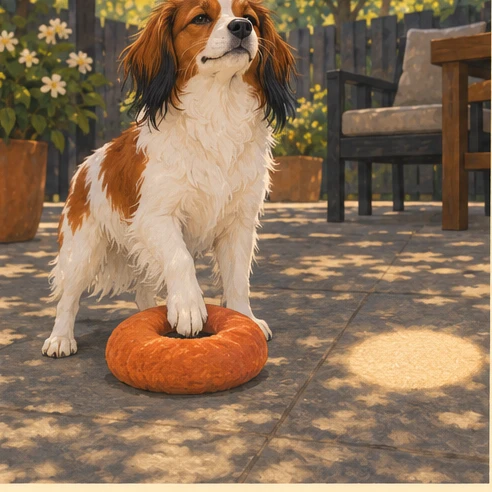
One paw pins the donut: surely that settles it. But the leafy shadow quietly slides away from the paw.
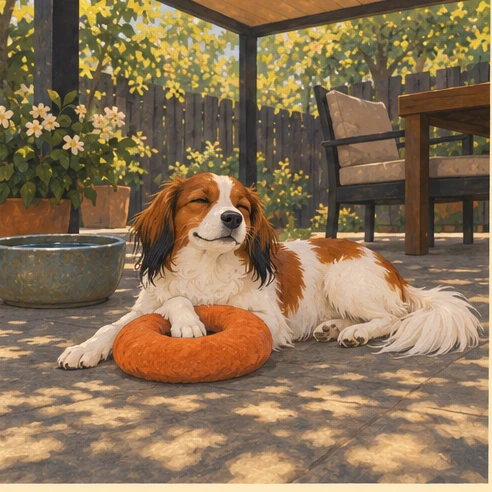
Back under the fixed canopy, the dog rests one forepaw inside the donut. This seat will not wander.
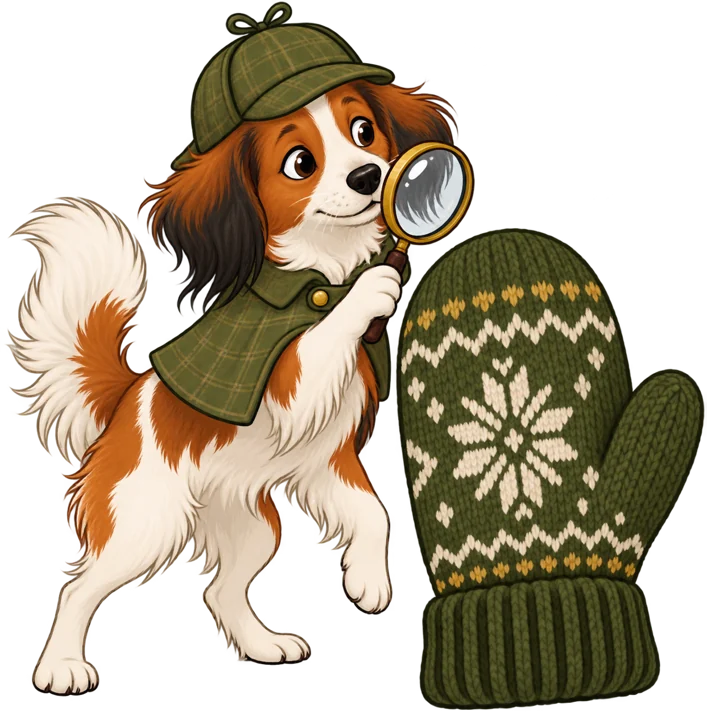

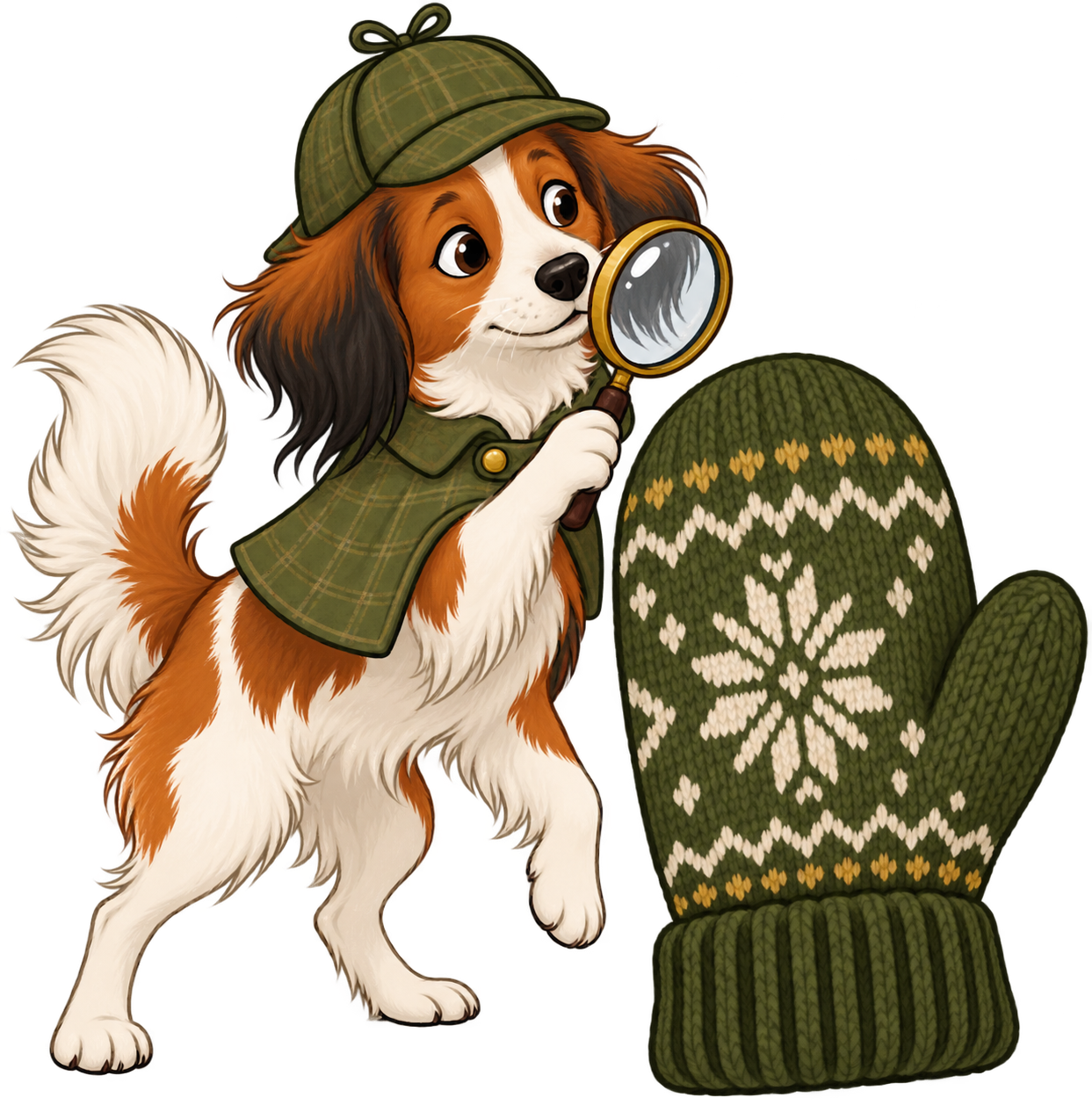
Eight transparent PNGs to save individually. Switch captions on or off for your chats.
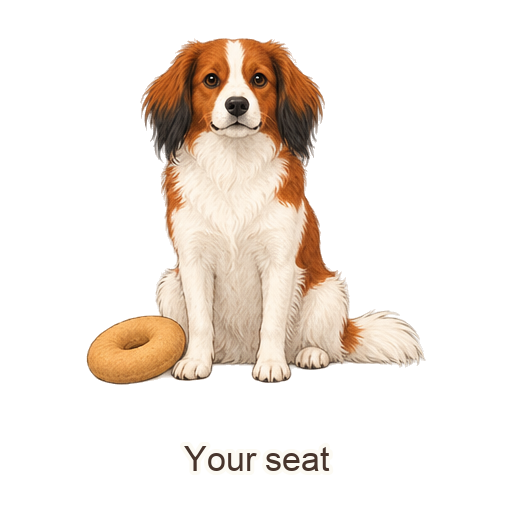 Your seat
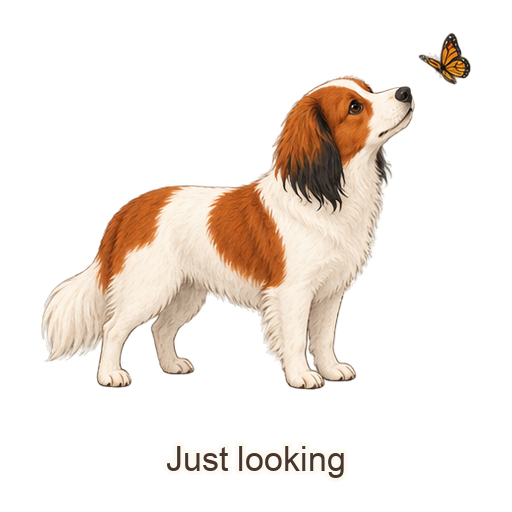 Just looking
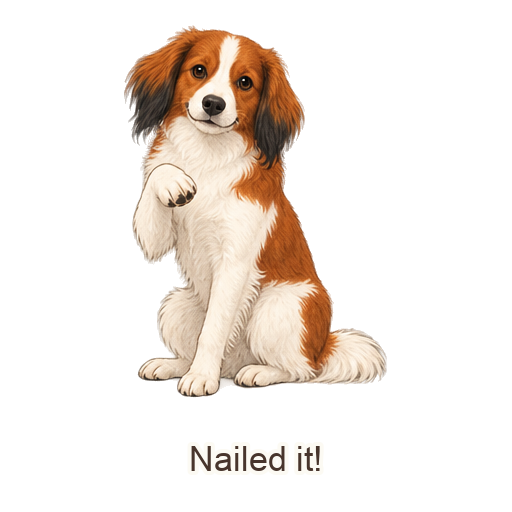 Nailed it!
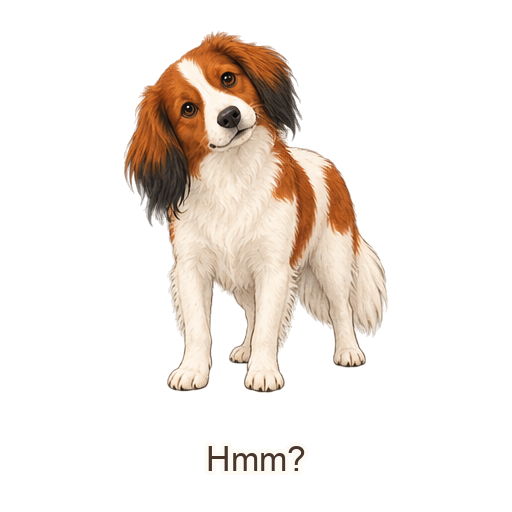 Hmm?
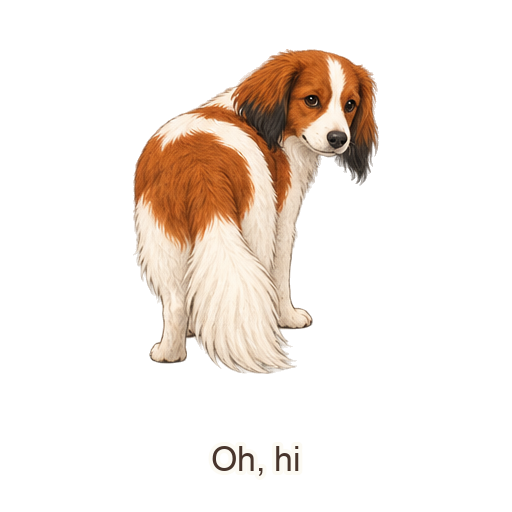 Oh, hi
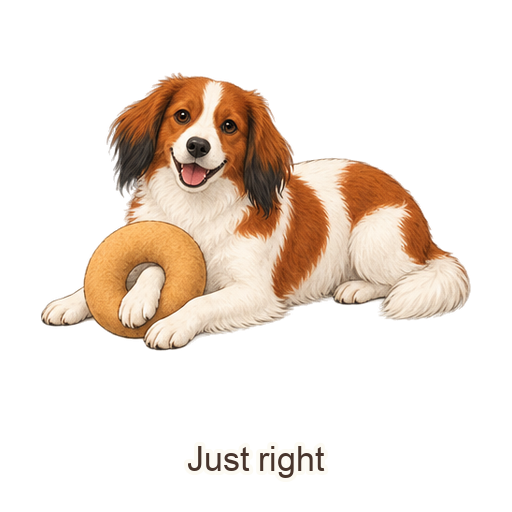 Just right
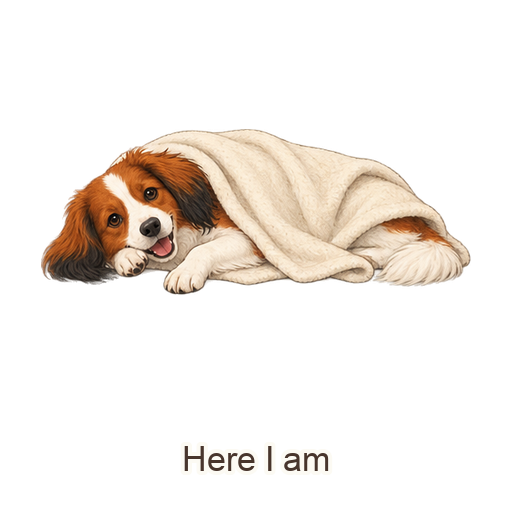 Here I am
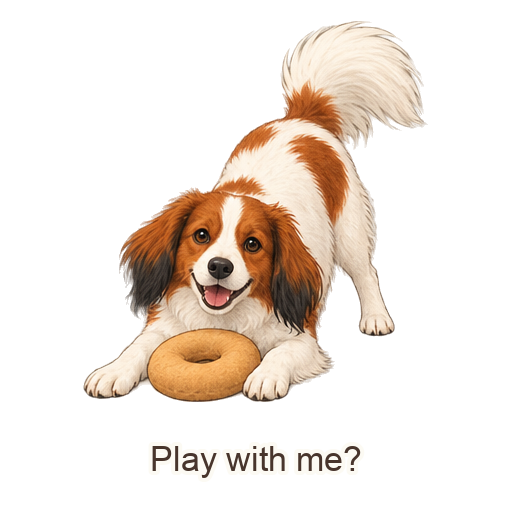 Play with me?
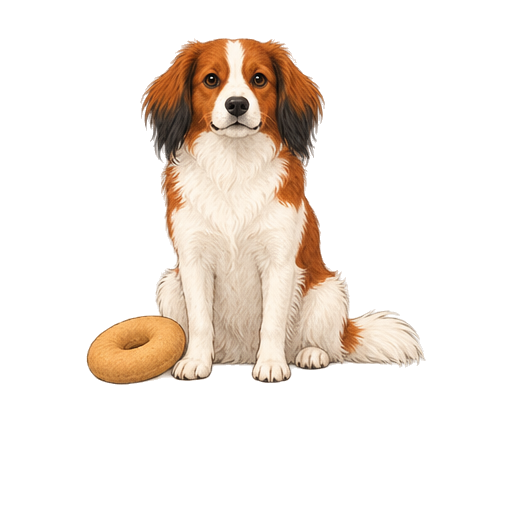 Your seat
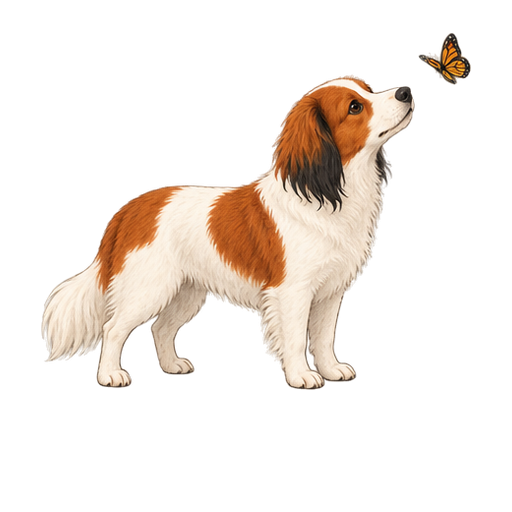 Just looking
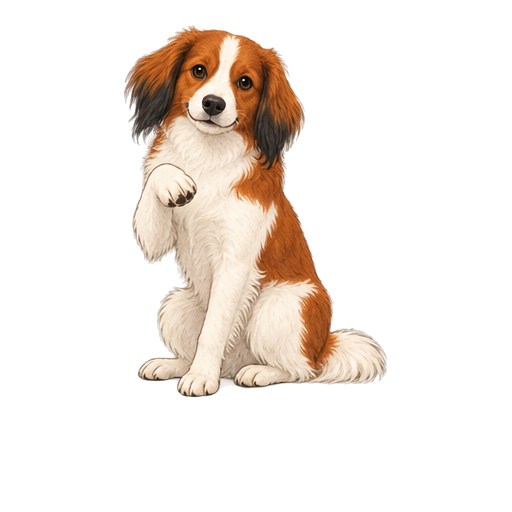 Nailed it!
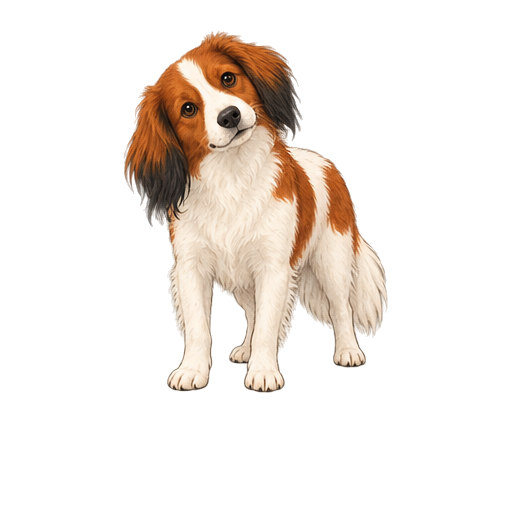 Hmm?
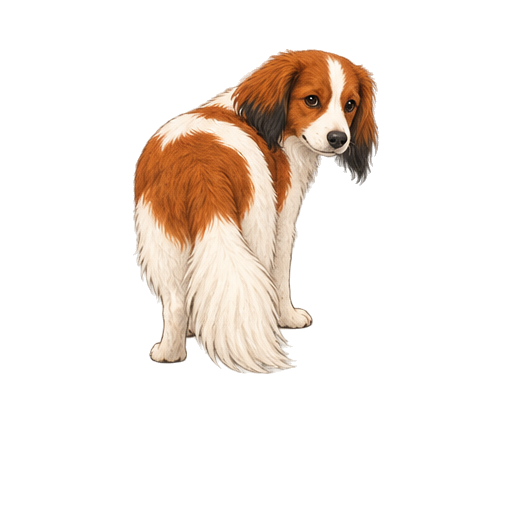 Oh, hi
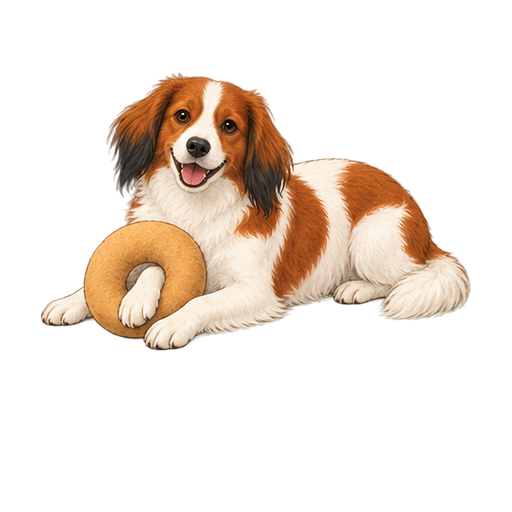 Just right
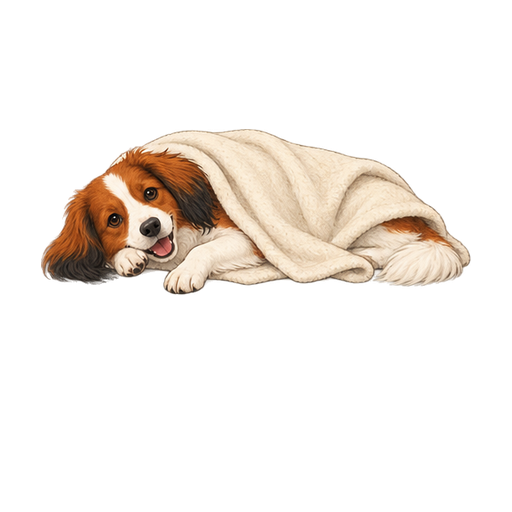 Here I am
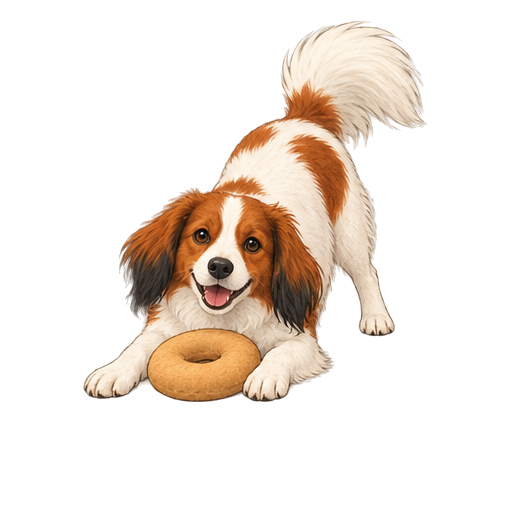 Play with me?
Original woofmap artwork, assisted by GPT Image 2. Free for personal chats and non-commercial sharing with credit to woofmap.com. Fictional moods do not predict every dog’s temperament; see this page’s factual sources.
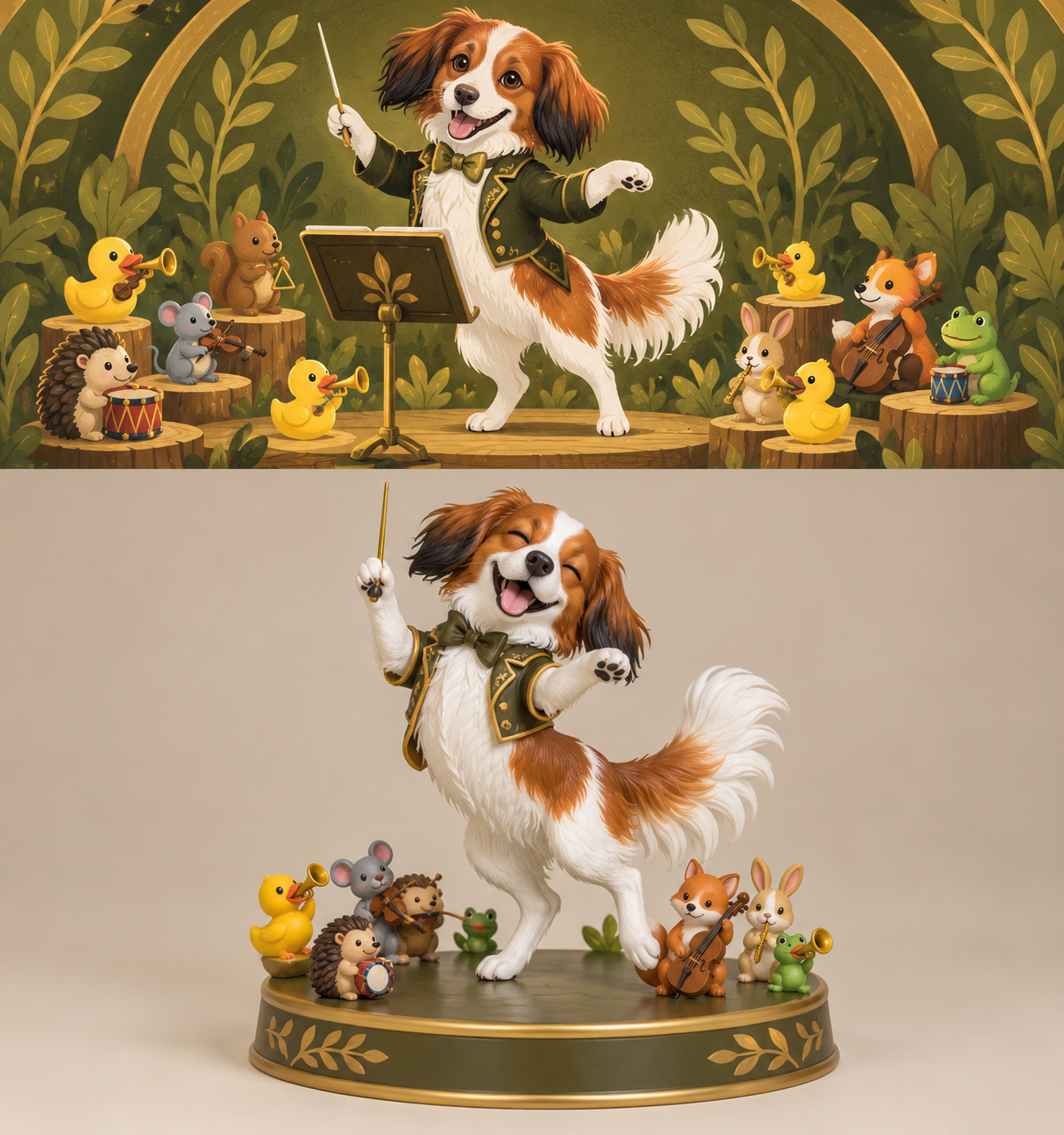
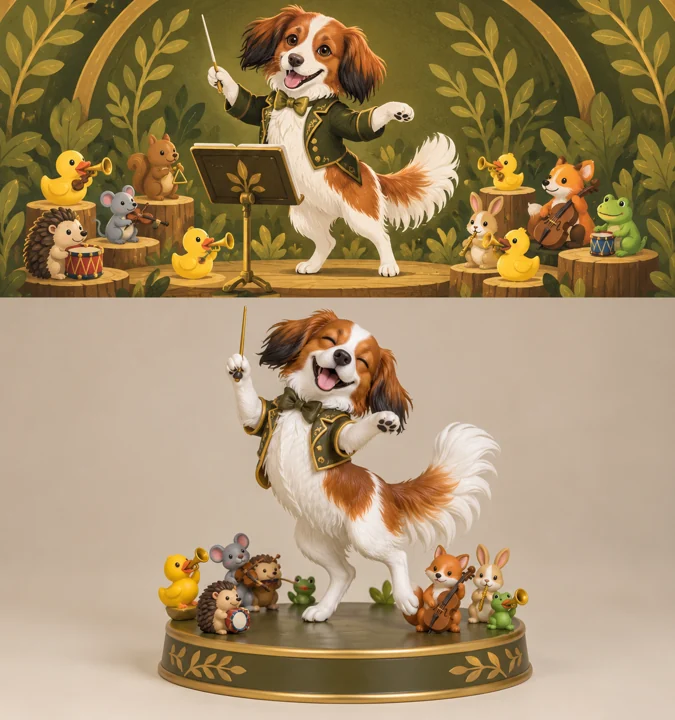
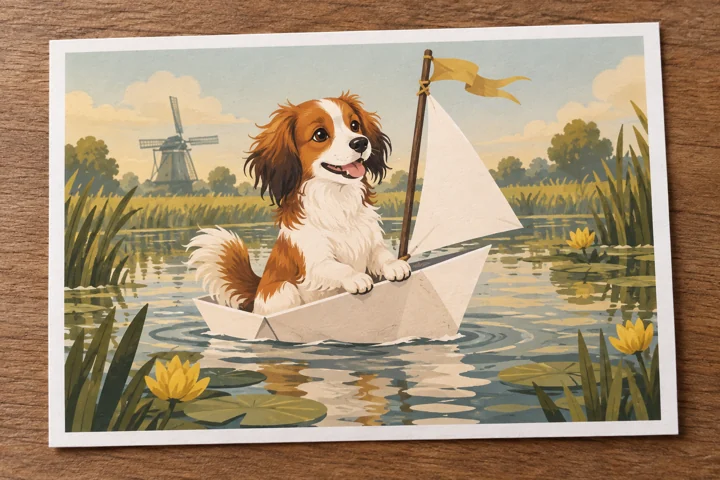
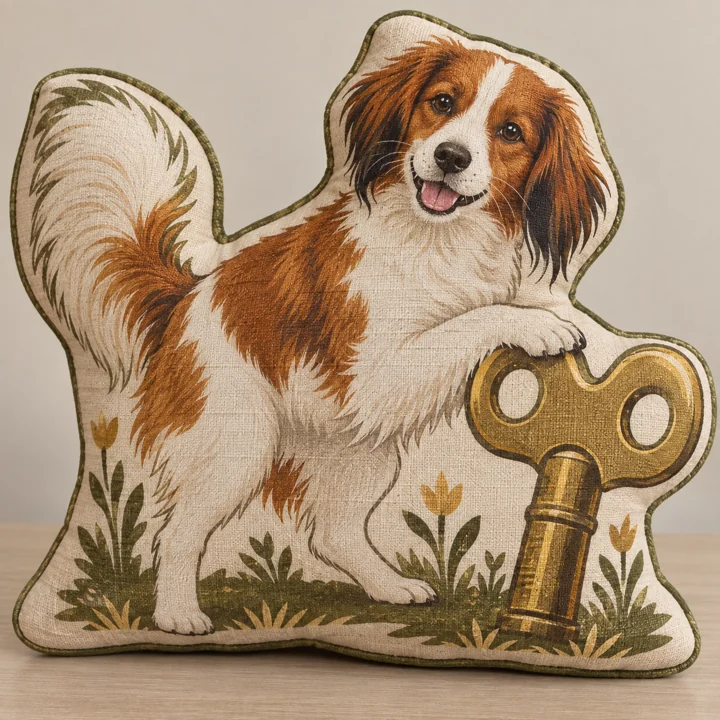
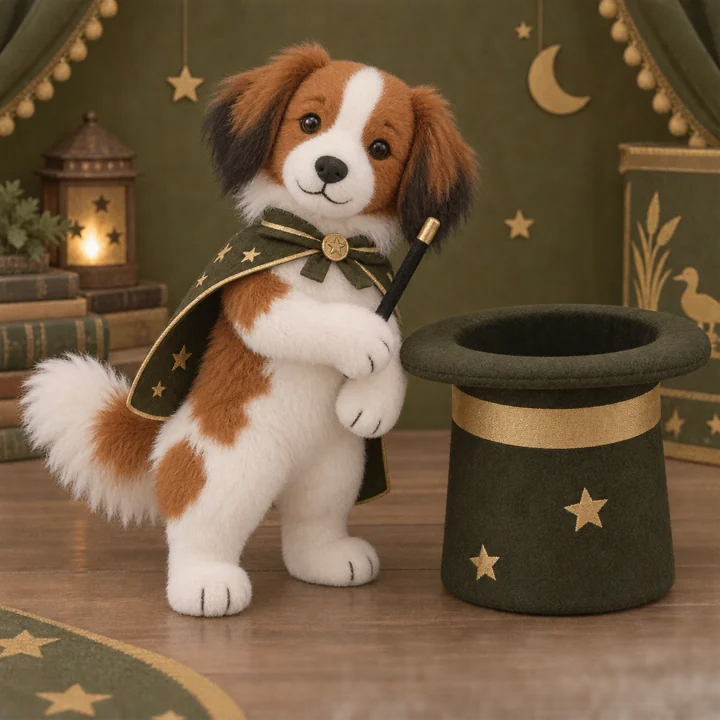
Combine the available parts, choose a name and take a little joy home.
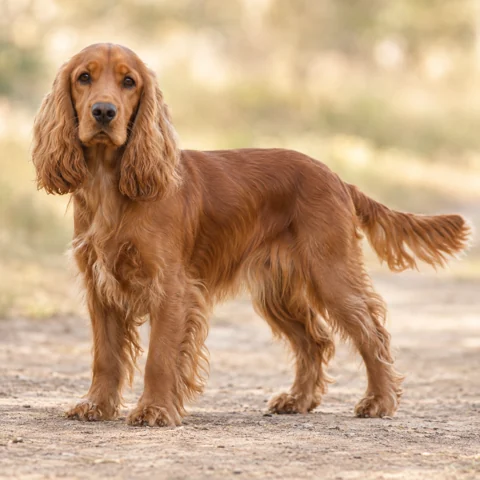 AI realistic image
Retrievers, flushing dogs and water dogs
English Cocker Spaniel
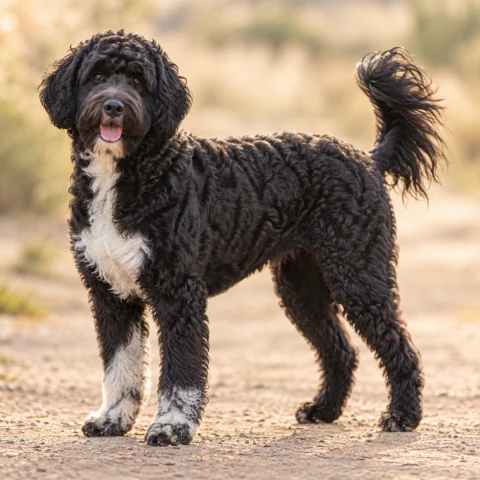 AI realistic image
Retrievers, flushing dogs and water dogs
Portuguese Water Dog
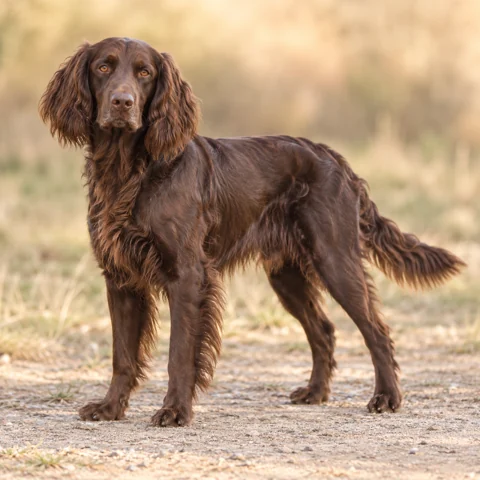 AI realistic image
Retrievers, flushing dogs and water dogs
German Spaniel