WOOFMAP · CANINE ARCHIVENO. 306
Spitz and primitive types
West Siberian Laika
West Siberian Laika
✳ woofmap.comRussia
WOOFMAP · CANINE ARCHIVE · NO. 306
West Siberian Laika
A keen-scented, versatile hunter from Russia’s forests.
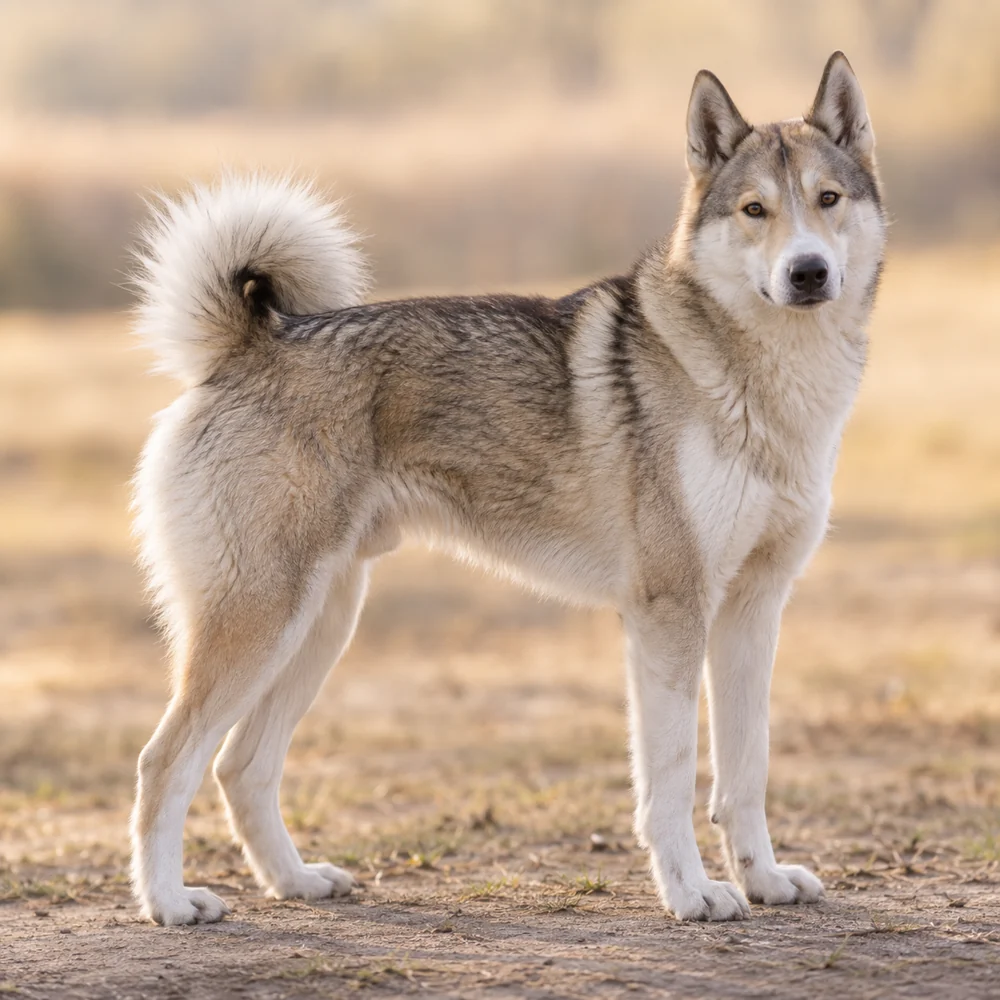
AI-generated realistic breed image, for visual reference.
This West Siberian Laika page is still waiting for a voice. Live with a West Siberian Laika? Share a natural bark, howl or whine and let others hear a little of your dog’s everyday life.
If we feature your recording, we’ll credit you or your dog using the name you choose.
A 5–15 second phone recording in a quiet setting is perfect. Capture a natural moment without startling or disturbing your dog. Audio or video with sound is welcome.
Share your dog’s voice ↗[email protected]Attach your recording, breed and preferred credit. Please confirm you recorded it and allow woofmap to feature it.
Thank you for helping us build a playful Woof Planet together. Every little woof deserves to be heard.
Spitz and primitive types
West Siberian Laika
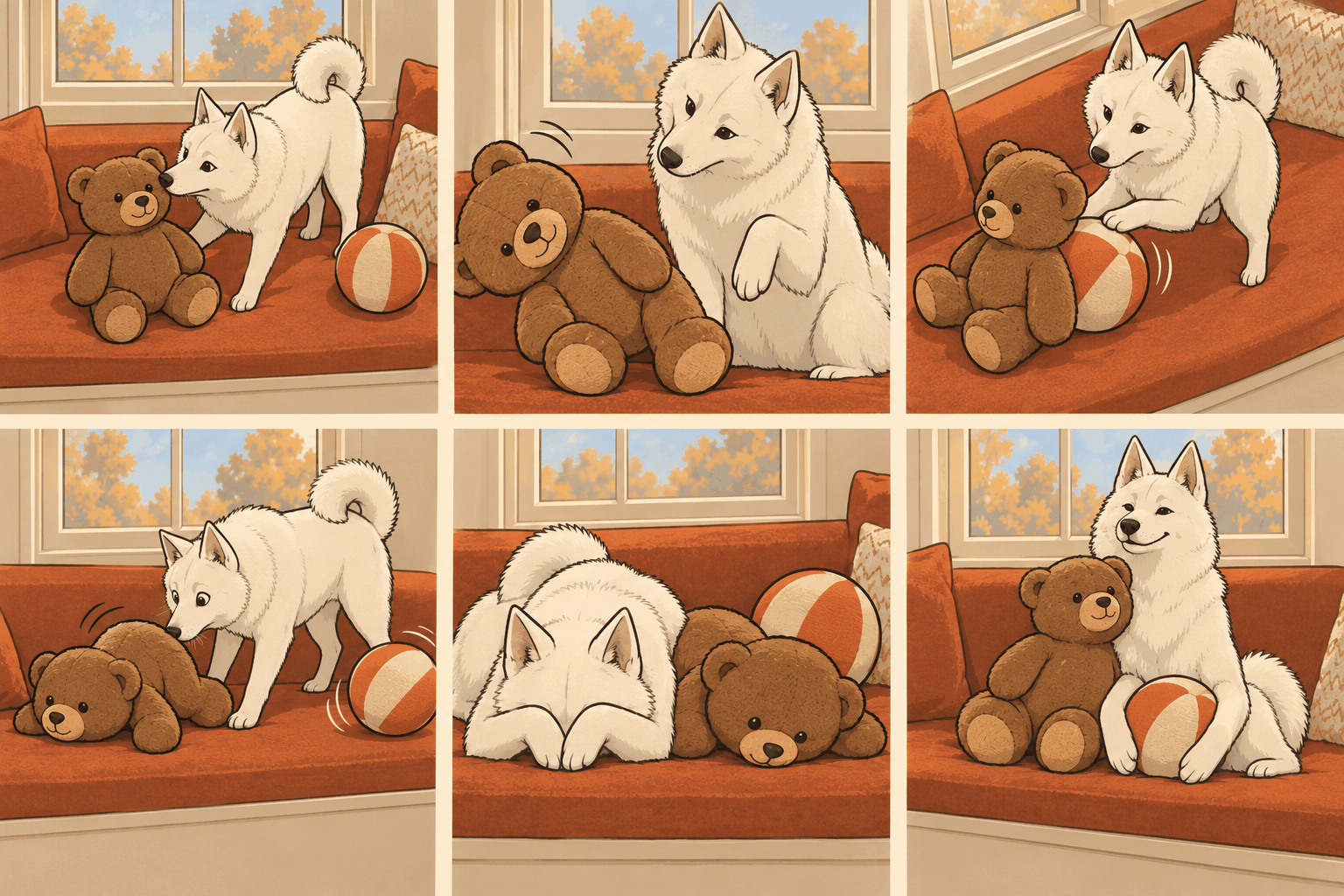
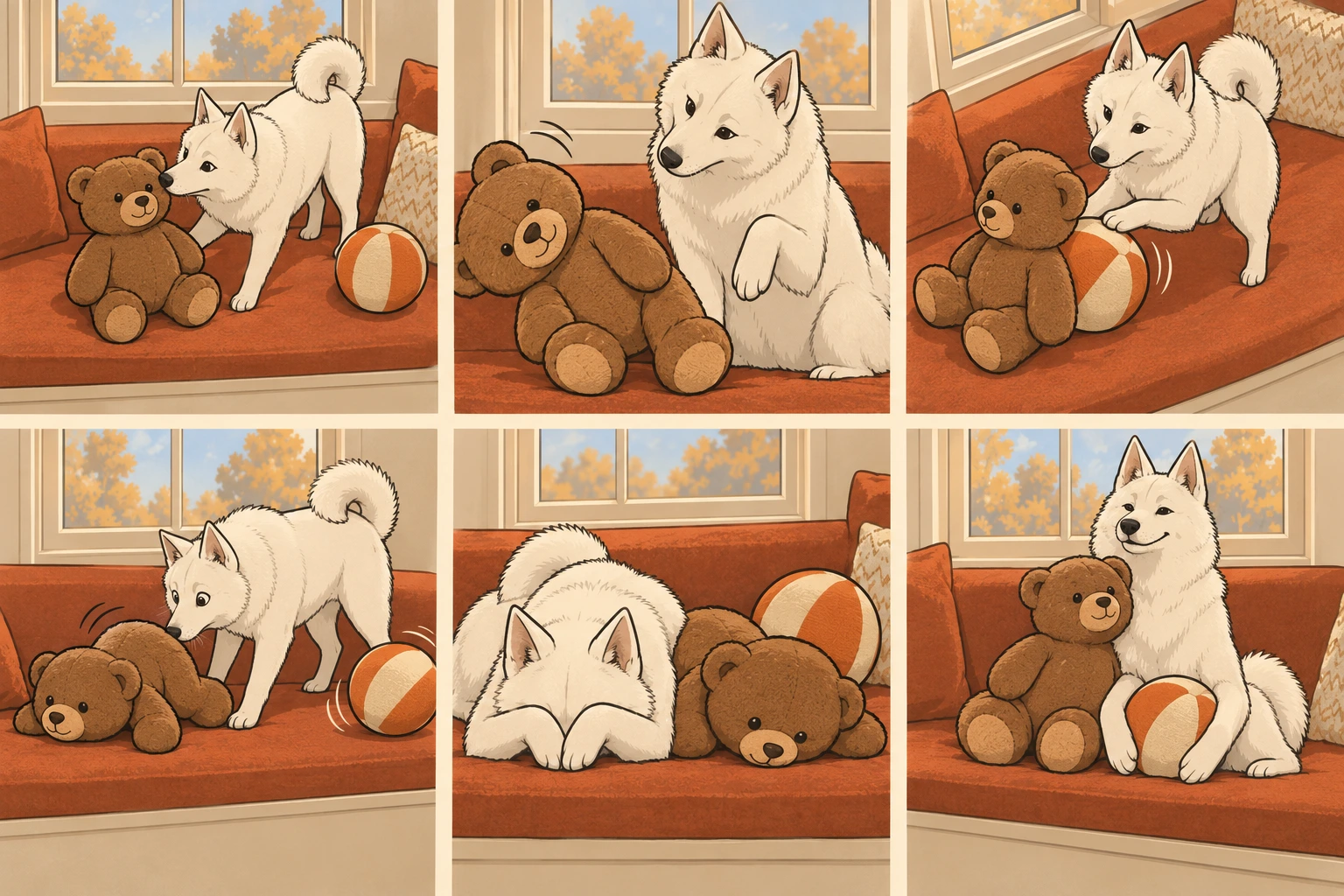
One fictional Laika tries to give a stuffed bear a dignified seat. A soft ball makes the arrangement increasingly lopsided—all on a broad, low window seat.
This native Russian hunting breed arose in the forest regions of the Urals and western and eastern Siberia from Khanty and Mansi hunting dogs. Russian cynologists drew up early standards for those Laikas in the early 20th century, and their closely related descendants were united as one breed in 1947. A new standard was approved in 1952 for this all-round hunting dog.
Strong and muscular, this dog is slightly longer than tall; males stand 55–62 cm and females 51–58 cm at the withers. Its high-set, pointed V-shaped ears are erect, and its tightly curled tail rests over the back or hips.
Look for a strong, slightly elongated body, wedge-shaped head, high-set V-shaped erect ears and a tail curled over the back or hips. Its oval eyes are fairly deep-set and its neck collar is prominent; the standard describes one breed with several accepted colours, not separate size or coat varieties.
The standard describes an even-tempered, vigorous dog with keen scenting ability and a strong interest in both feathered and furred game. It is self-confident and alert with strangers; reward-based training can build cooperation and recall, while allowing for individual differences in vigilance and prey response.
Brush the double coat regularly and more often during shedding, checking the hair between the toes. Provide walks, scent-search games and progressive training to engage its hunting instincts. Use a lead or secure fencing around wildlife rather than relying on recall alone. A home should offer daily interaction, activity and consistent boundaries.
It can suit a first-time owner prepared for active training and management, but not someone seeking a purely undemanding companion. Early socialization, reward-based teaching and secure outdoor routines matter for a watchful hunting dog.
Its abundant undercoat means loose hair is especially noticeable during shedding. Brush through the collar and body coat, increase brushing as it sheds, and check between the toes for trapped debris.
Scent games, searching for hidden items and short training sessions let it use both nose and mind. Choose secure places for off-lead activity, and keep it on a lead where game animals may appear.
SOURCE NOTES
Breed traits follow the cited official standards; everyday care advice is our editorial interpretation of coat, build and working purpose.
Coat and size varieties can share a standard. The number is an archive reference, not a rarity score. An independent educational atlas, not a registry publication. Temperament varies; consult a veterinarian about health concerns.
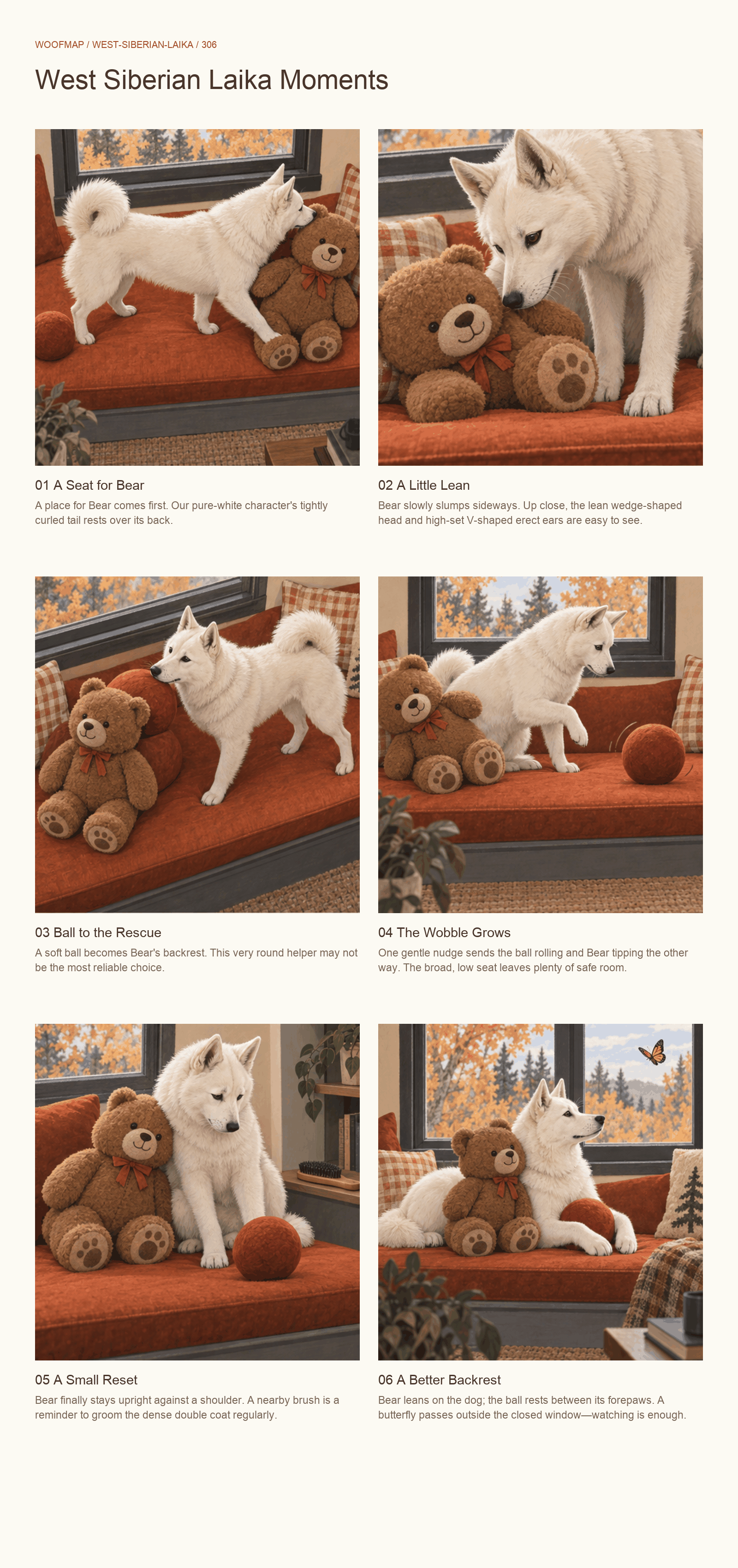
WOOFMAP / WEST-SIBERIAN-LAIKA / LITTLE MOMENTS
This pack illustrates the accepted pure-white coat, with high-set V-shaped erect ears, a wedge-shaped head, a prominent neck collar and a tightly curled tail. Its window-seat antics are fictional, not breed-wide traits.
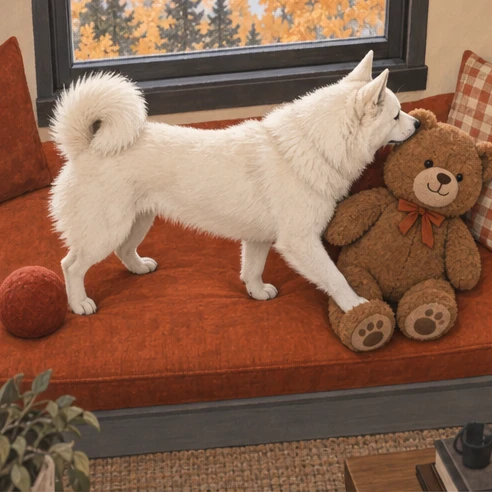
A place for Bear comes first. Our pure-white character's tightly curled tail rests over its back.
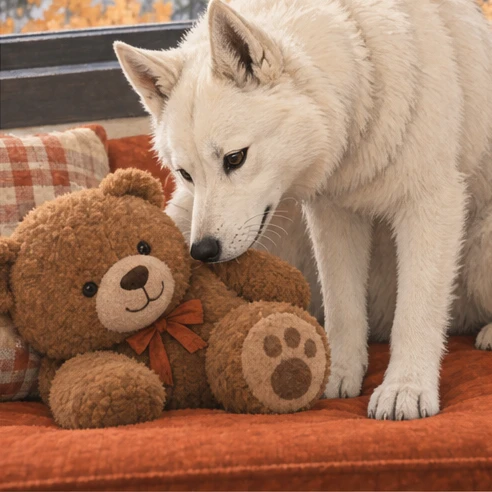
Bear slowly slumps sideways. Up close, the lean wedge-shaped head and high-set V-shaped erect ears are easy to see.
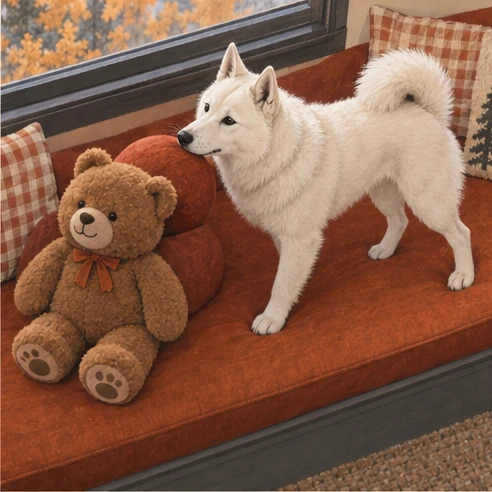
A soft ball becomes Bear's backrest. This very round helper may not be the most reliable choice.
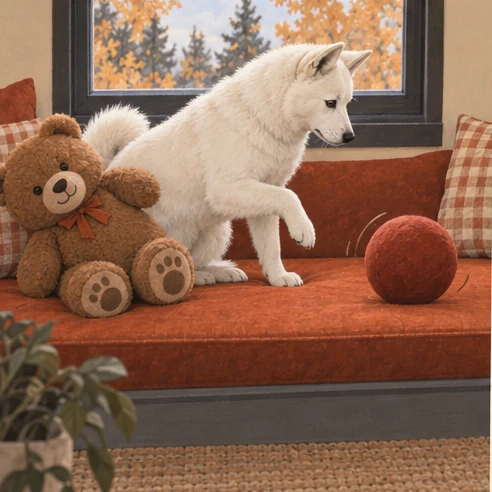
One gentle nudge sends the ball rolling and Bear tipping the other way. The broad, low seat leaves plenty of safe room.
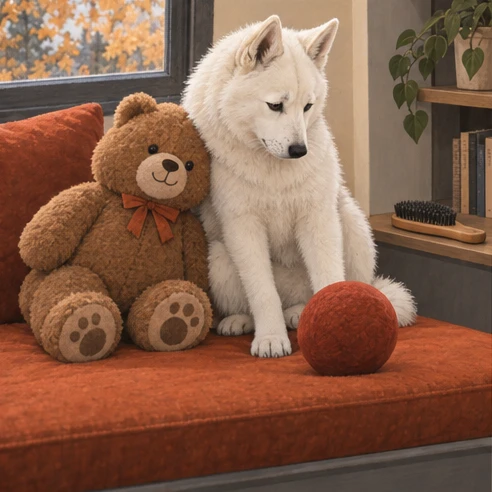
Bear finally stays upright against a shoulder. A nearby brush is a reminder to groom the dense double coat regularly.
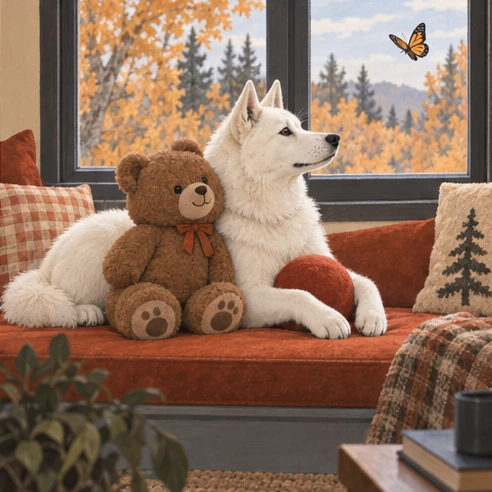
Bear leans on the dog; the ball rests between its forepaws. A butterfly passes outside the closed window—watching is enough.
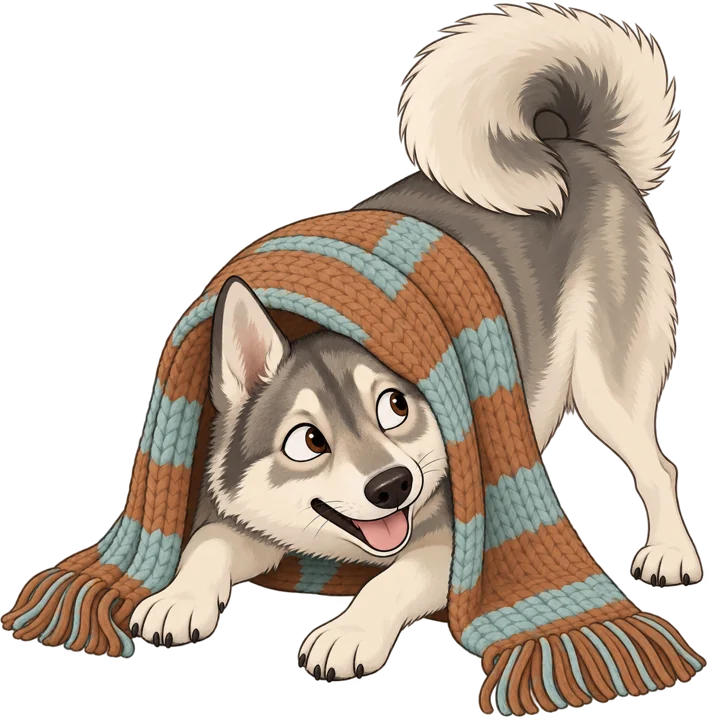
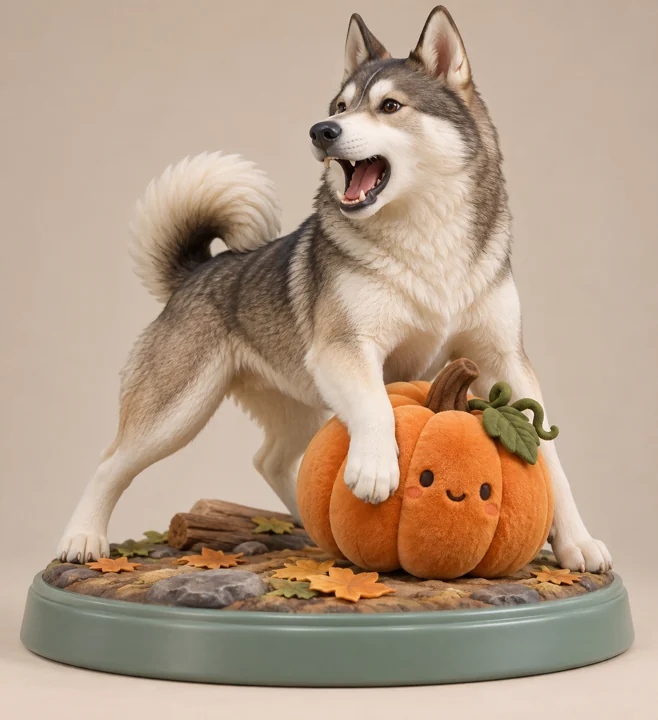
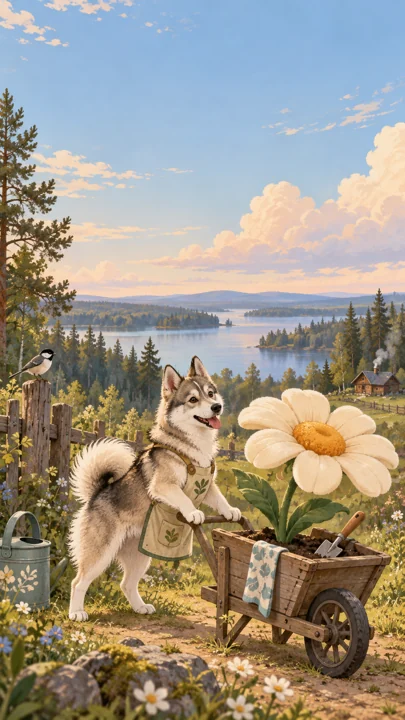
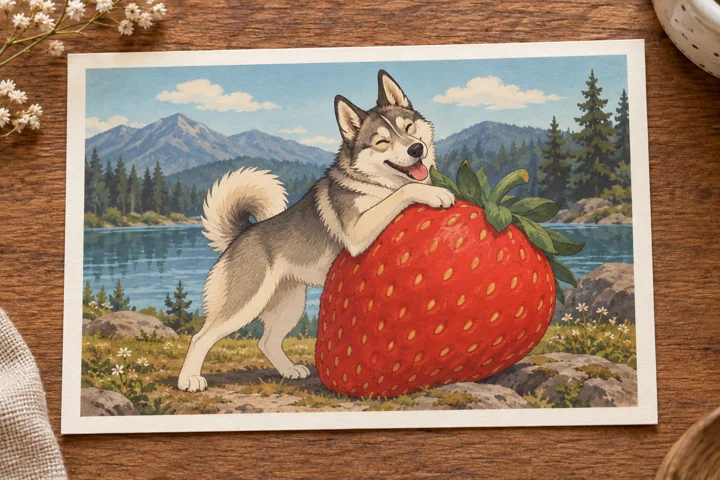
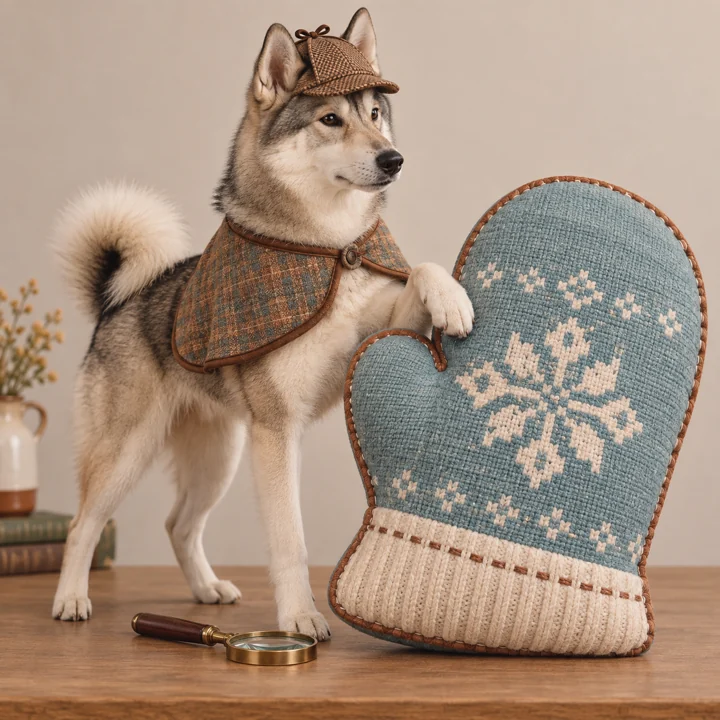
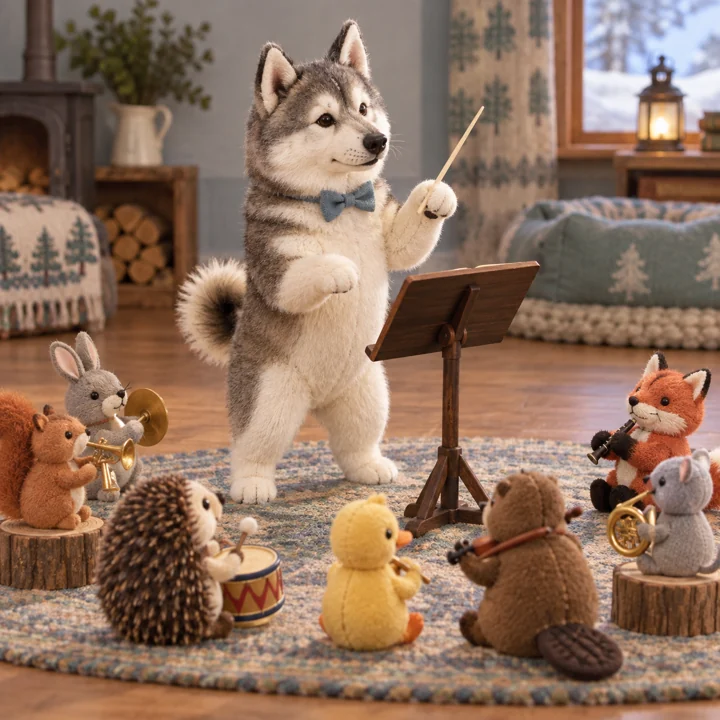
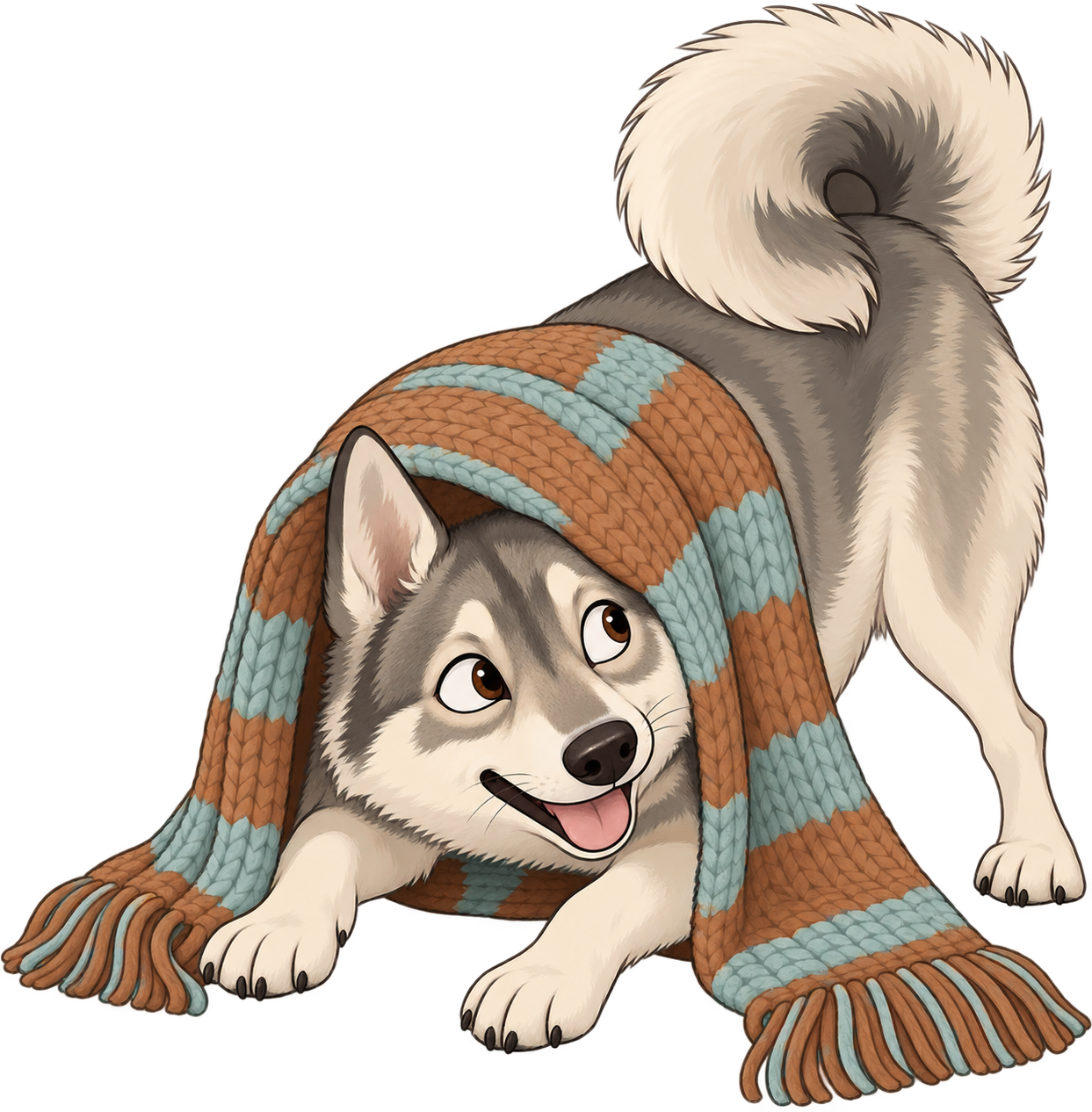
Eight transparent PNGs to save individually. Switch captions on or off for your chats.
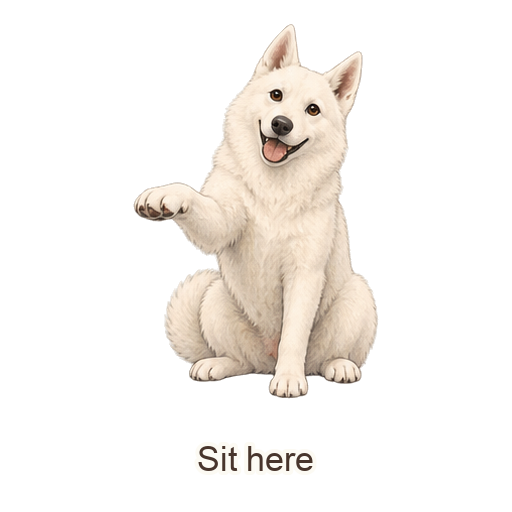 Sit here
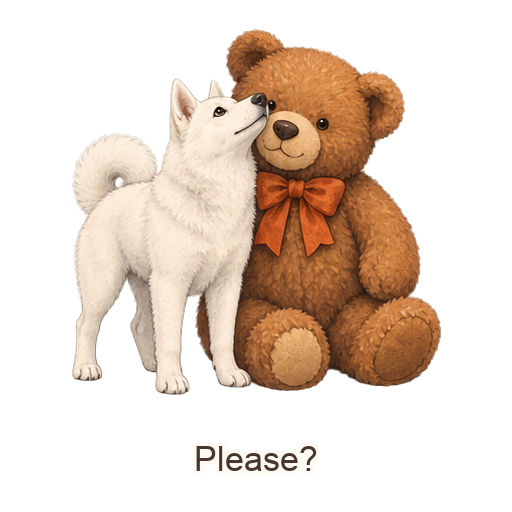 Please?
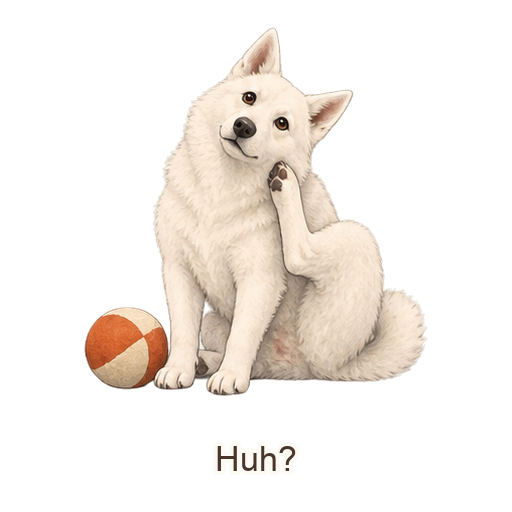 Huh?
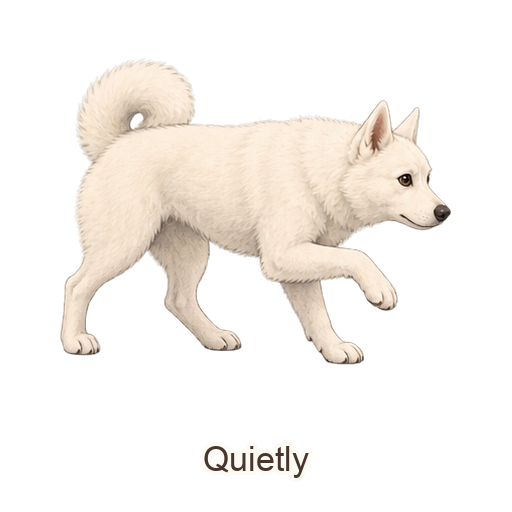 Quietly
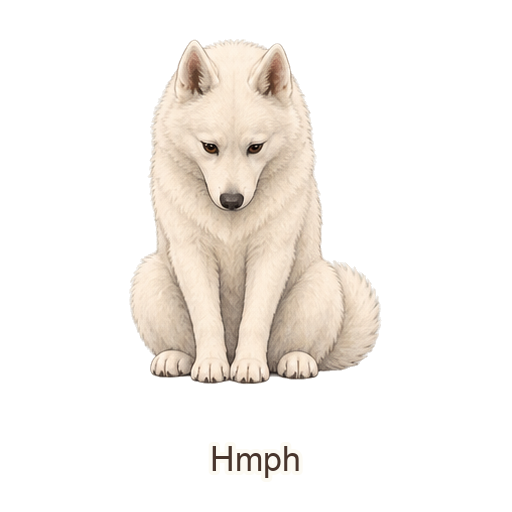 Hmph
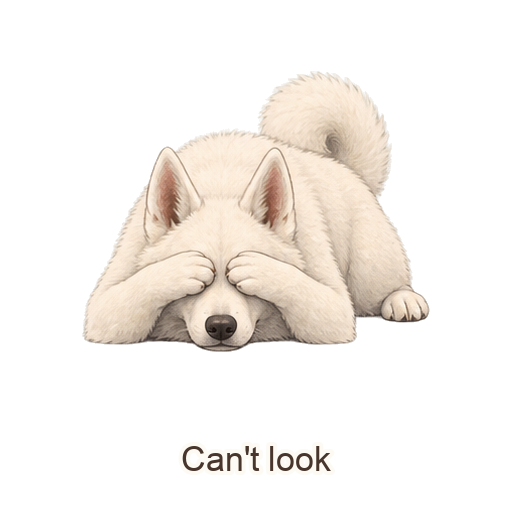 Can't look
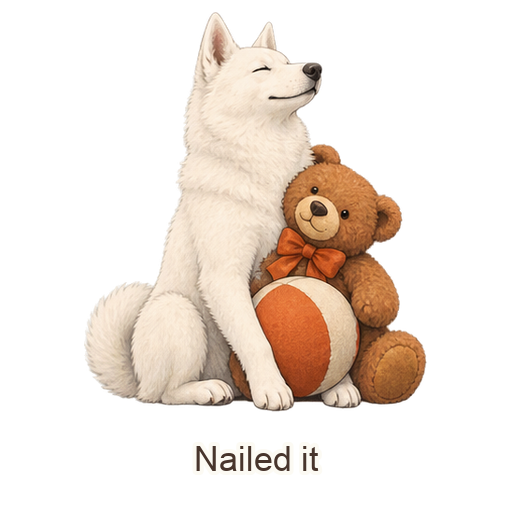 Nailed it
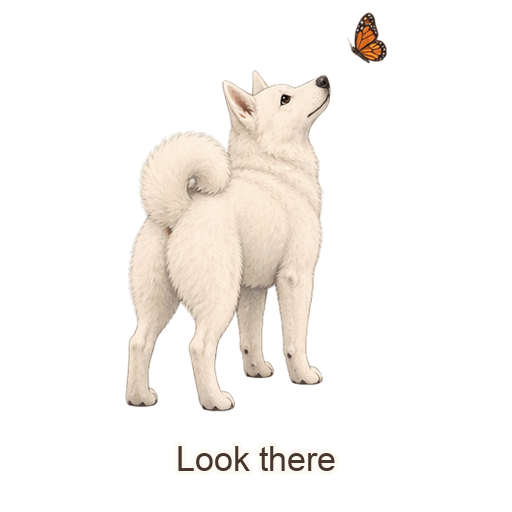 Look there
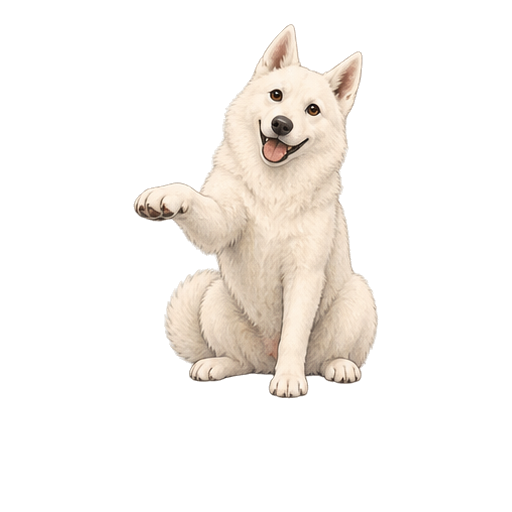 Sit here
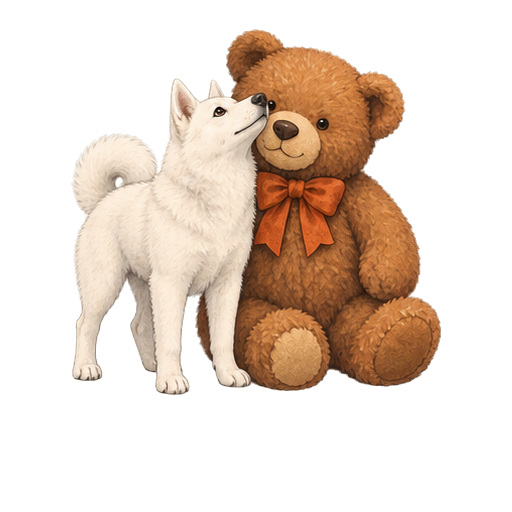 Please?
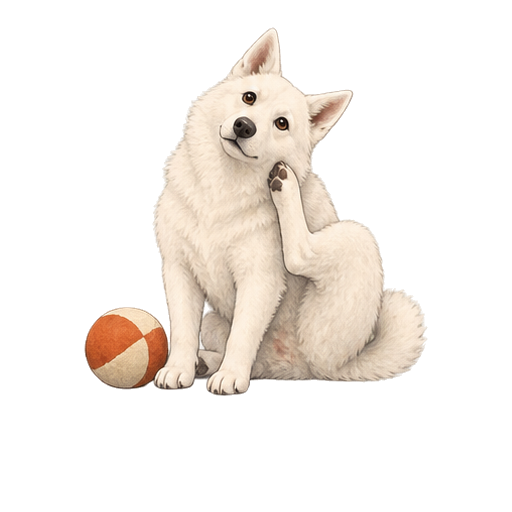 Huh?
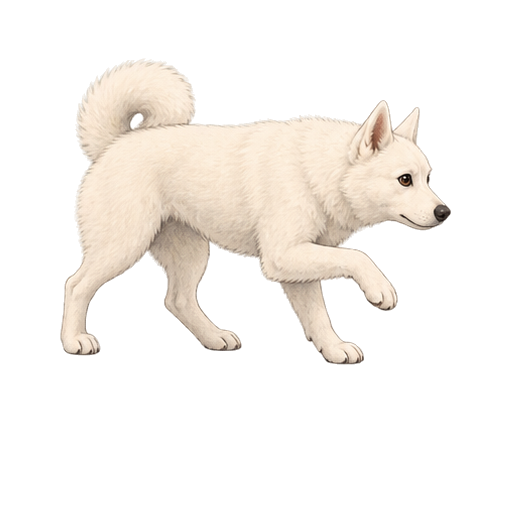 Quietly
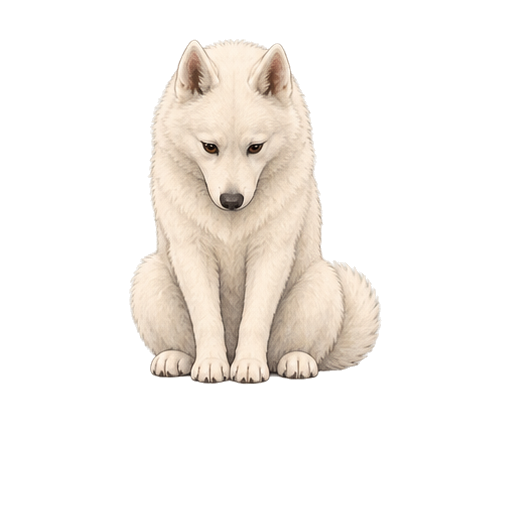 Hmph
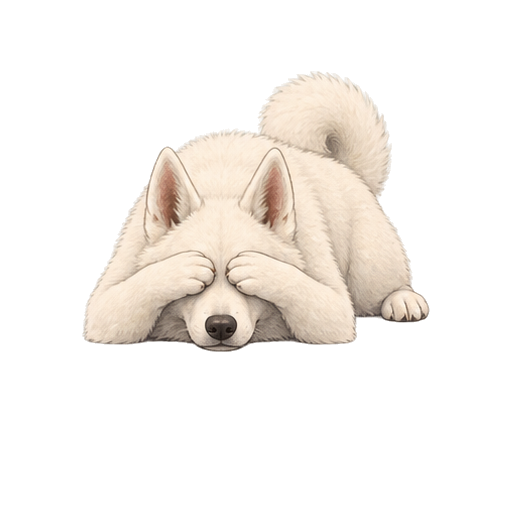 Can't look
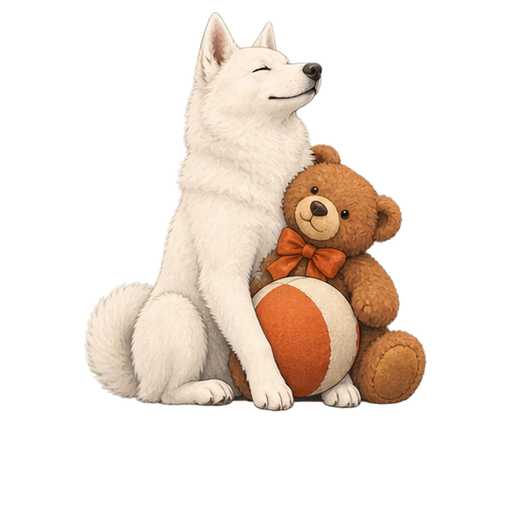 Nailed it
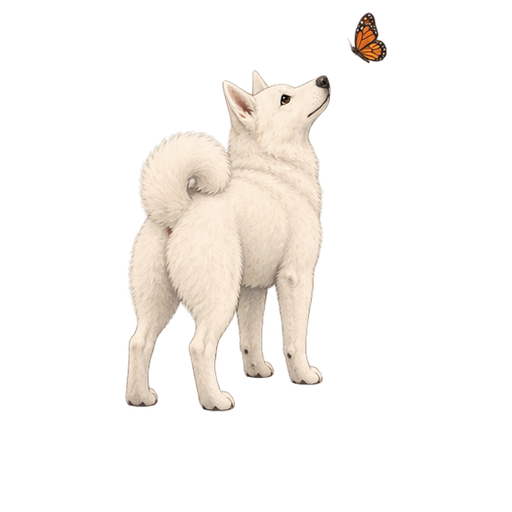 Look there
Original woofmap artwork, assisted by GPT Image 2. Free for personal chats and non-commercial sharing with credit to woofmap.com. Fictional moods do not predict every dog’s temperament; see this page’s factual sources.
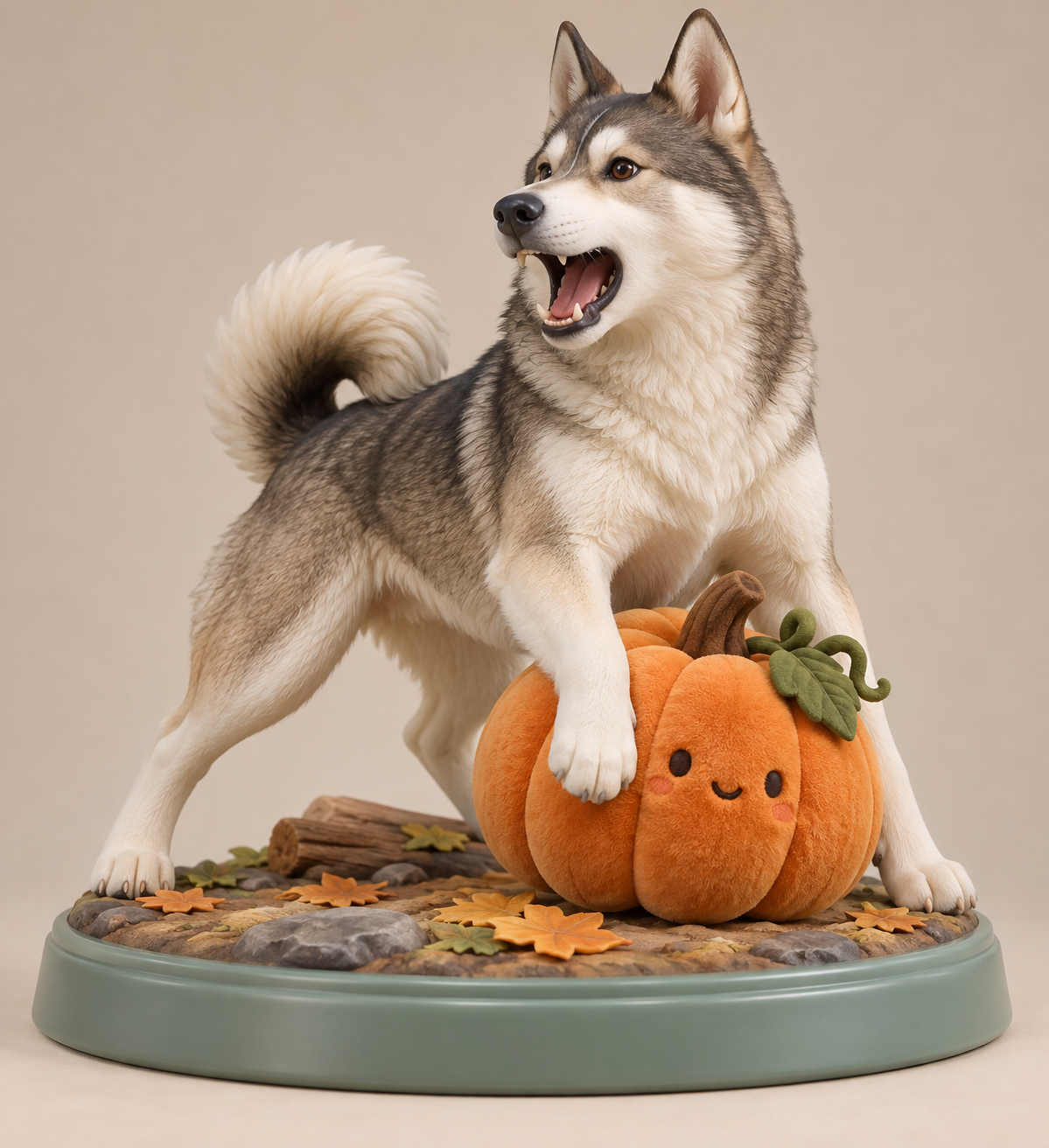
Combine the available parts, choose a name and take a little joy home.
 AI realistic image
Spitz and primitive types
Swedish Vallhund
 AI realistic image
Spitz and primitive types
Jämthund
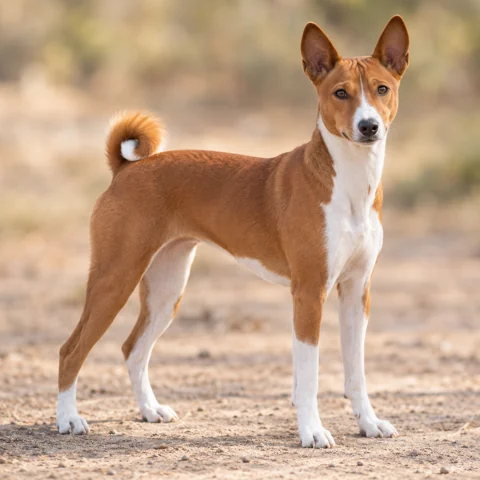 AI realistic image
Spitz and primitive types
Basenji