WOOFMAP · CANINE ARCHIVENO. 243
Spitz and primitive types
Alaskan Malamute
Alaskan Malamute
✳ woofmap.comUnited States of America
WOOFMAP · CANINE ARCHIVE · NO. 243
Alaskan Malamute
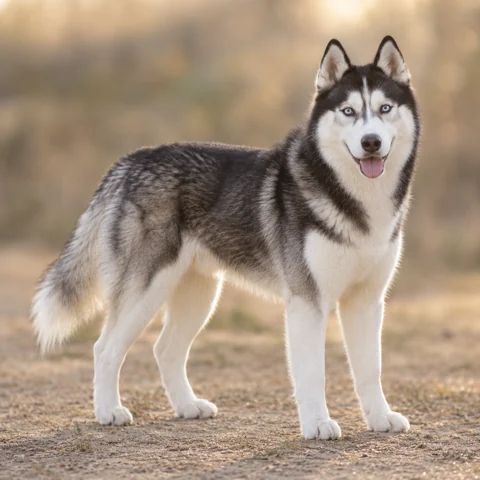
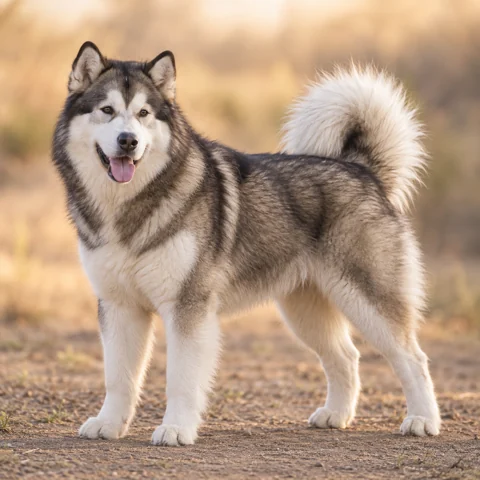
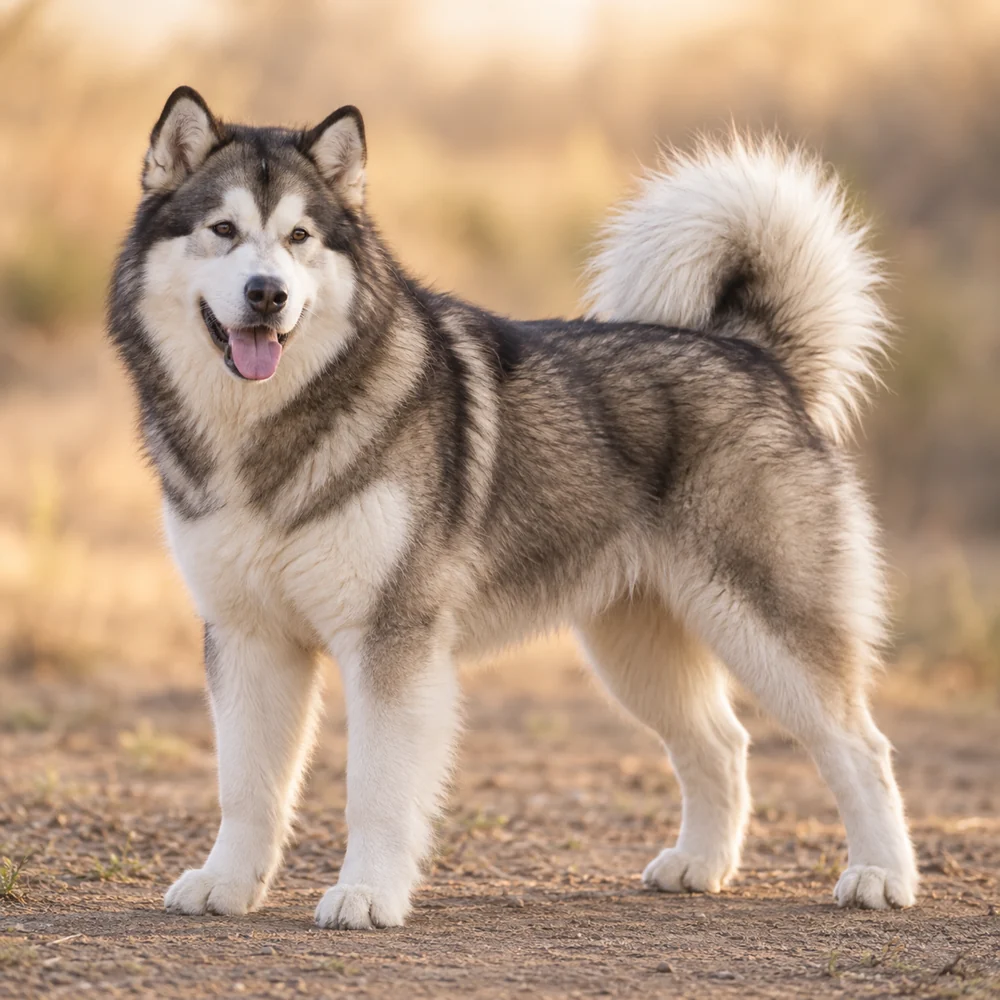
An Arctic sled dog built for heavy loads, not speed.
AI-generated realistic breed image, for visual reference.
Real recording · Individual vocal example · Short sample Excerpt trimmed, volume normalized and converted to MP3; pitch and speed unchanged.
Recording source: be-steele · Freesound · Igor3B.wav ↗ · CC BY 4.0 · Open the recording
Spitz and primitive types
Alaskan Malamute
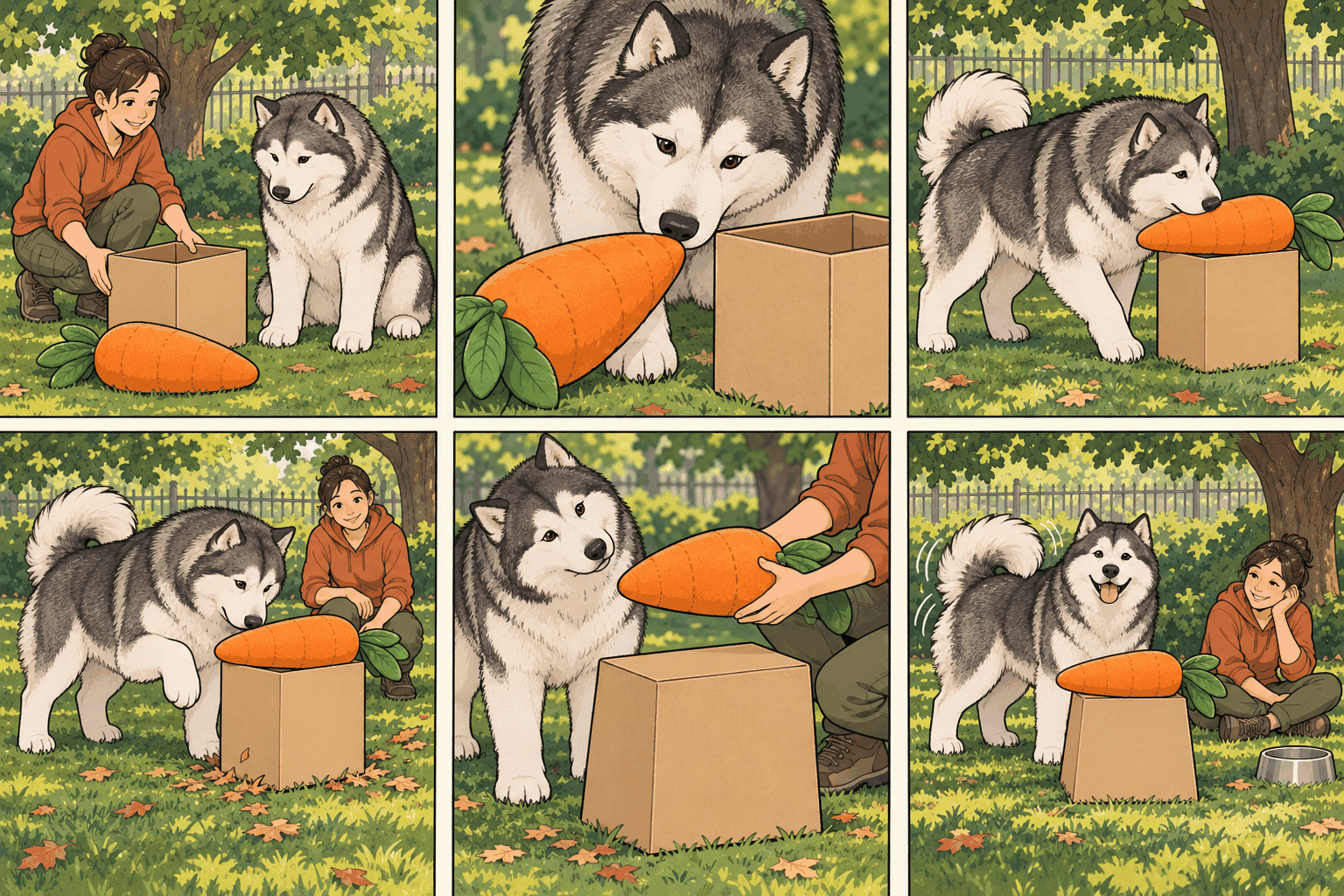
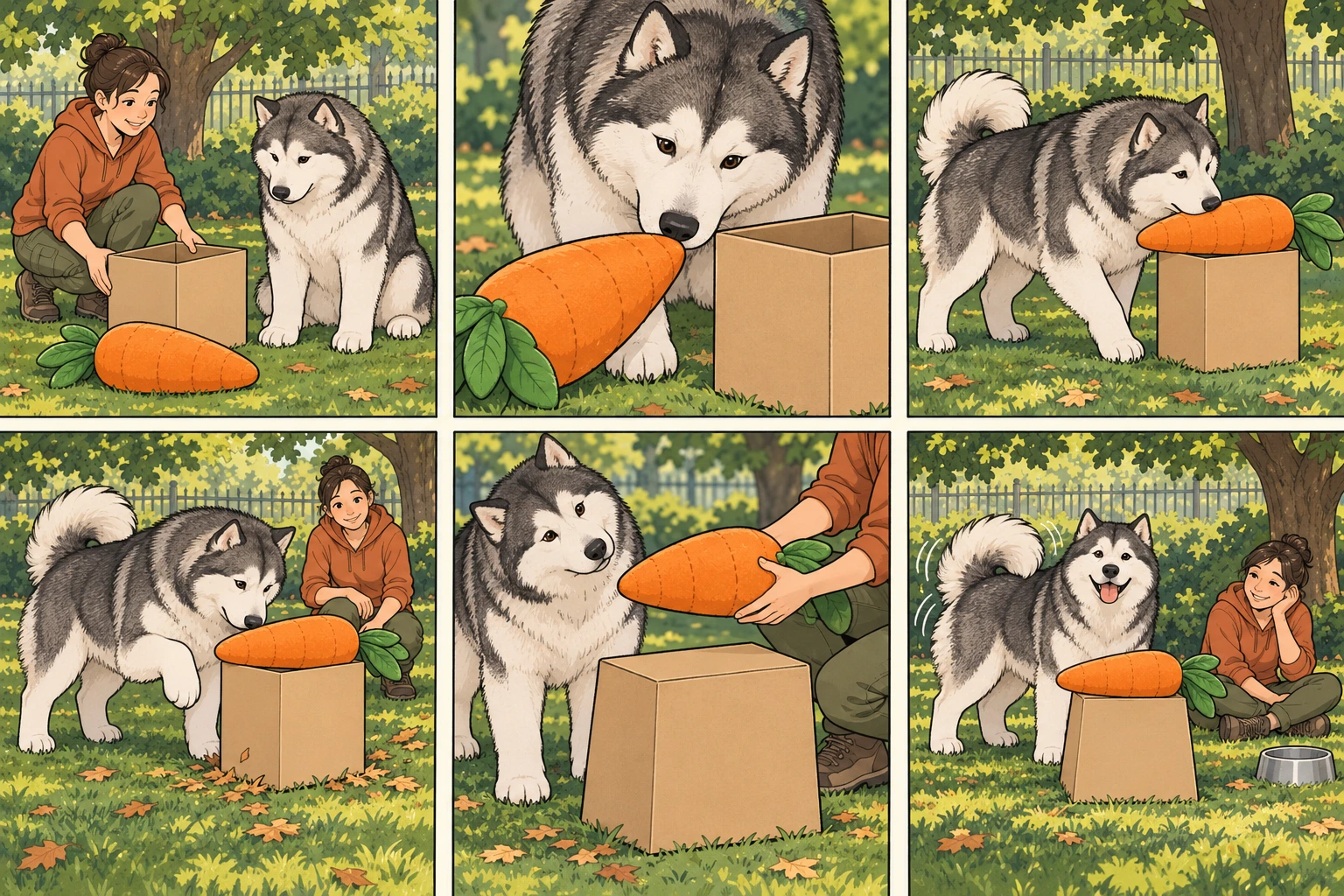
One oversized plush carrot, one empty box: a gentle push sends the box turning instead. Six silent beats end with packing happily abandoned.
The standard describes the Alaskan Malamute as one of the oldest Arctic sled dogs. Its stated work is hauling heavy freight in the Arctic; strength, endurance and efficient movement matter more than racing speed.
Heavy-boned, deep-chested and muscular, it has a compact body slightly longer than tall. Triangular ears stand erect when alert, and the plumed tail is carried over the back when not working. Desirable freighting sizes—not fixed limits—are 63.5 cm and 38 kg for males, 58.5 cm and 34 kg for females.
Look for substantial bone without clumsiness, a deep chest, broad head, bulky rather than pointed muzzle, and a well-furred tail carried like a plume. The head has a cap and the face may be white or bear a bar or mask; eyes are brown, not blue. This standard defines no separate size or coat varieties.
The standard describes an affectionate, friendly and devoted companion, not exclusively attached to one person; it can be playful yet dignified as an adult. Patient, consistent reward-based teaching helps channel its strength into good leash manners and self-control. Individuals vary, so friendliness toward every person or dog should not be assumed.
Brush the double coat regularly and more often during heavier shedding; check between the toes and the pads rather than styling the coat with trimming. Offer walks, sniffing and gradually introduced pulling activities suited to a dog built for sustained work. Practise loose-leash walking, recall and settling with rewards, and manage outdoor access with a lead or secure enclosure. Provide shade and water in warm weather.
Possibly, if the household is ready to train and manage a strong, large sled dog. Plan for consistent leash practice and secure outdoor handling.
Its dense double coat needs ongoing brushing, especially when shedding increases. The standard notes a shorter, less dense summer coat, not a shed-free season.
Add sniffing, training games or appropriate pulling activities to walks, building activity to suit the individual. Teach loose-leash walking so its pulling strength does not dictate every outing.
SOURCE NOTES
Breed traits follow the cited official standards; everyday care advice is our editorial interpretation of coat, build and working purpose.
Coat and size varieties can share a standard. The number is an archive reference, not a rarity score. An independent educational atlas, not a registry publication. Temperament varies; consult a veterinarian about health concerns.
WOOFMAP / ALASKAN-MALAMUTE / LITTLE MOMENTS
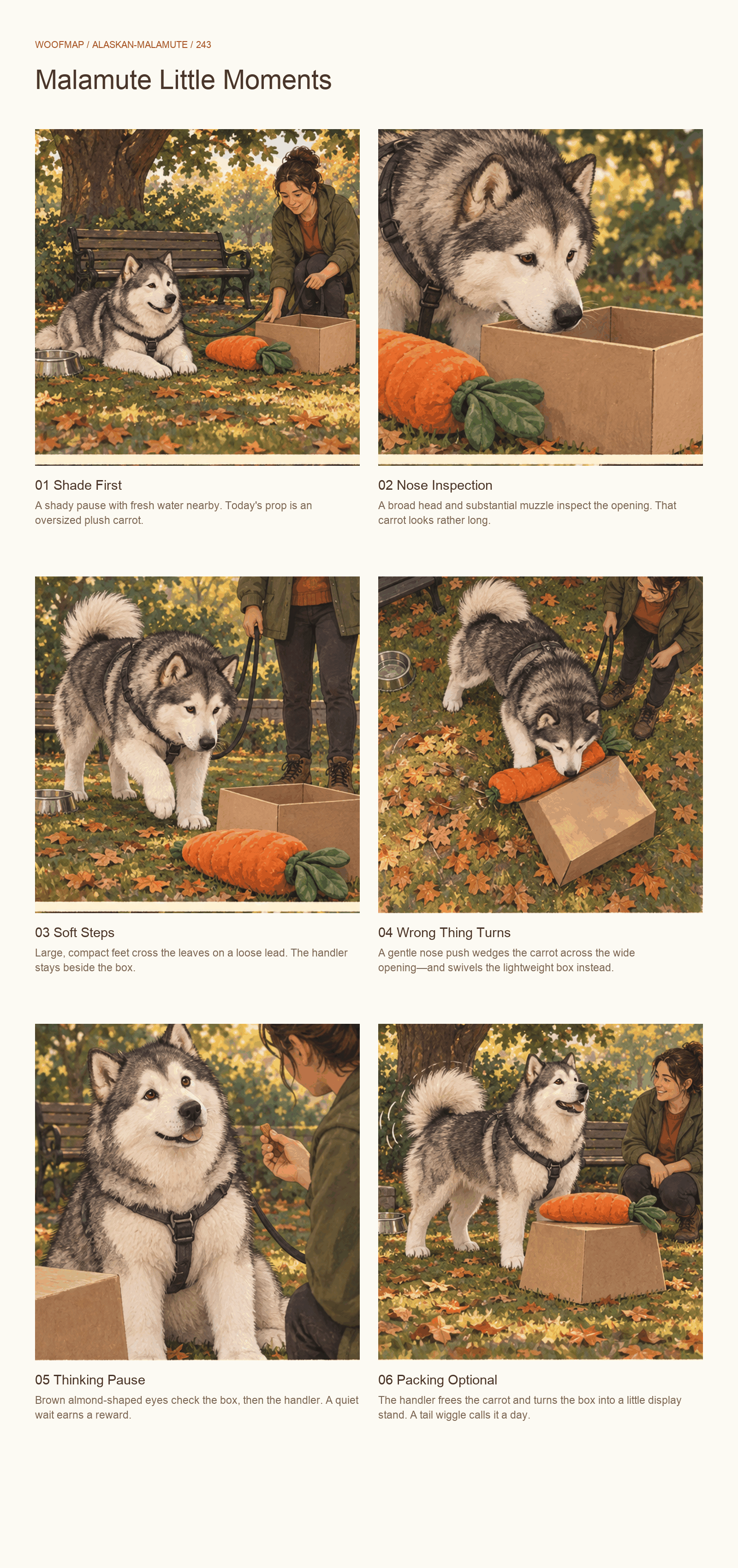
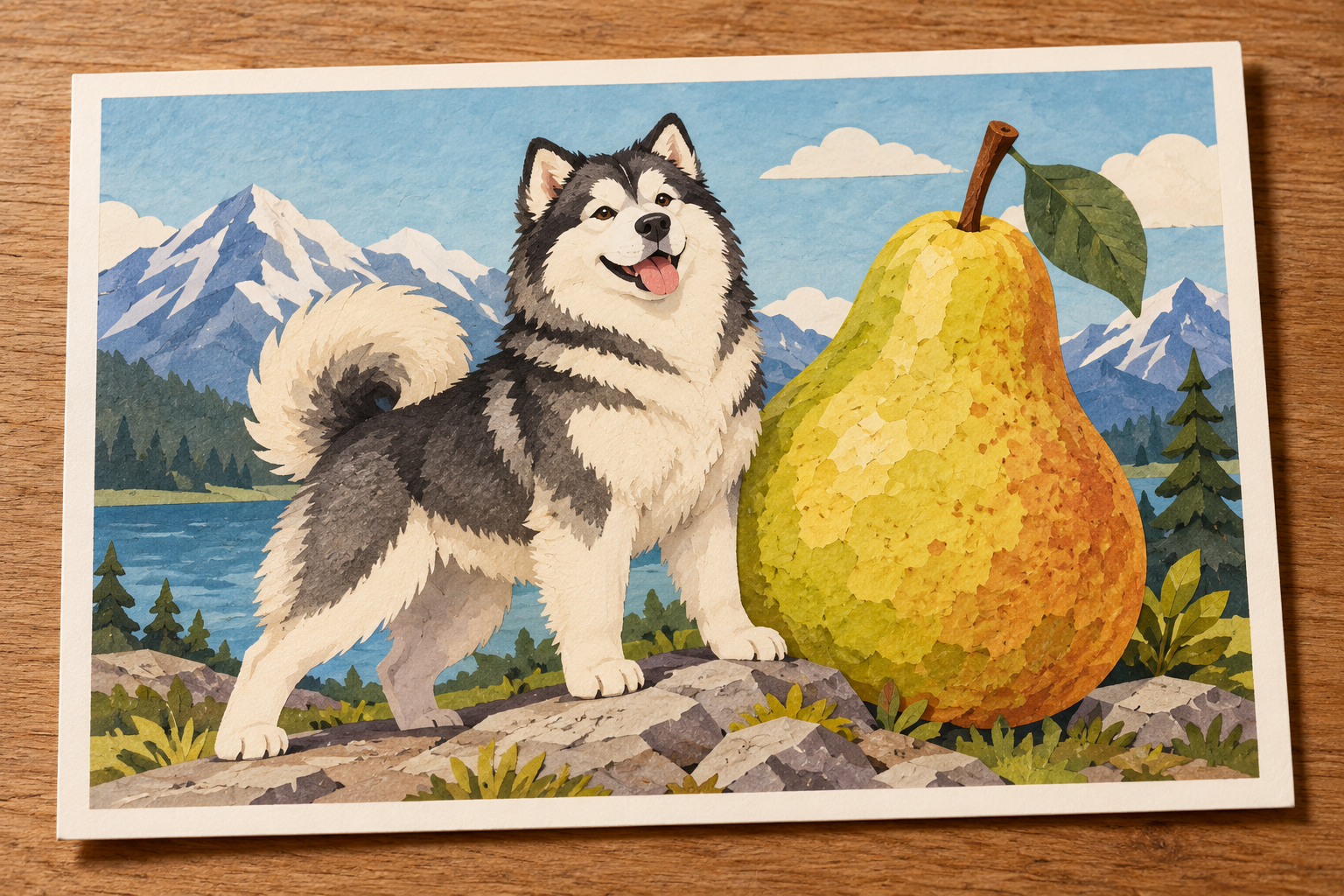
This pack depicts a grey-and-white Alaskan Malamute with a dark cap, white face, brown almond-shaped eyes, substantial muzzle and plumed tail. The park-day moods belong to this fictional individual.
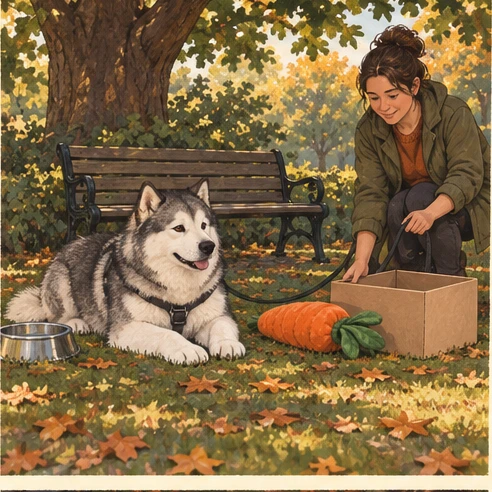
A shady pause with fresh water nearby. Today's prop is an oversized plush carrot.
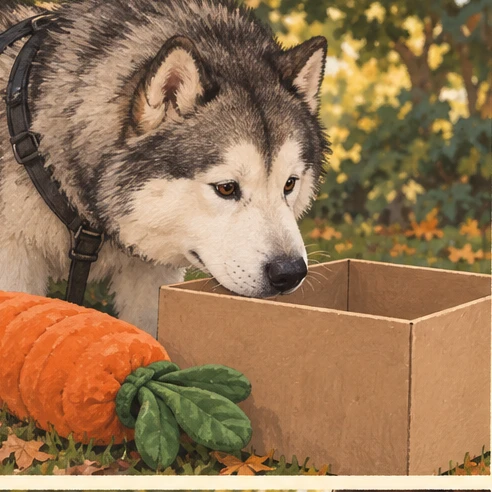
A broad head and substantial muzzle inspect the opening. That carrot looks rather long.
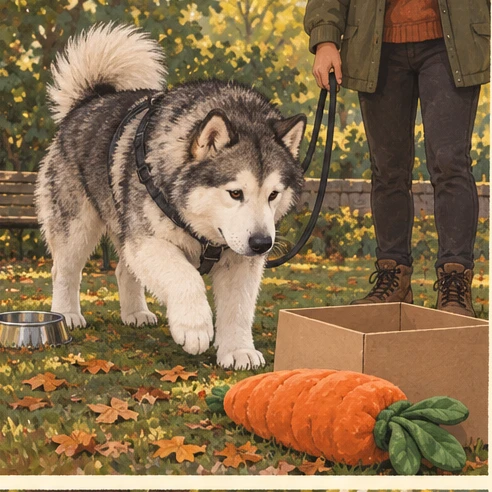
Large, compact feet cross the leaves on a loose lead. The handler stays beside the box.
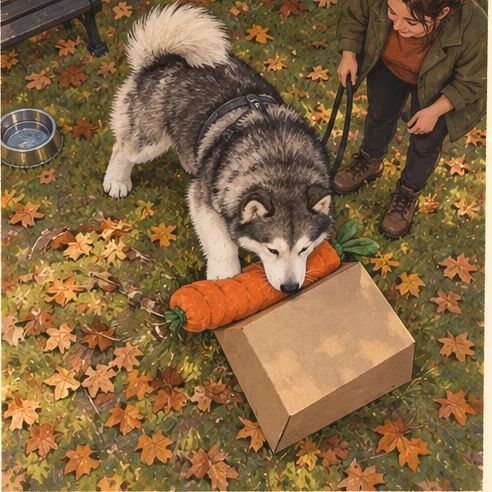
A gentle nose push wedges the carrot across the wide opening—and swivels the lightweight box instead.
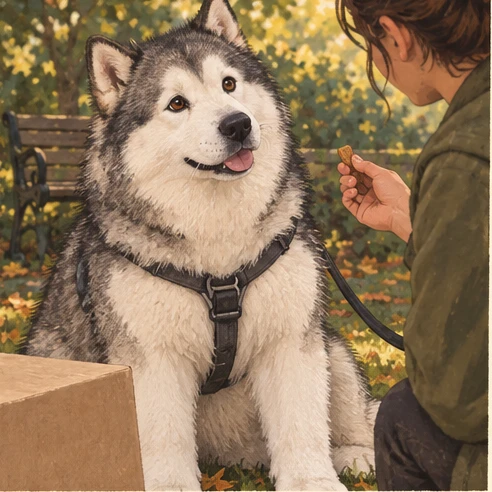
Brown almond-shaped eyes check the box, then the handler. A quiet wait earns a reward.
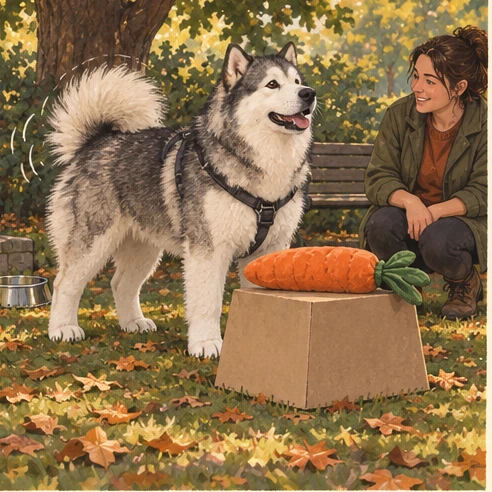
The handler frees the carrot and turns the box into a little display stand. A tail wiggle calls it a day.
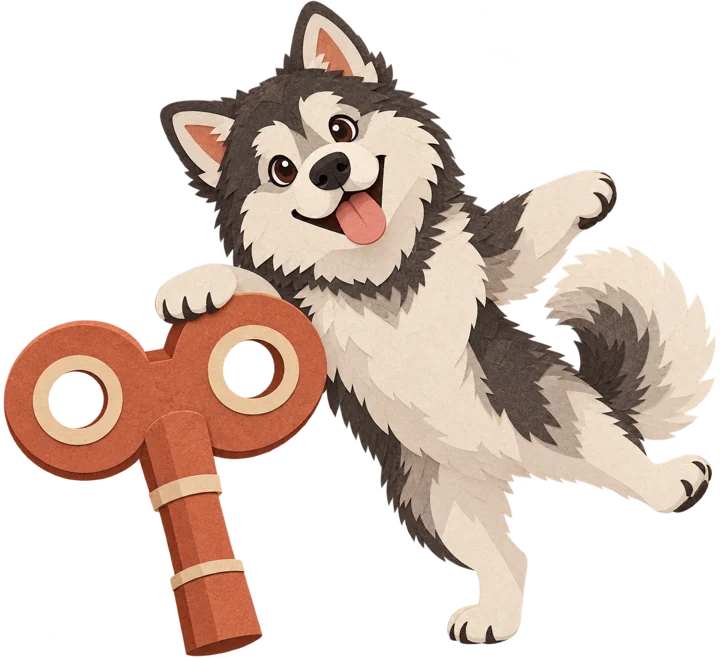
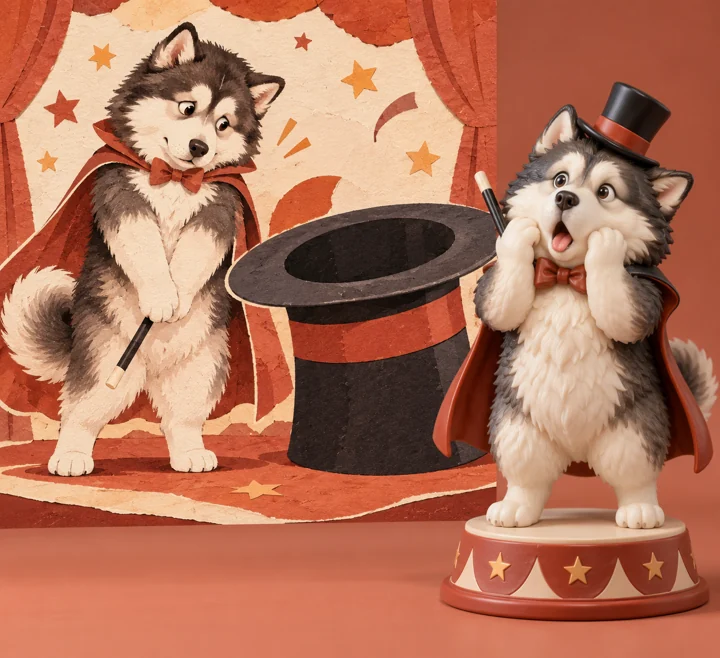
Eight transparent PNGs to save individually. Switch captions on or off for your chats.
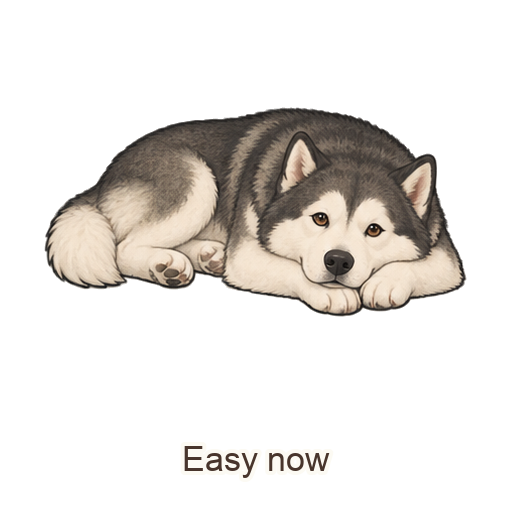 Easy now
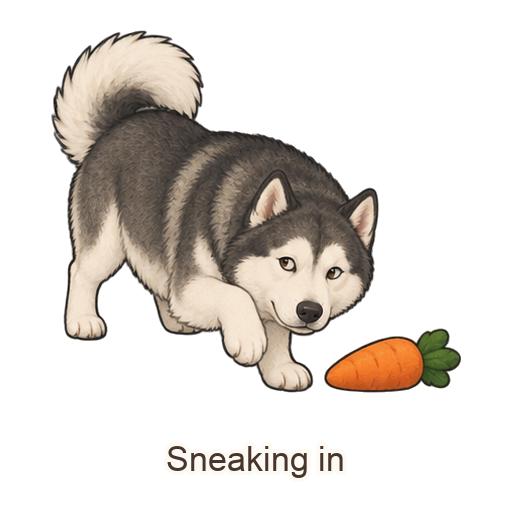 Sneaking in
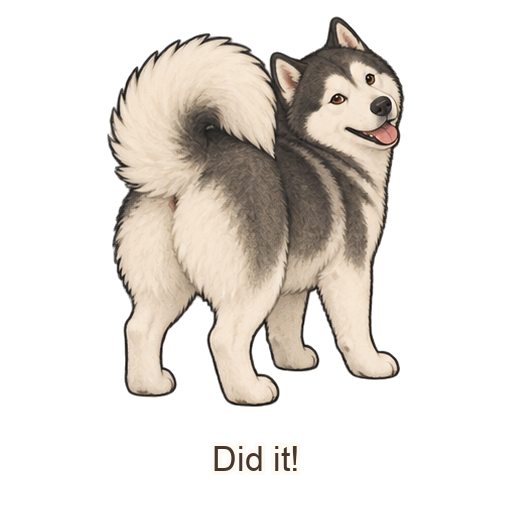 Did it!
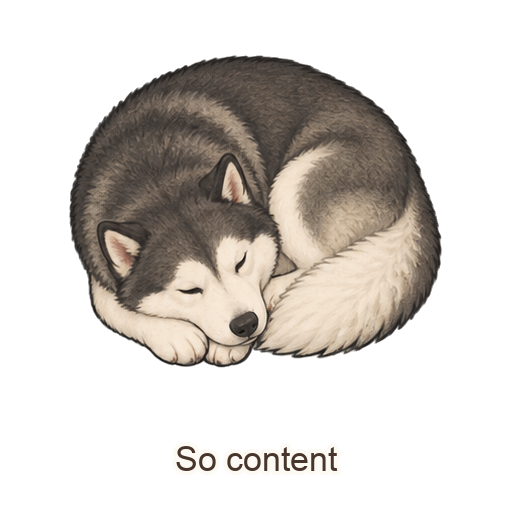 So content
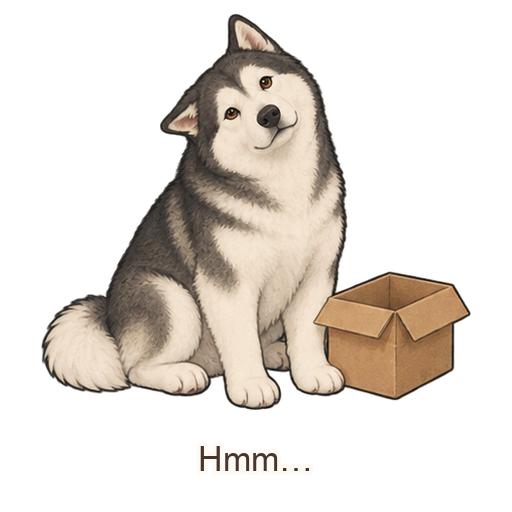 Hmm…
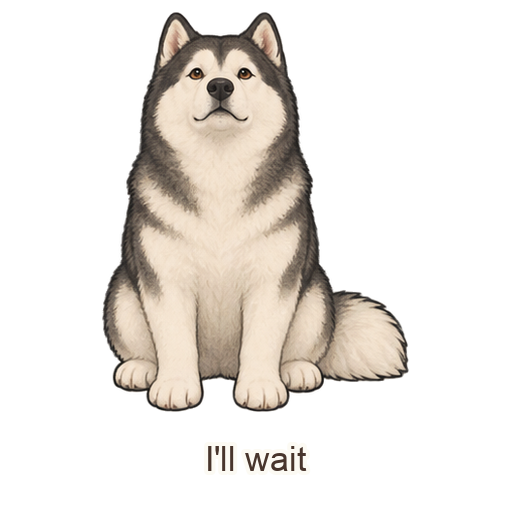 I'll wait
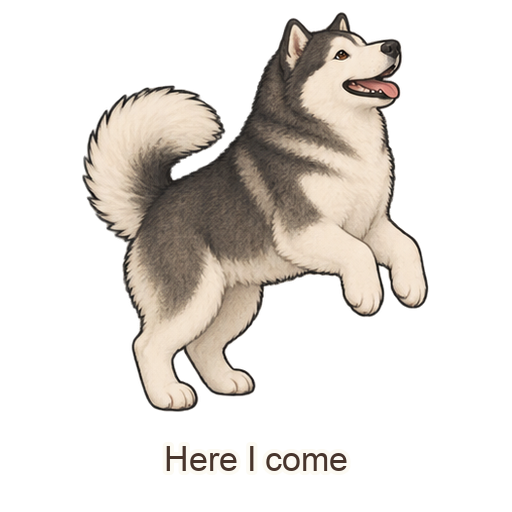 Here I come
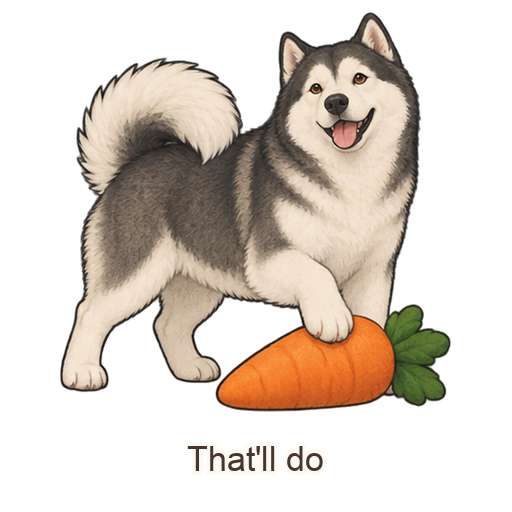 That'll do
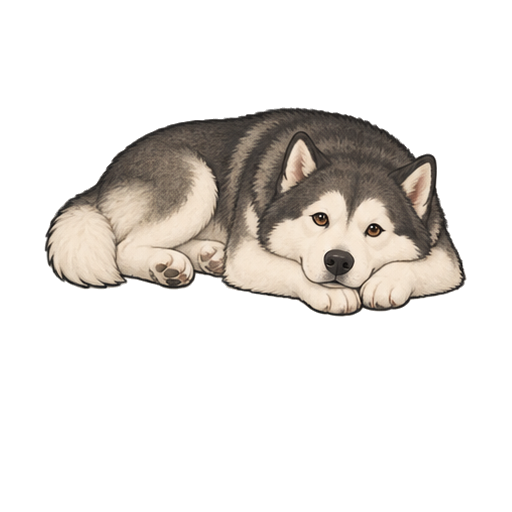 Easy now
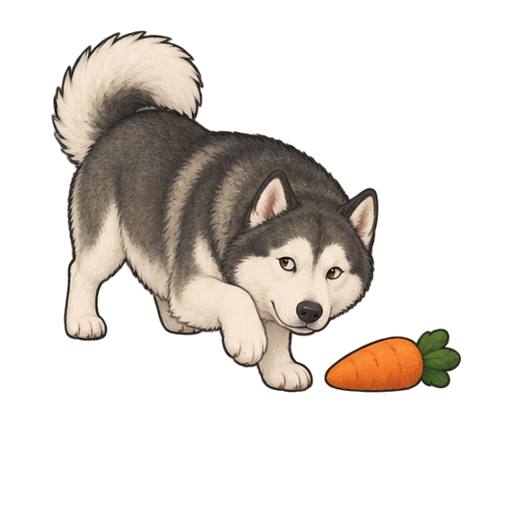 Sneaking in
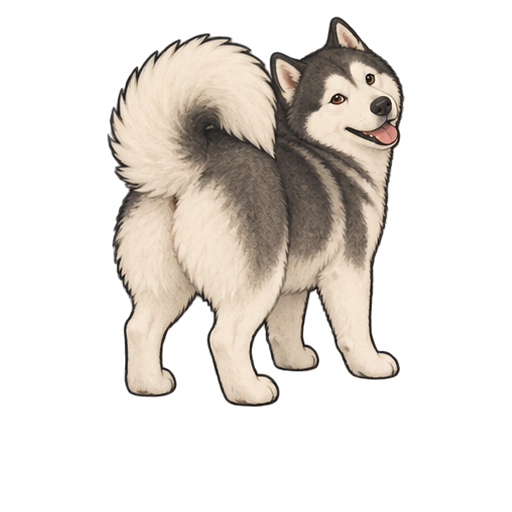 Did it!
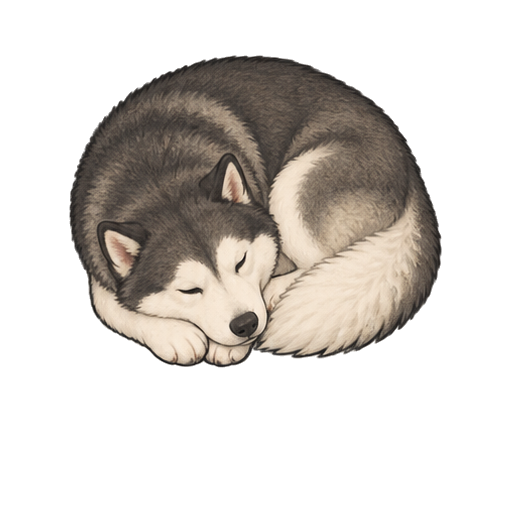 So content
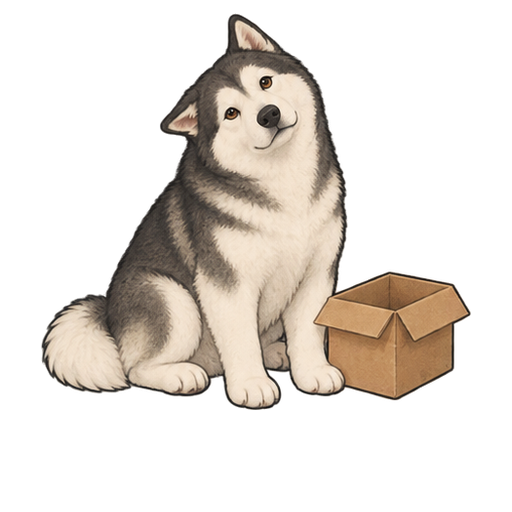 Hmm…
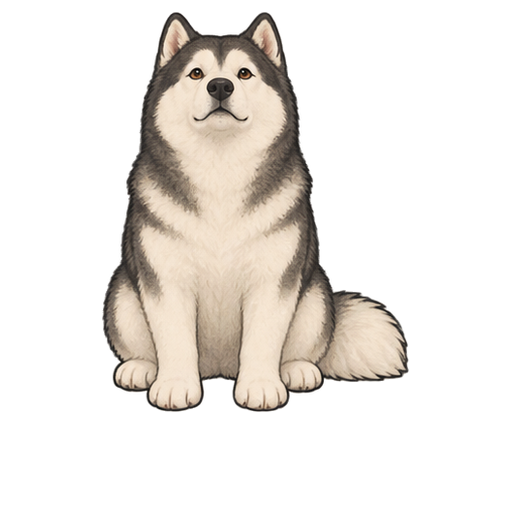 I'll wait
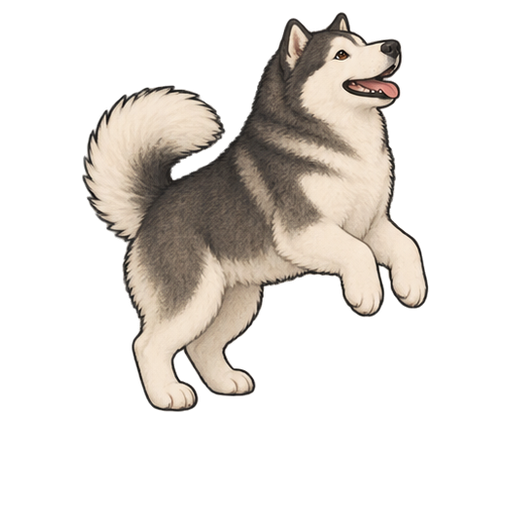 Here I come
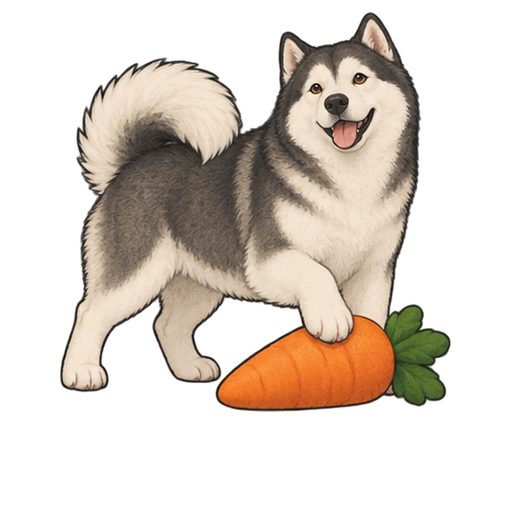 That'll do
Original woofmap artwork, assisted by GPT Image 2. Free for personal chats and non-commercial sharing with credit to woofmap.com. Fictional moods do not predict every dog’s temperament; see this page’s factual sources.
Combine the available parts, choose a name and take a little joy home.
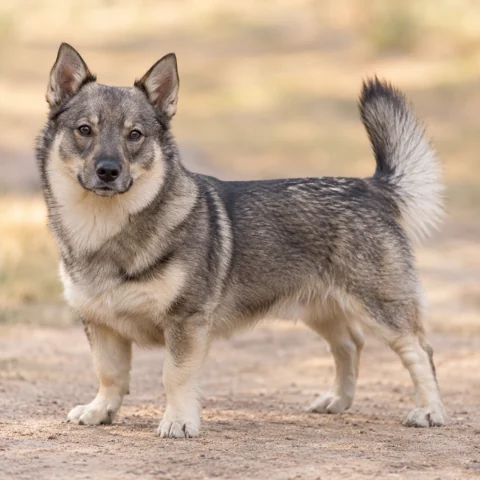 AI realistic image
Spitz and primitive types
Swedish Vallhund
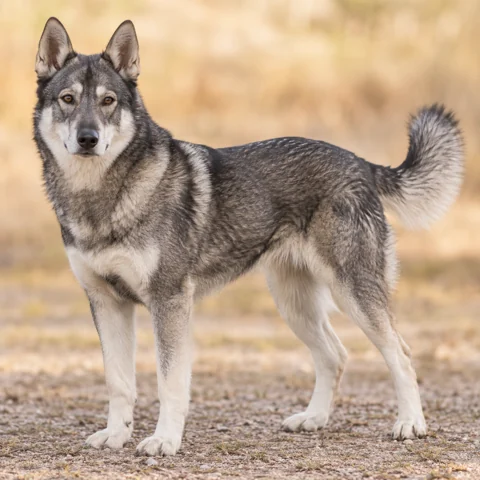 AI realistic image
Spitz and primitive types
Jämthund
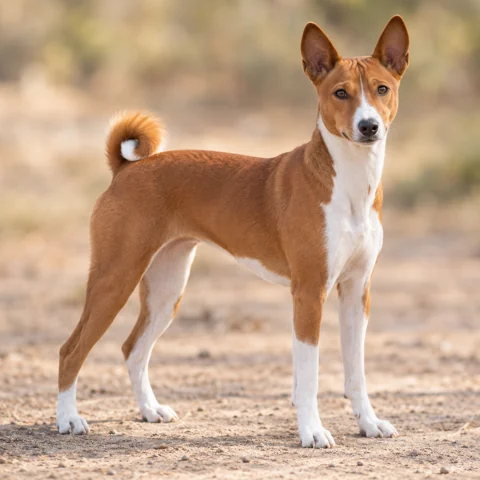 AI realistic image
Spitz and primitive types
Basenji