Siberian Husky vs Alaskan Malamute: differences and which suits you
Huskies have a lighter build; Malamutes show more bone and strength, reflecting different sled-work roles. Both have double coats and ongoing activity needs. Eye colour alone does not identify the breed, and larger size does not guarantee a quieter dog.
Assess secure fencing, loose-lead training and handling strength first. Explore a Husky for a lighter build; consider a Malamute if you can manage a stronger dog and larger transport space. Both need undercoat care, shade, water and weather-adjusted activity.
Everyday care and appearance
Siberian Husky vs Alaskan Malamute: differences and which suits you
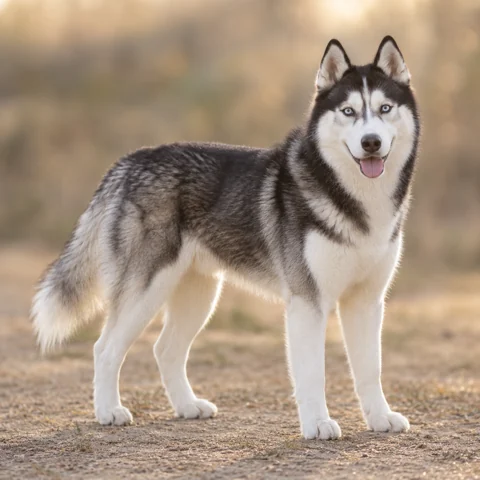
A light sled-dog outline with erect ears and sickle tail, built for endurance rather than heaviness.
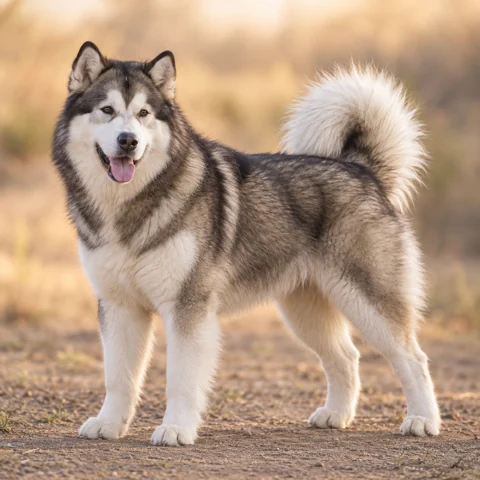
Heavy-boned, deep-chested and muscular, it has a compact body slightly longer than tall. Triangular ears stand erect when alert, and the plumed tail is carried over the back when not working. Desirable freighting sizes—not fixed limits—are 63.5 cm and 38 kg for males, 58.5 cm and 34 kg for females.
Coat
Medium-length double coat in many colours; eyes may be brown, blue or one of each.
A thick, coarse outer coat covers a dense, woolly undercoat; the coat is usually shorter and less dense in summer. Colours range from light grey to black, sable and red; all-white is the only permitted solid colour, and white predominates underneath and on parts of the legs, feet and face.
Temperament and training
Friendly, gentle and alert, usually without the guarding qualities of a dedicated guard breed.
The standard describes an affectionate, friendly and devoted companion, not exclusively attached to one person; it can be playful yet dignified as an adult. Patient, consistent reward-based teaching helps channel its strength into good leash manners and self-control. Individuals vary, so friendliness toward every person or dog should not be assumed.
Exercise, grooming and daily care
Use secure fencing and regular exercise, adjust activity in heat and brush shedding undercoat without shaving the double coat.
Brush the double coat regularly and more often during heavier shedding; check between the toes and the pads rather than styling the coat with trimming. Offer walks, sniffing and gradually introduced pulling activities suited to a dog built for sustained work. Practise loose-leash walking, recall and settling with rewards, and manage outdoor access with a lead or secure enclosure. Provide shade and water in warm weather.
Common questions
Which is easier to care for: Siberian Husky or Alaskan Malamute?
Assess secure fencing, loose-lead training and handling strength first. Explore a Husky for a lighter build; consider a Malamute if you can manage a stronger dog and larger transport space. Both need undercoat care, shade, water and weather-adjusted activity.
Can either live in an apartment?
Apartment rest space is only one factor: plan cool conditions, outdoor activity and alone-time and quiet training. Malamute size adds lift and transport demands; Huskies still need doorway and lead safety. A balcony or brief toilet walks are not an activity plan.
Sources and limits
Recommendations are editorial interpretations of the breed profiles, not guarantees about an individual dog. Age, breeding, socialisation, training and health matter; consider the individual dog, your time and budget.