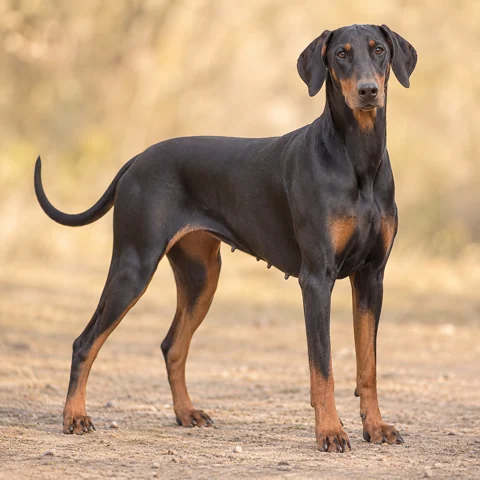
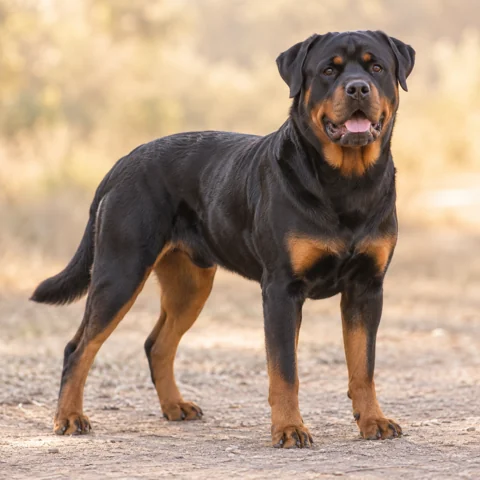
| Size and build | Medium-sized, powerful and muscular yet elegant, the body is nearly square, especially in males. Males stand 68–72 cm and females 63–68 cm at the withers; the ears and tail are left natural, with the tail ideally carried high in a slight curve. | Compact and powerful without being cumbersome, this is a medium-to-large working dog. Males stand 61–68 cm and females 56–63 cm at the withers; the ears are high-set and pendant, and the natural tail reaches roughly to the hocks. |
|---|
| Coat | The coat is short, hard, dense and close-fitting, with no undercoat. The two accepted colour varieties are black and brown, each with clearly defined rust-red markings. | The coat has a medium-length, coarse, flat topcoat and an undercoat. The standard calls for black with sharply defined rich-tan markings on the face, throat, chest, legs, above the eyes and beneath the tail base. |
|---|
| Temperament and training | The standard calls for a friendly, calm dog devoted to its family, with measured alertness and courage. It describes a willing, trainable worker; consistent reward-based guidance helps channel that confidence and protective ability. Individuals differ, so sociability with strangers should not be assumed. | The standard describes a good-natured, placid dog that is devoted, willing to work, self-assured and alert yet even-tempered. Clear, consistent reward-based training helps channel those qualities; they do not guarantee that every individual welcomes every person. Experience and training affect how a dog behaves. |
|---|
| Exercise, grooming and daily care | Brush the short coat regularly and use the opportunity to check skin, ears and nails. This working breed needs daily activity plus engaging tasks such as scent games and obedience training. Reward-based practice can build reliable recall and calm behaviour around visitors, while gradual exposure helps it adapt to varied settings. Manage its protective tendencies responsibly rather than leaving it to assess guests on its own. | Brush the double coat regularly, more often when shedding is noticeable, and check ears and nails. Walks, scent exploration and progressive training give a former cattle-driving and guarding worker constructive outlets. Use rewards to build reliable leash manners and recall, and practise calm responses to visitors, strangers and other animals. Its strength calls for consistent household rules and a handler able to manage it securely in public. |
|---|