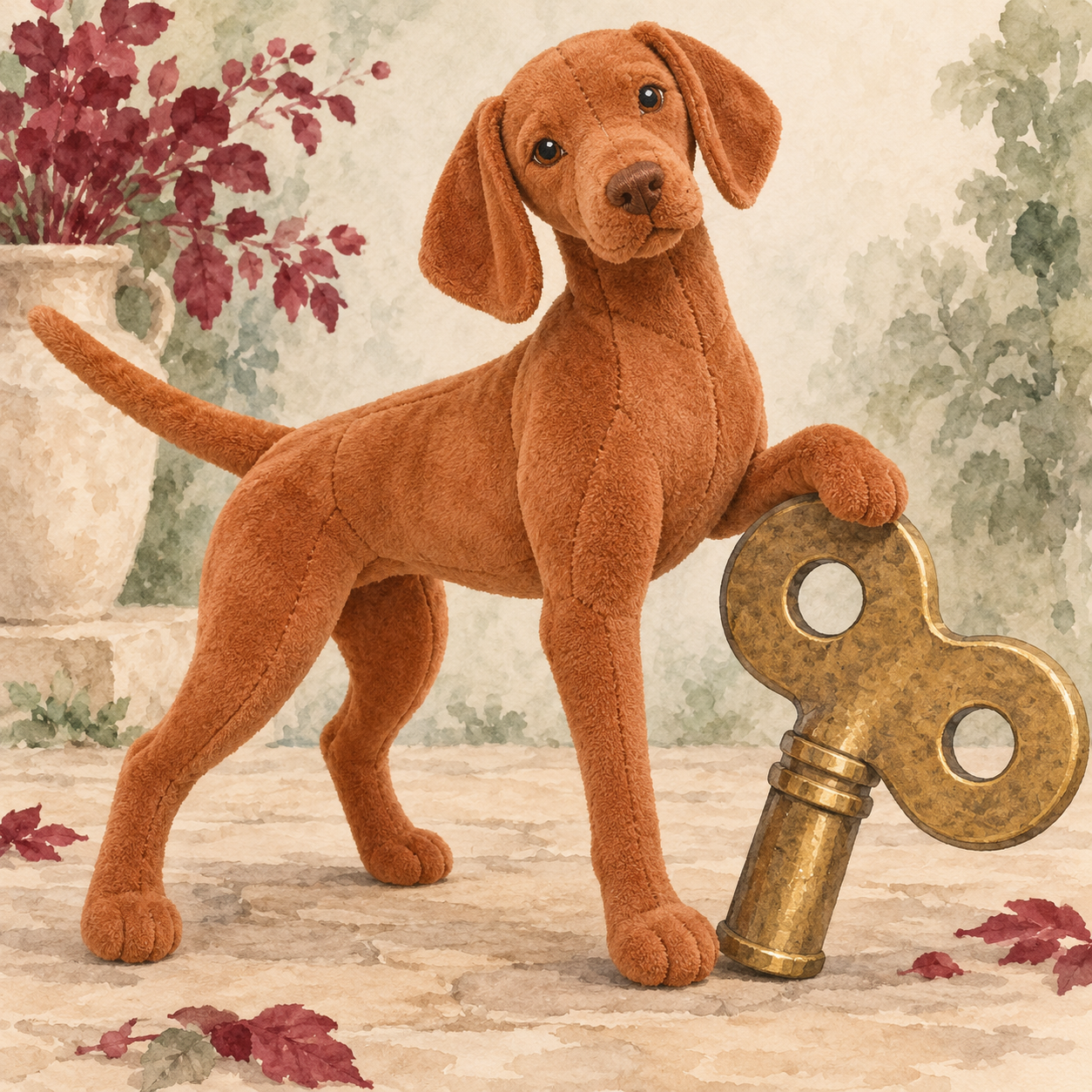
WOOFMAP · CANINE ARCHIVENO. 057
Pointing dogs
Hungarian Short-Haired Pointer (Vizsla)
Hungarian Short-Haired Pointer (Vizsla)
✳ woofmap.comHungary
WOOFMAP · CANINE ARCHIVE · NO. 057
Hungarian Short-Haired Pointer (Vizsla)
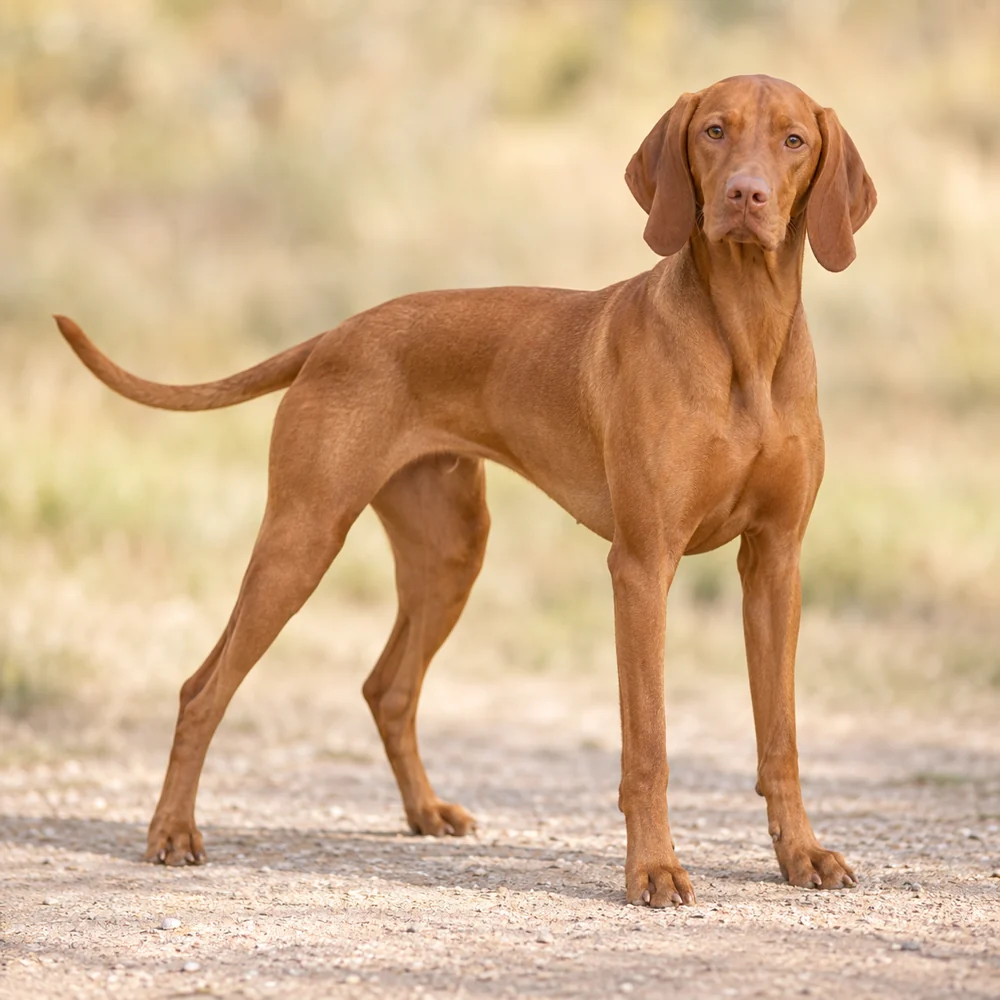
A golden-coated pointer built to work on land and in water.
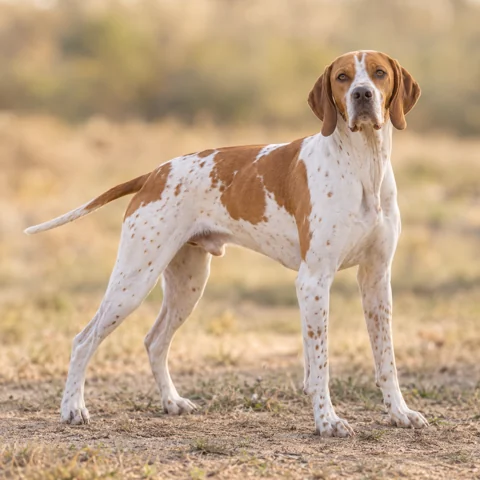
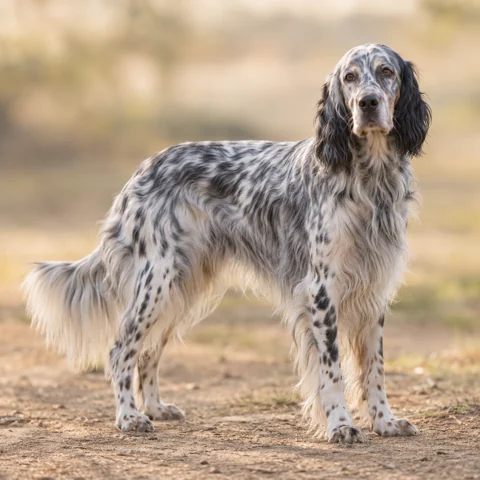
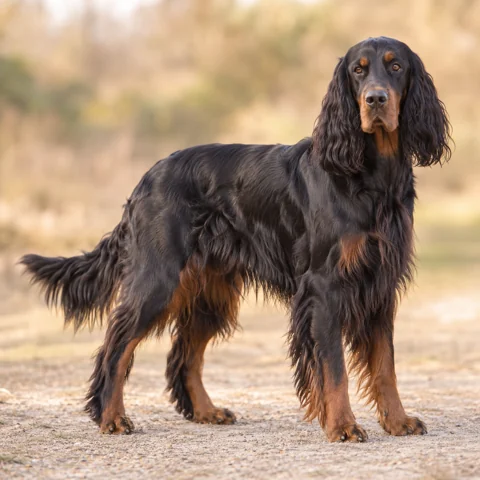
AI-generated realistic breed image, for visual reference.
This Hungarian Short-Haired Pointer (Vizsla) page is still waiting for a voice. Live with a Hungarian Short-Haired Pointer (Vizsla)? Share a natural bark, howl or whine and let others hear a little of your dog’s everyday life.
If we feature your recording, we’ll credit you or your dog using the name you choose.
A 5–15 second phone recording in a quiet setting is perfect. Capture a natural moment without startling or disturbing your dog. Audio or video with sound is welcome.
Share your dog’s voice ↗[email protected]Attach your recording, breed and preferred credit. Please confirm you recorded it and allow woofmap to feature it.
Thank you for helping us build a playful Woof Planet together. Every little woof deserves to be heard.
Pointing dogs
Hungarian Short-Haired Pointer (Vizsla)
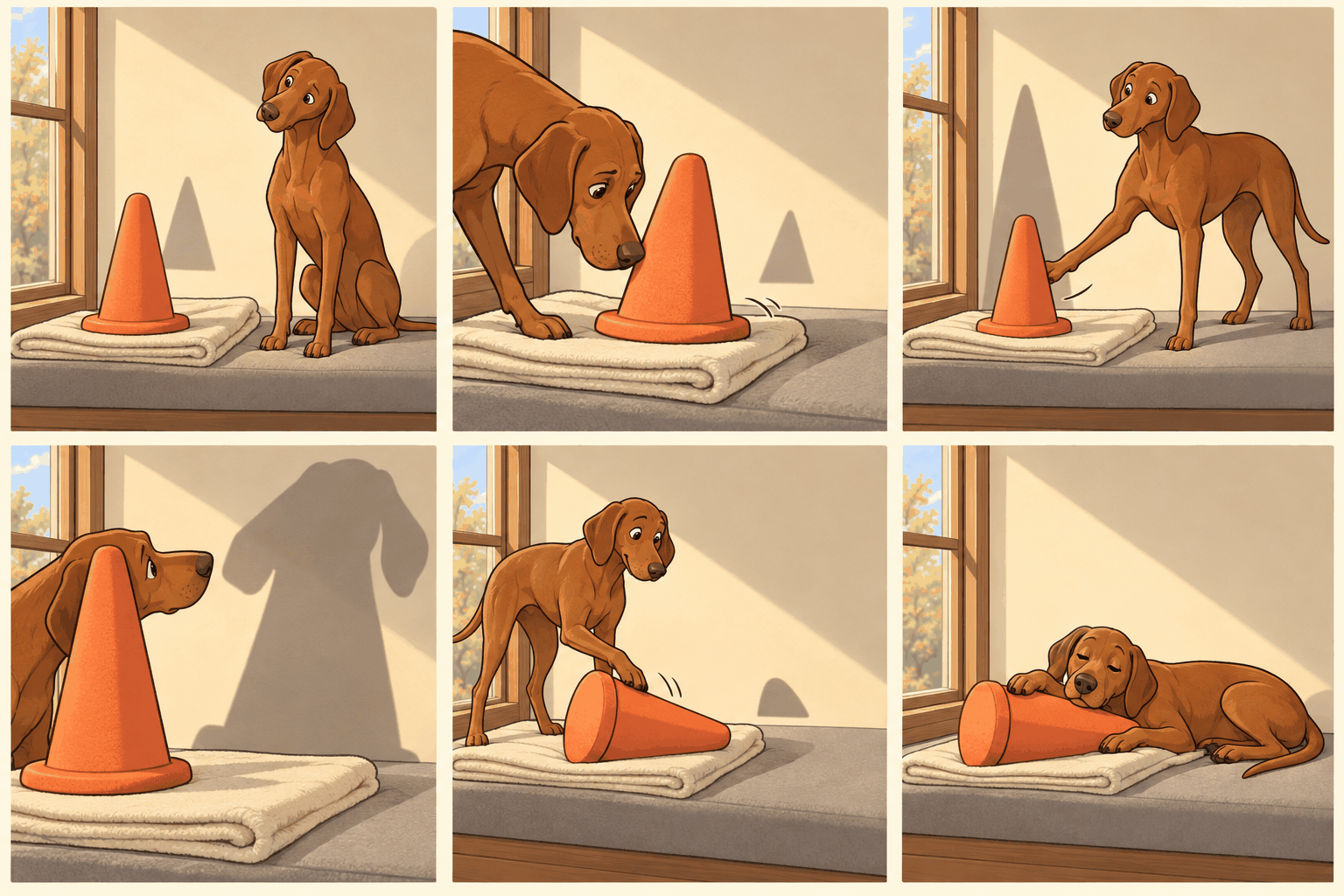
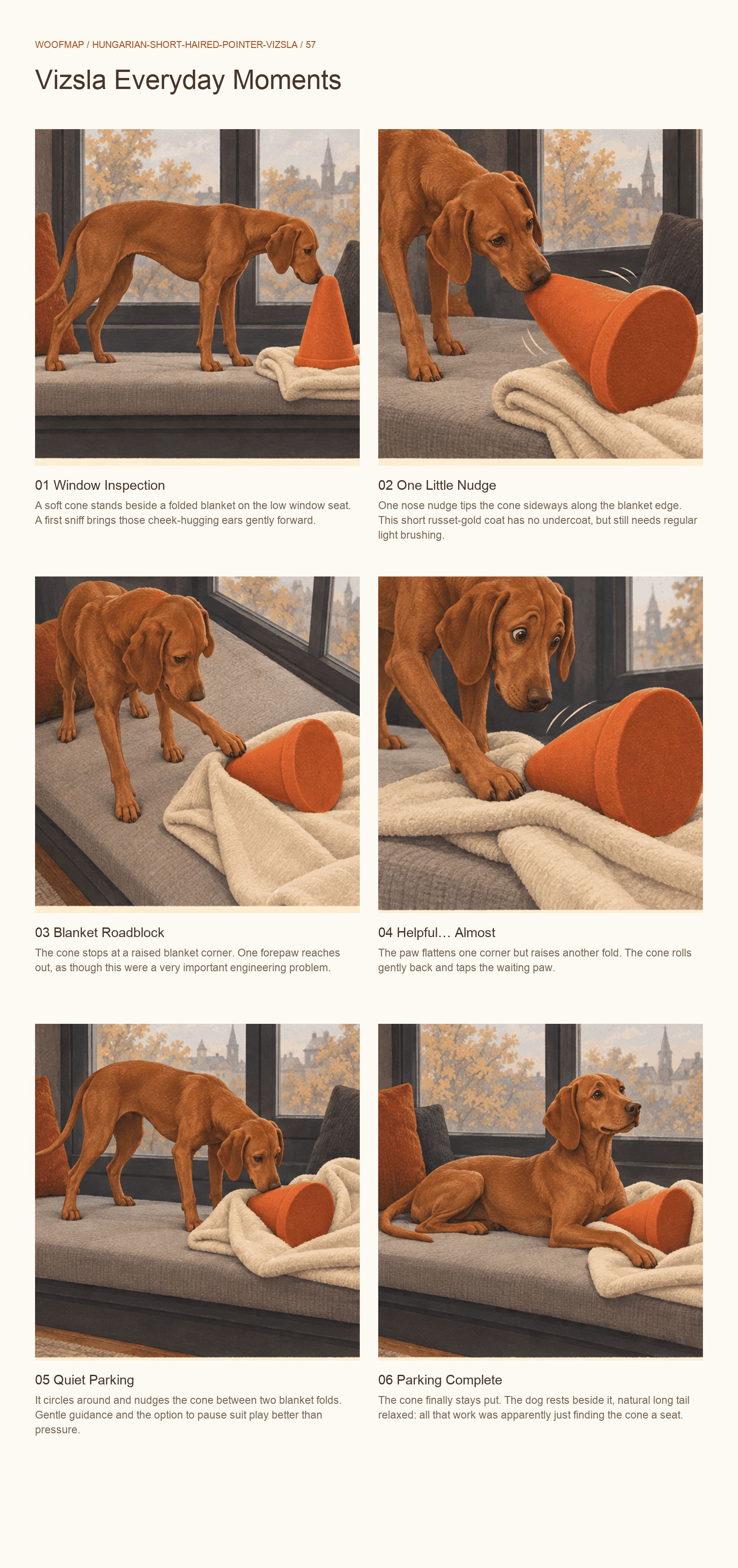
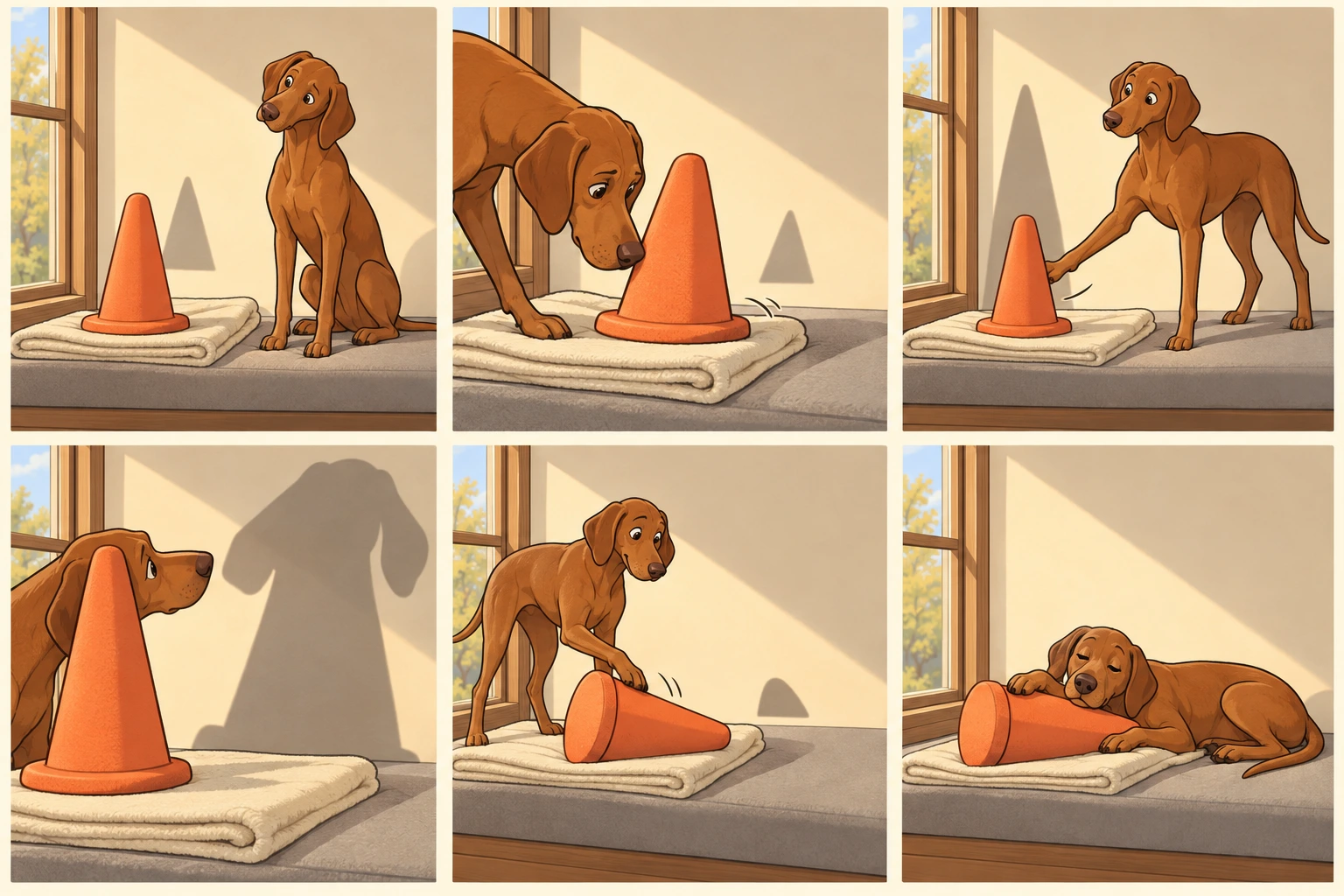
A soft cone casts an ever-larger shadow, and this fictional Vizsla investigates. Six wordless beats tell the story through movement alone.
According to the standard, Vizsla ancestors arrived in the Carpathian Basin with nomadic Hungarian tribes, and written and illustrated records date to the 14th century. Their importance as hunting dogs grew from the 18th century, and they took part in Hungarian pointing-dog competitions by the late 19th century. Specific modern breeding began in 1920; FCI recognition followed in 1936.
Medium-sized, lean and strong, the body is slightly longer than the height at the withers; males stand 58–64 cm and females 54–60 cm. The rounded V-shaped ears hang close to the cheeks; an undocked tail reaches the hock and is straight or slightly sabre-shaped.
Look for a lean, medium-sized dog with a short, harsh golden coat without an undercoat and ears hanging close to the cheeks. This breed points and retrieves, with work described in fields, forest and water. This standard covers the short-haired Hungarian Vizsla, not the wire-haired breed.
The standard describes a lively, friendly, even-tempered dog that is readily trained and especially willing to stay in contact with its handler while working. Reward-based, clear guidance suits that cooperative tendency better than rough correction. Individuals can still differ in energy, reactions to unfamiliar situations and how readily they settle at home.
Brush the short coat regularly and check skin, ears and paws after outdoor work. Walks, scent games, retrieves and safe opportunities to work in water can channel its hunting abilities. Teach recall and settling with consistent, gentle methods; the standard says it cannot bear rough treatment. Manage potential pursuit of game with a lead or secure enclosure until recall is reliable.
It can be considered if outdoor activity and mental work are part of daily life; indoor space alone will not meet its needs. Teach calm time and being left alone gradually, adjusting to the individual dog.
A regular light brushing removes loose hair and dirt; having no undercoat does not mean it sheds no hair. Check the ears and paws after trips through rough ground or vegetation.
Combine walks with scent searches and retrieving games to engage its nose and willingness to work with a handler. Build recall in secure places before adding distractions, and use a lead around wildlife when needed.
SOURCE NOTES
Breed traits follow the cited official standards; everyday care advice is our editorial interpretation of coat, build and working purpose.
Coat and size varieties can share a standard. The number is an archive reference, not a rarity score. An independent educational atlas, not a registry publication. Temperament varies; consult a veterinarian about health concerns.
WOOFMAP / HUNGARIAN-SHORT-HAIRED-POINTER-VIZSLA / LITTLE MOMENTS
This pack depicts a solid russet-gold short-haired Vizsla with slightly darker ears, no white markings, cheek-hugging drop ears and a natural long tail. These fictional window-seat antics are not breed-wide traits.
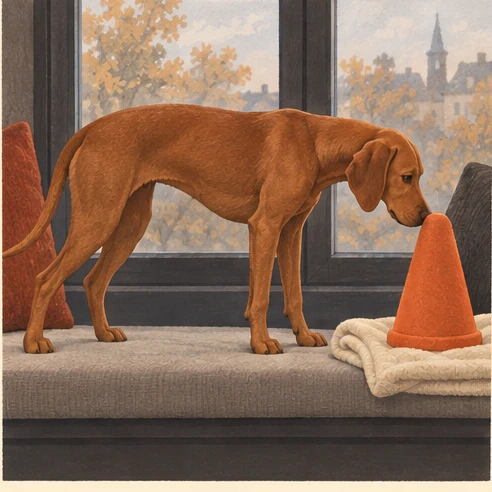
A soft cone stands beside a folded blanket on the low window seat. A first sniff brings those cheek-hugging ears gently forward.
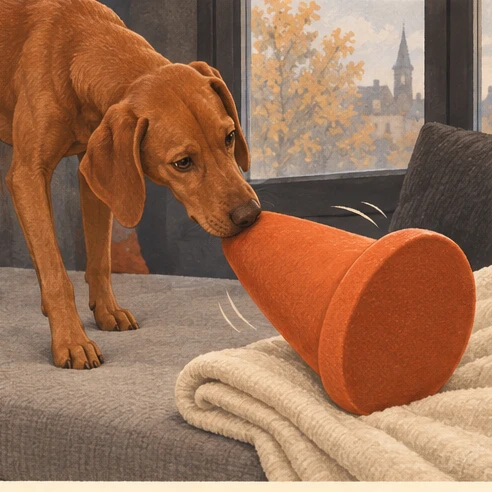
One nose nudge tips the cone sideways along the blanket edge. This short russet-gold coat has no undercoat, but still needs regular light brushing.
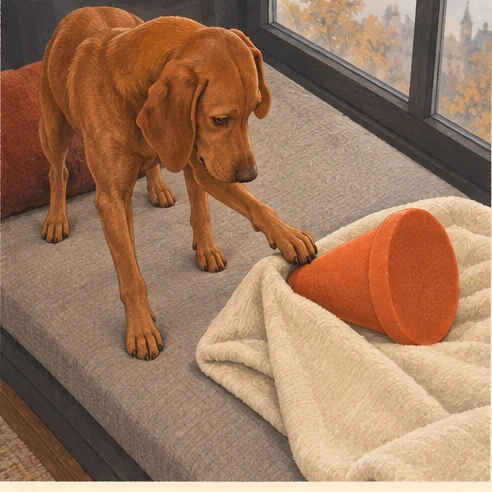
The cone stops at a raised blanket corner. One forepaw reaches out, as though this were a very important engineering problem.
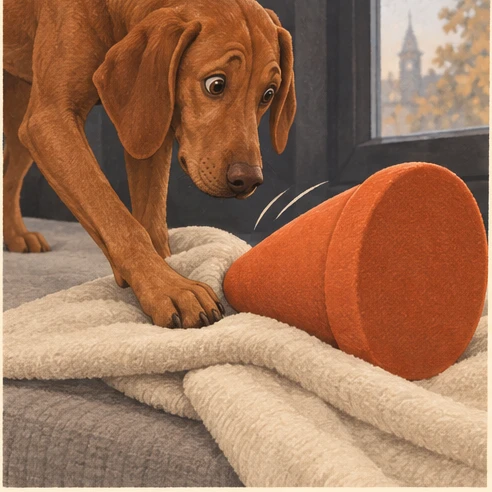
The paw flattens one corner but raises another fold. The cone rolls gently back and taps the waiting paw.
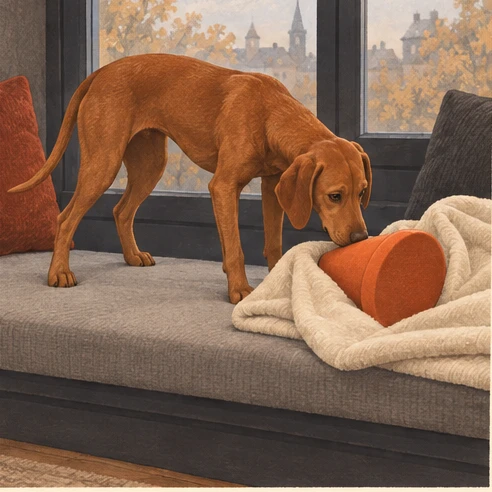
It circles around and nudges the cone between two blanket folds. Gentle guidance and the option to pause suit play better than pressure.
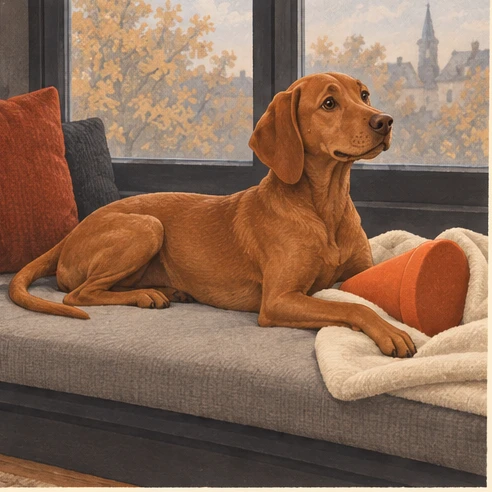
The cone finally stays put. The dog rests beside it, natural long tail relaxed: all that work was apparently just finding the cone a seat.

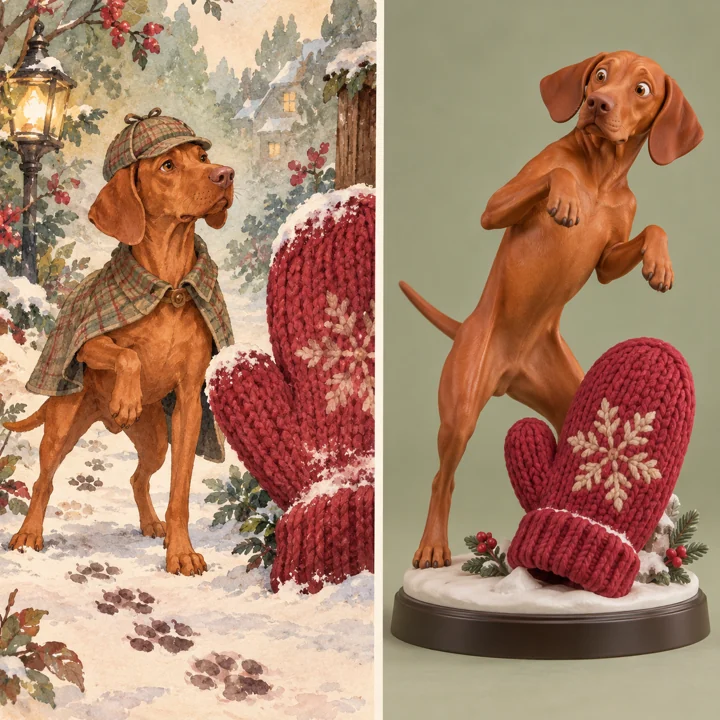
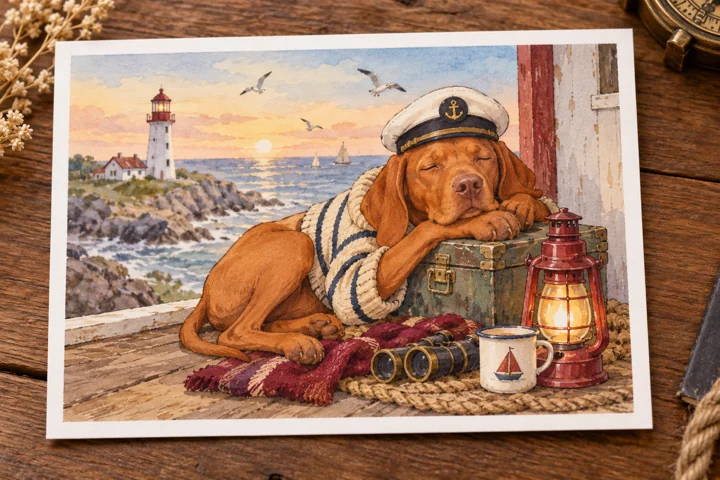
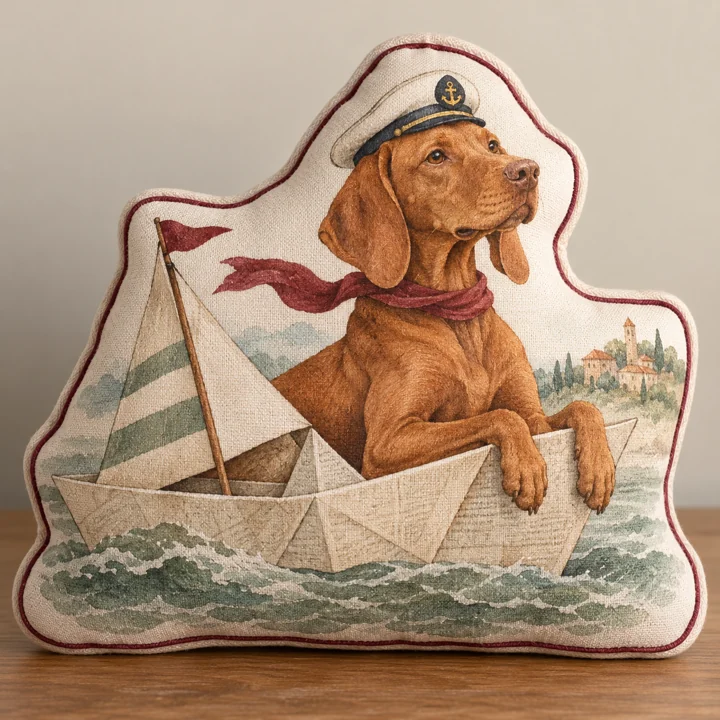
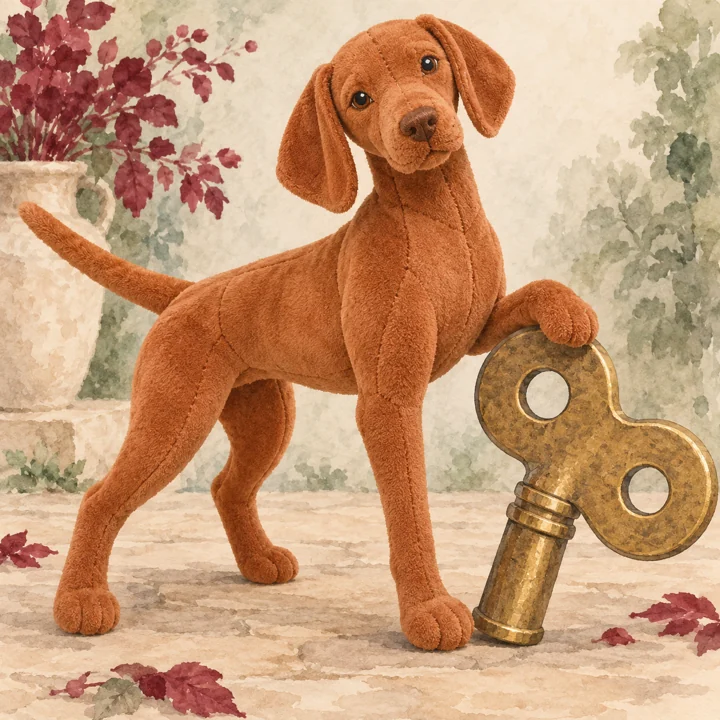
Eight transparent PNGs to save individually. Switch captions on or off for your chats.
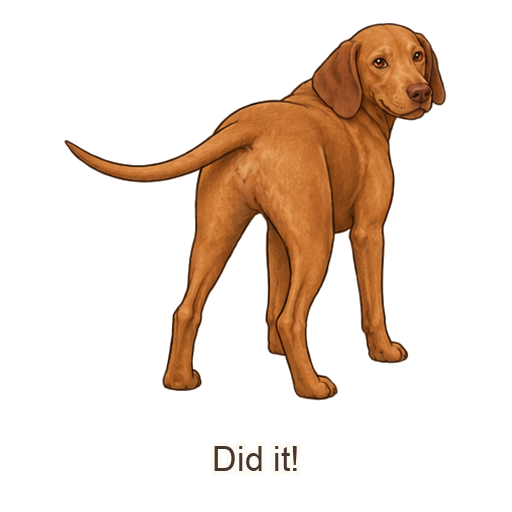 Did it!
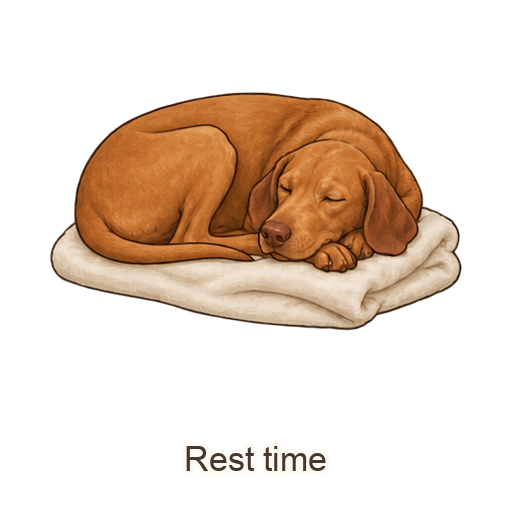 Rest time
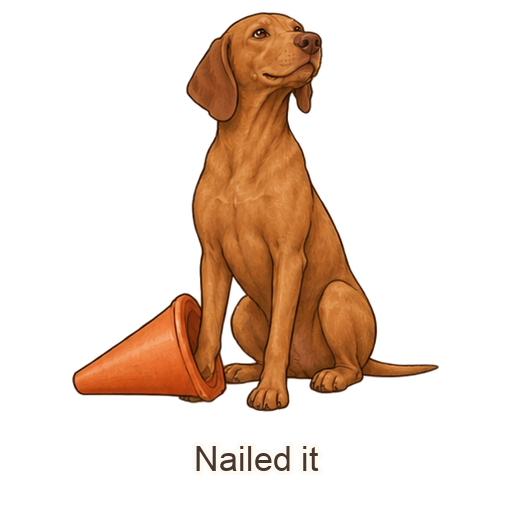 Nailed it
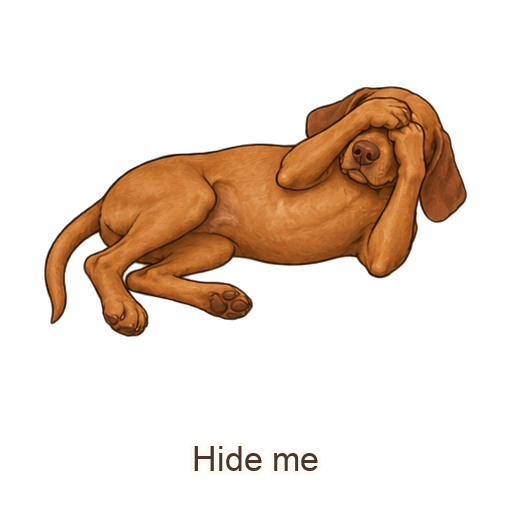 Hide me
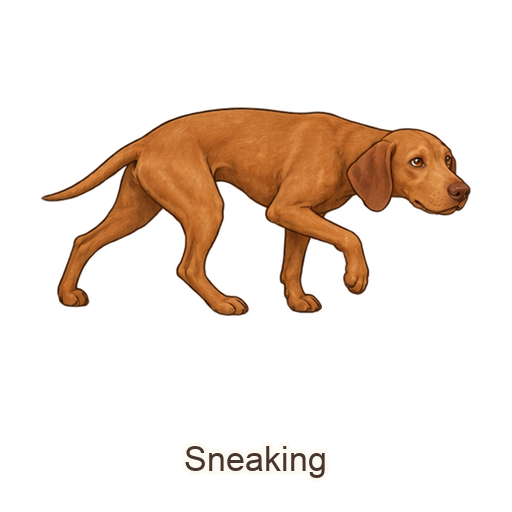 Sneaking
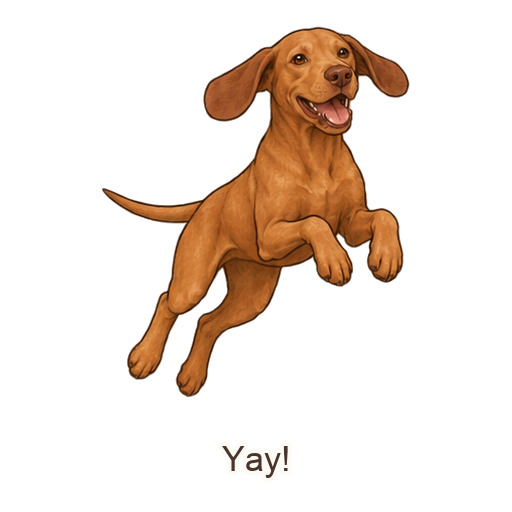 Yay!
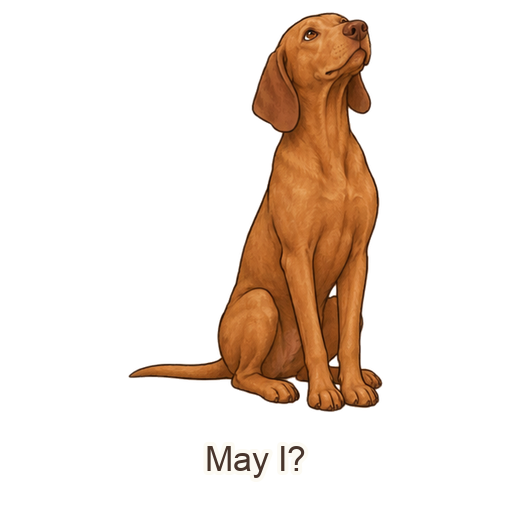 May I?
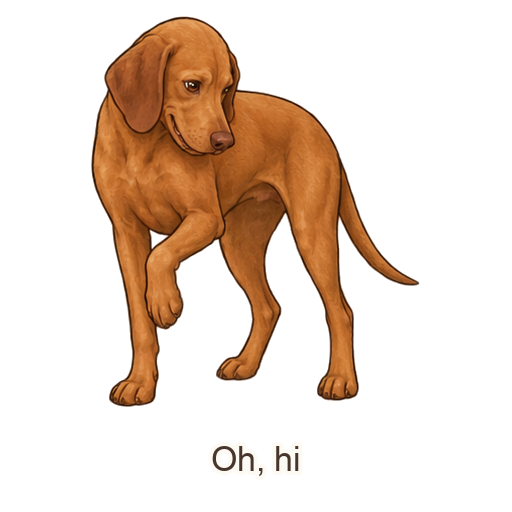 Oh, hi
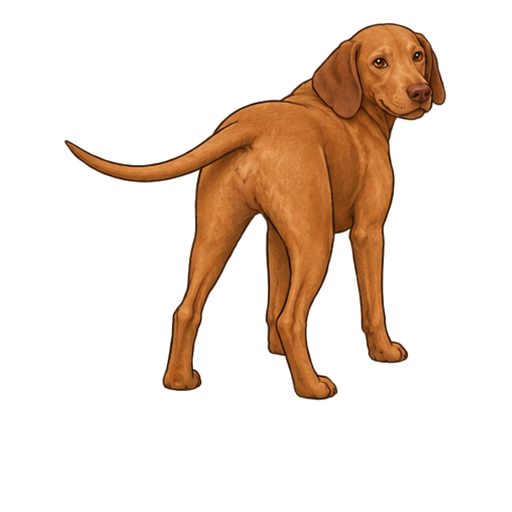 Did it!
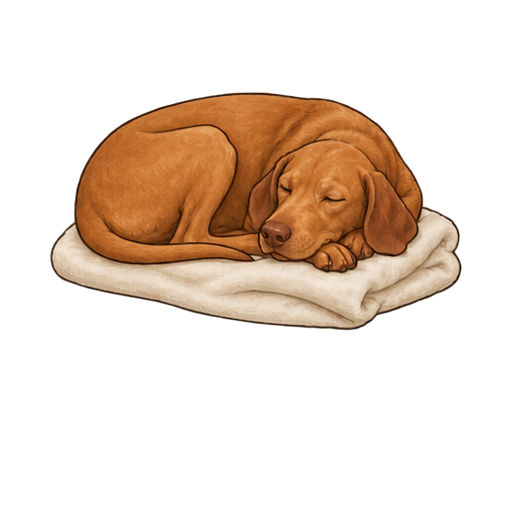 Rest time
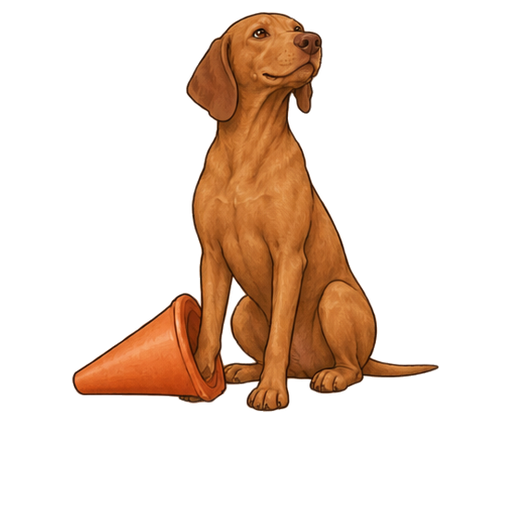 Nailed it
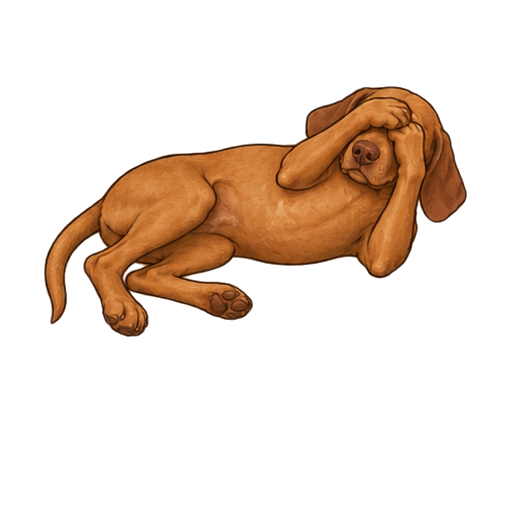 Hide me
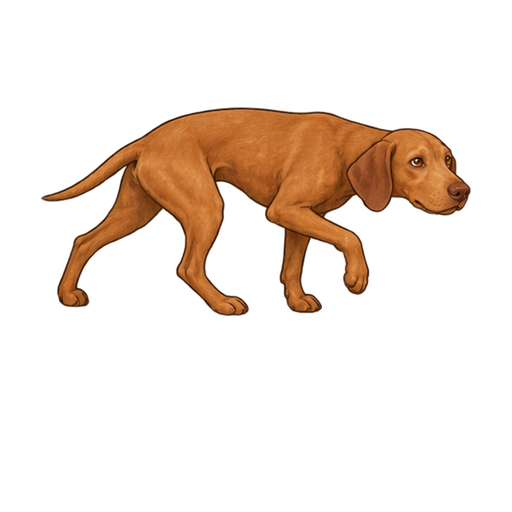 Sneaking
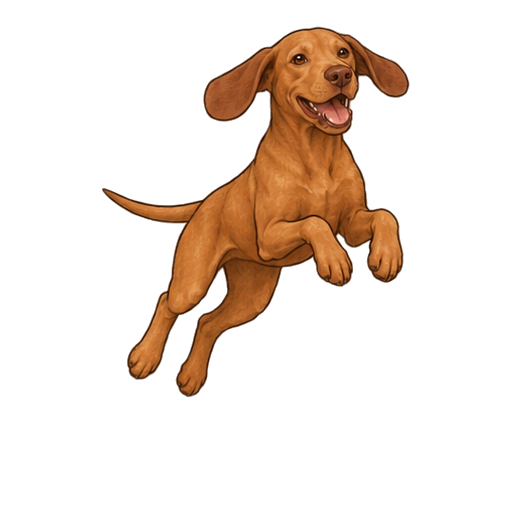 Yay!
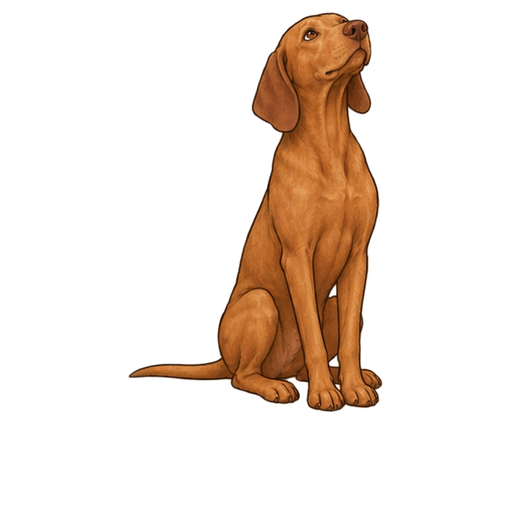 May I?
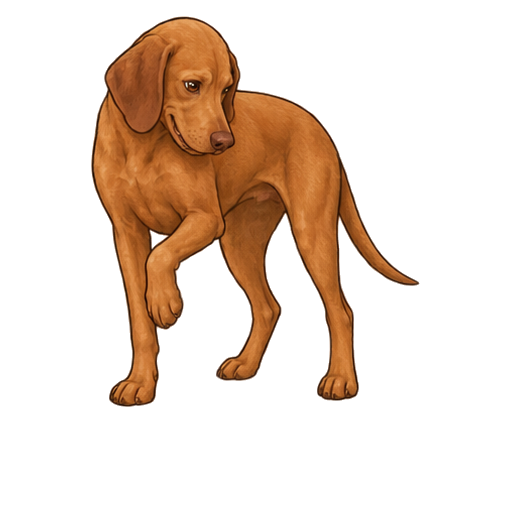 Oh, hi
Original woofmap artwork, assisted by GPT Image 2. Free for personal chats and non-commercial sharing with credit to woofmap.com. Fictional moods do not predict every dog’s temperament; see this page’s factual sources.
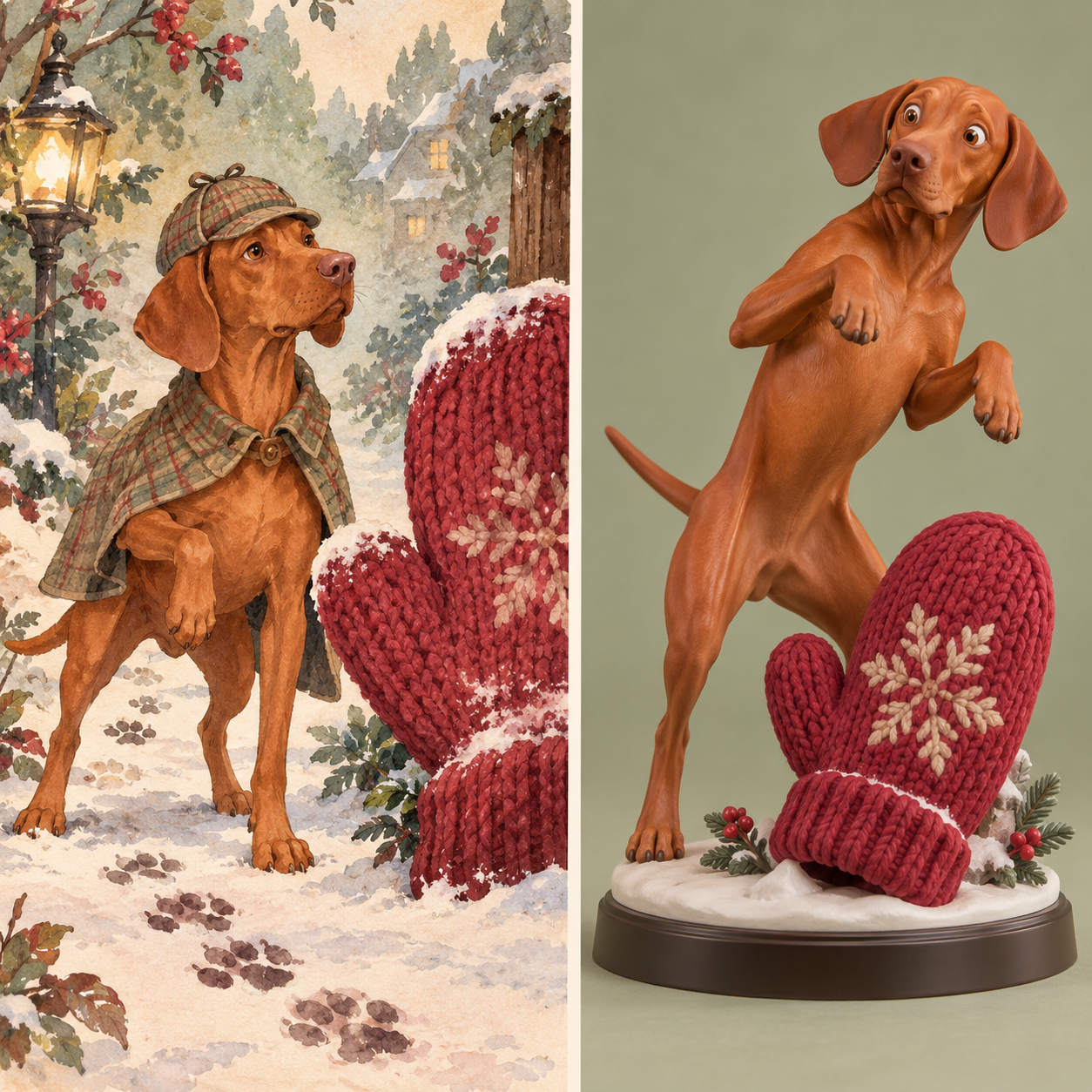
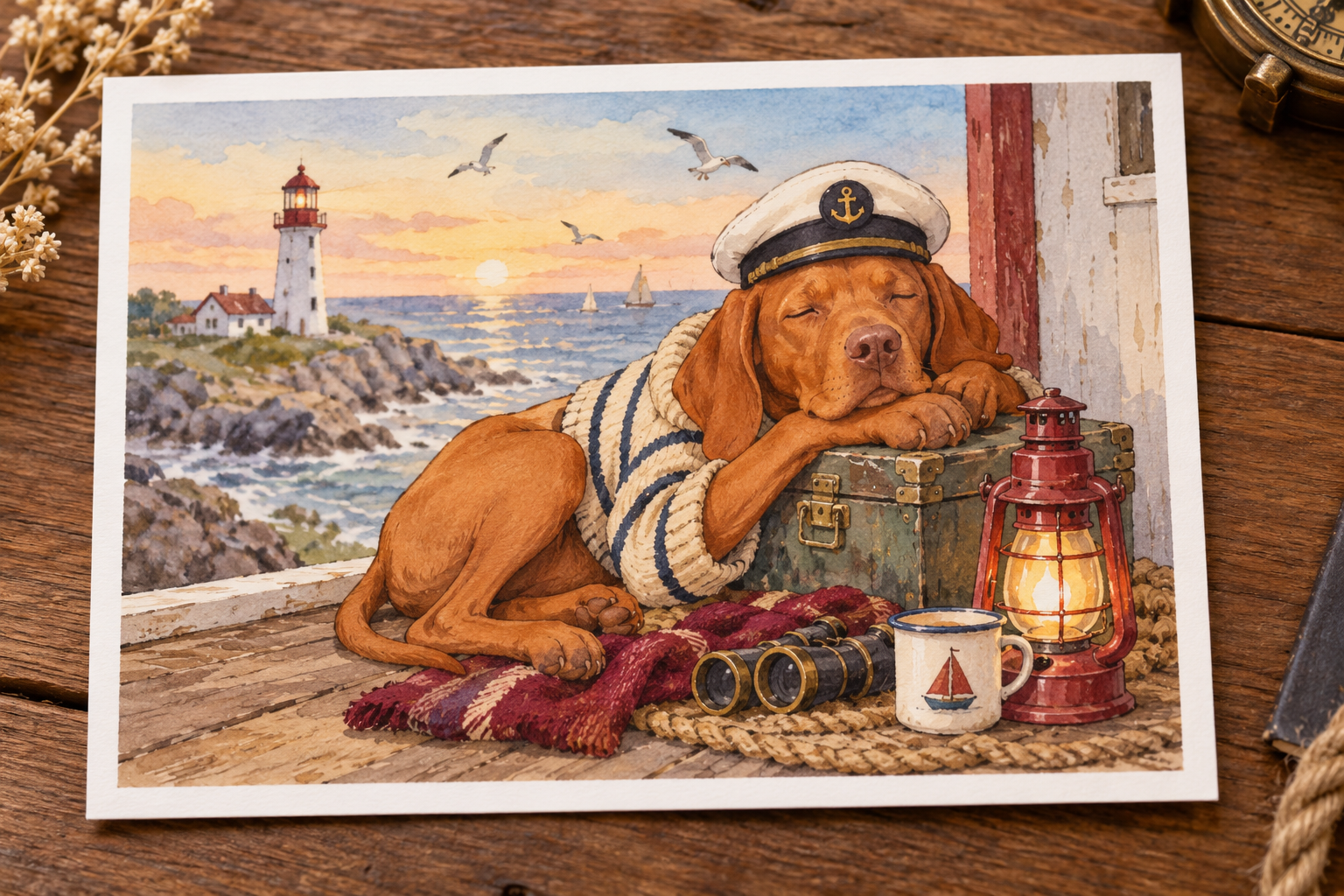
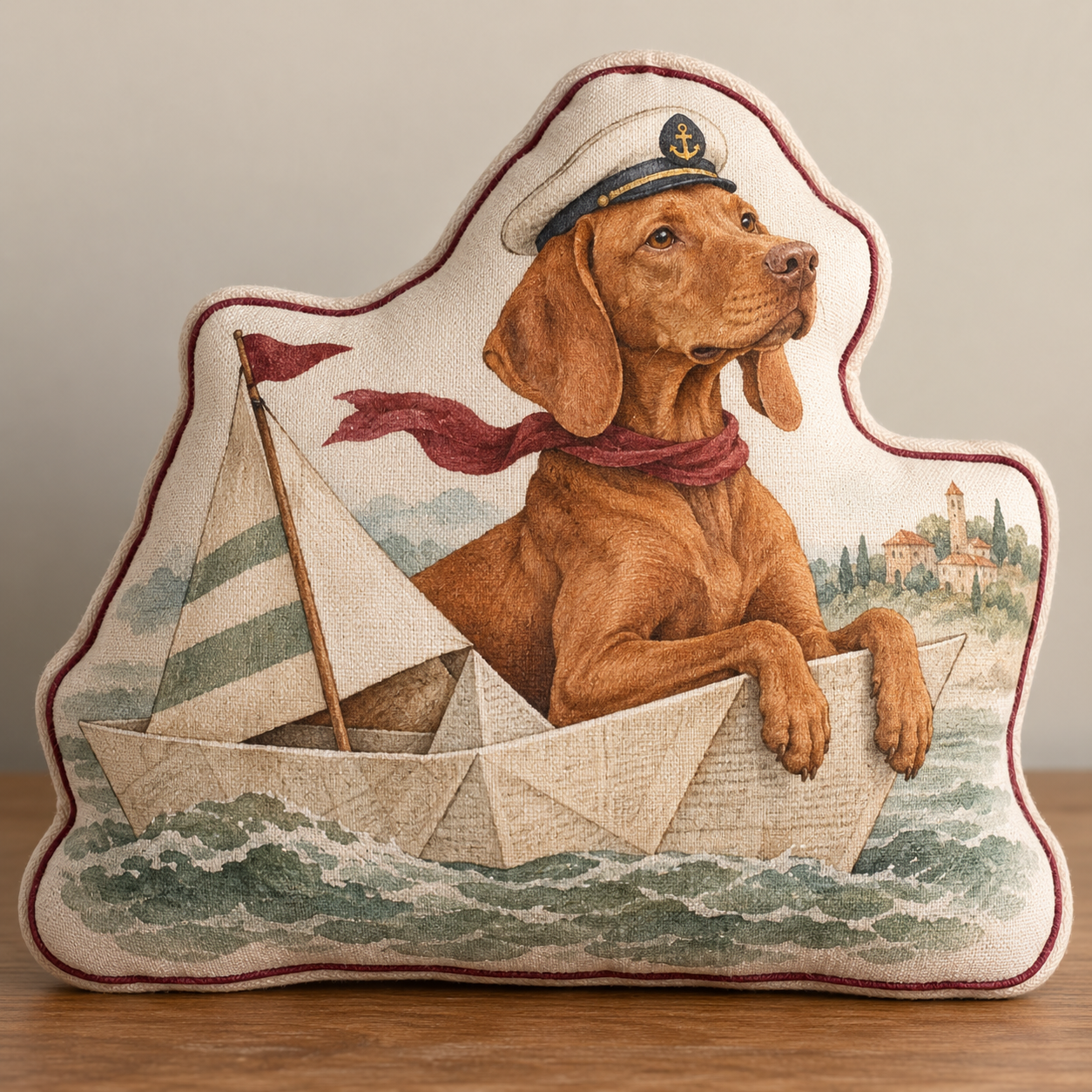
Combine the available parts, choose a name and take a little joy home.