WOOFMAP · CANINE ARCHIVENO. 088
Sheepdogs and cattle dogs
Shetland Sheepdog
Shetland Sheepdog
✳ woofmap.comGreat Britain
WOOFMAP · CANINE ARCHIVE · NO. 088
Shetland Sheepdog
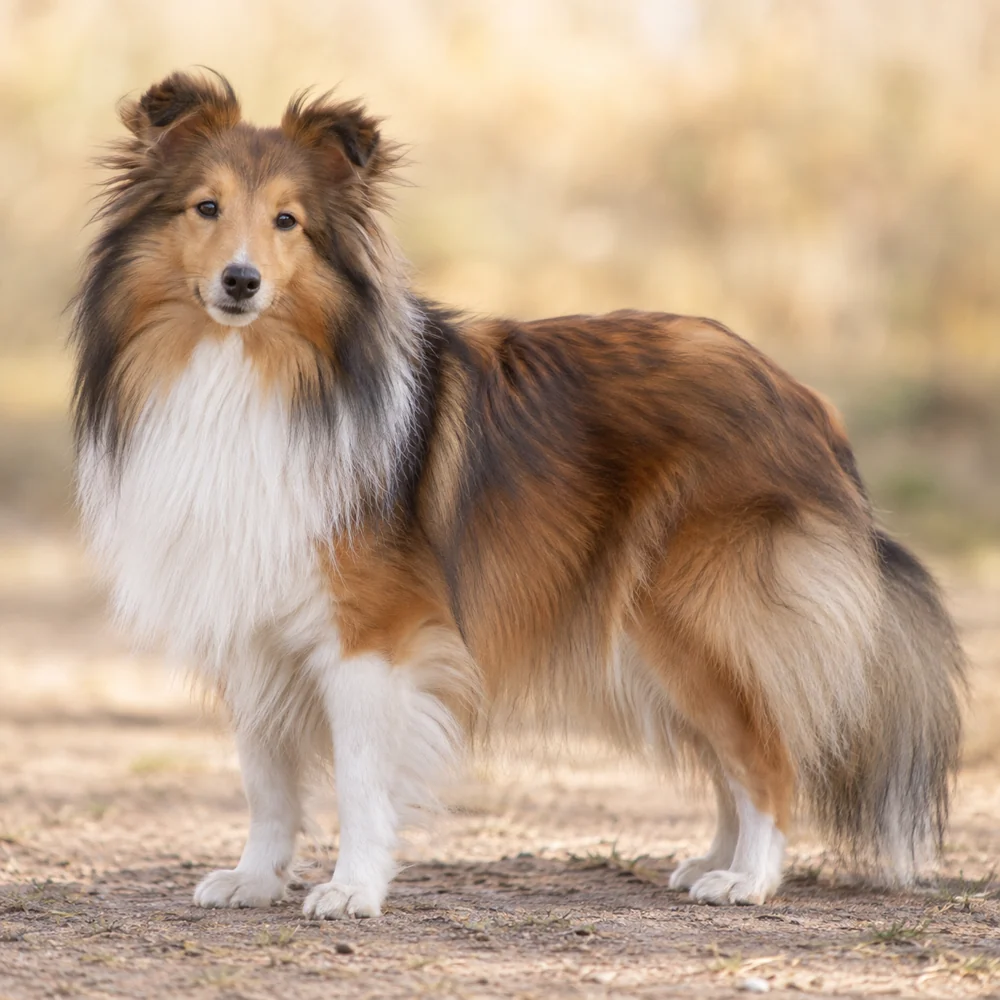
A small sheepdog with a splendid mane and effortless movement.
AI-generated realistic breed image, for visual reference.
This Shetland Sheepdog page is still waiting for a voice. Live with a Shetland Sheepdog? Share a natural bark, howl or whine and let others hear a little of your dog’s everyday life.
If we feature your recording, we’ll credit you or your dog using the name you choose.
A 5–15 second phone recording in a quiet setting is perfect. Capture a natural moment without startling or disturbing your dog. Audio or video with sound is welcome.
Share your dog’s voice ↗[email protected]Attach your recording, breed and preferred credit. Please confirm you recorded it and allow woofmap to feature it.
Thank you for helping us build a playful Woof Planet together. Every little woof deserves to be heard.
Sheepdogs and cattle dogs
Shetland Sheepdog
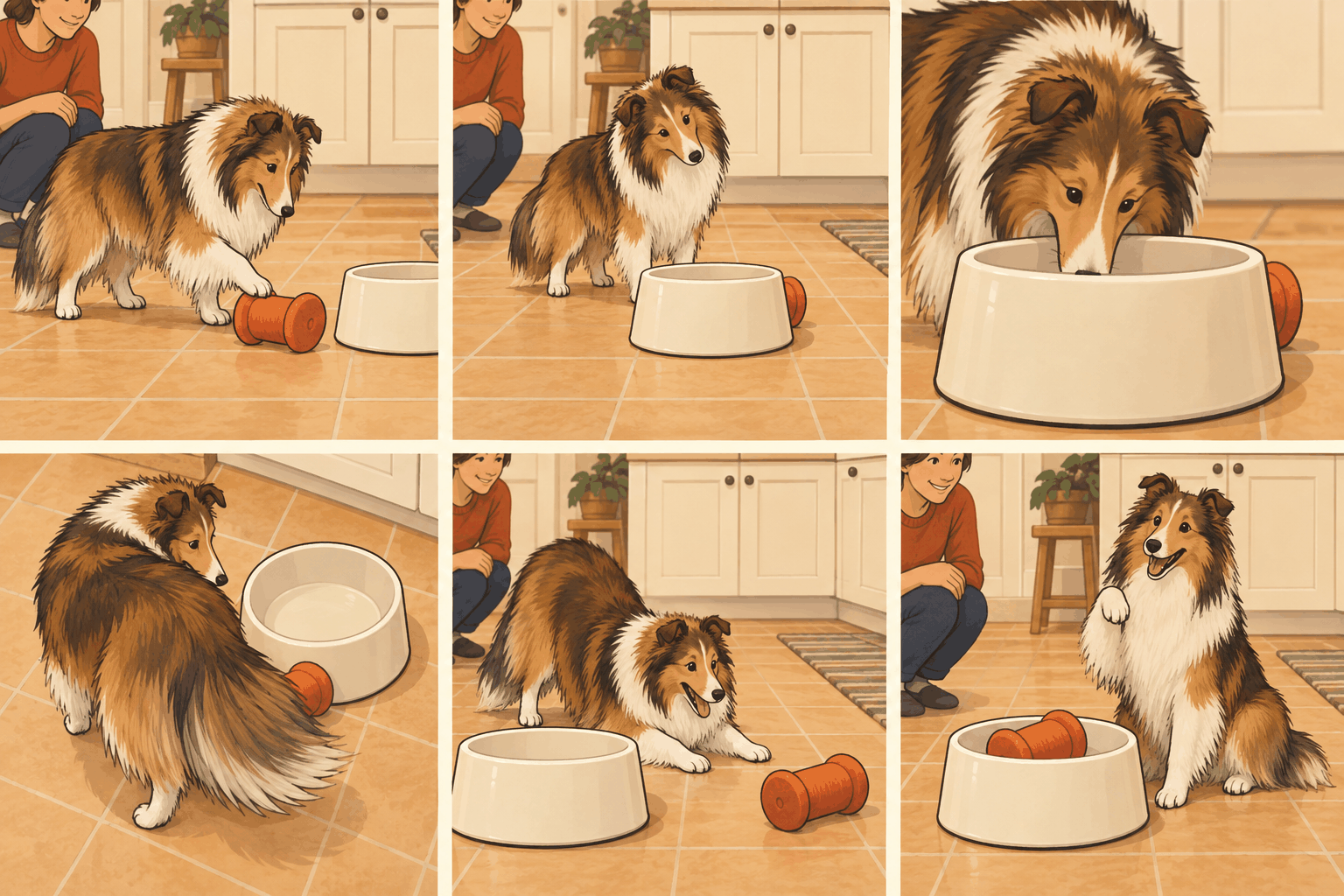
A six-beat wordless mix-up: a spool hides behind a bowl, then behind the dog's own tail. Play is supervised, and the handler keeps control of the ribbon.
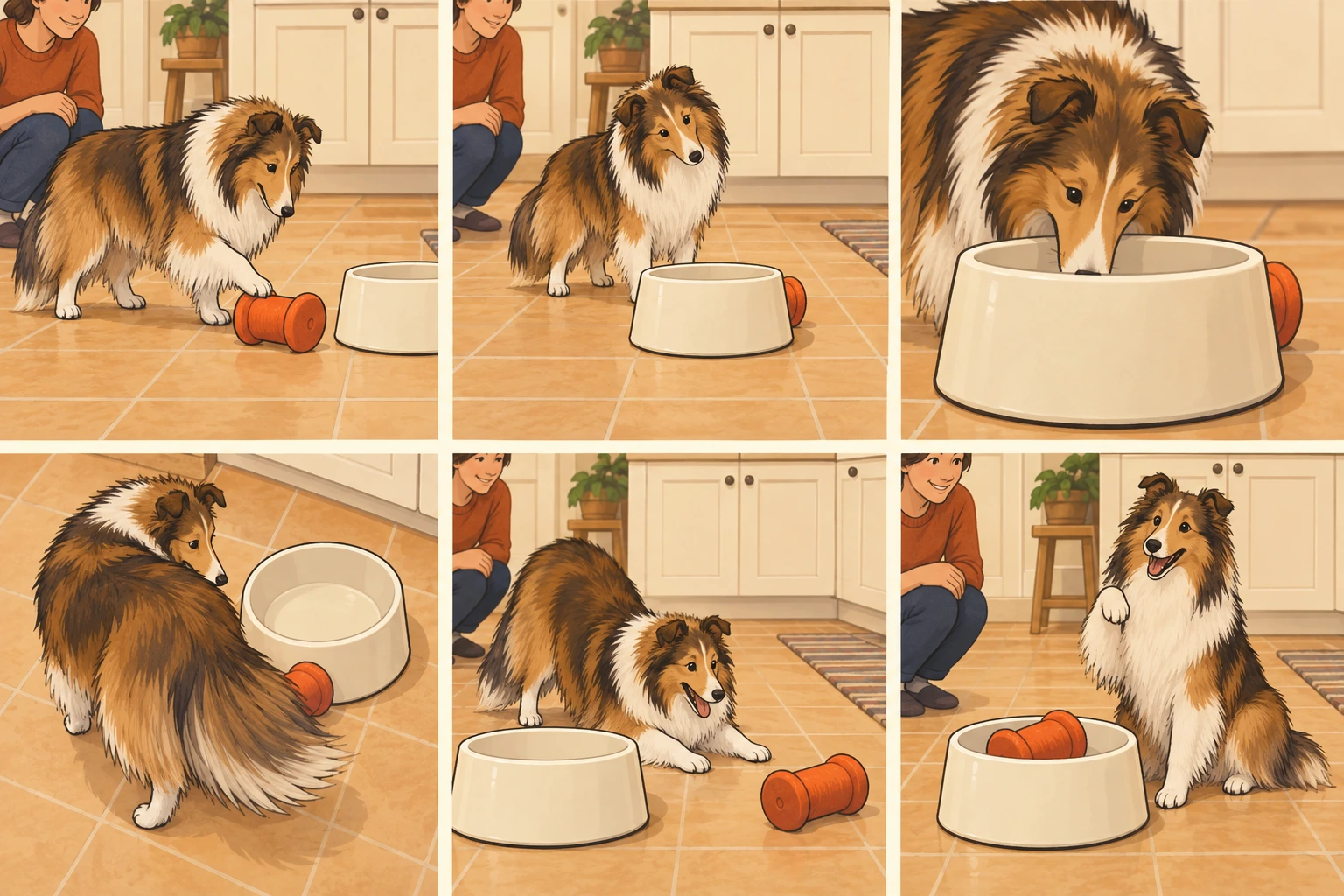
The FCI standard lists Great Britain as its origin and describes its uses as companion dog and sheepdog. It calls for a small working dog with balanced proportions and lithe, graceful movement suited to active work.
Small and balanced, the body is slightly longer than it is tall; ideal height at the withers is 37 cm for males and 35.5 cm for females. The small ears are semi-erect with forward-tipping ends when alert, and the low-set tail reaches at least to the hock.
Look for the proportionate, long wedge-shaped head, black nose and small ears whose tips fall forward when alert; a merle may have one or both eyes blue or blue-flecked. Sable is not the only recognised appearance: tricolour, blue merle, black and white, and black and tan are included too.
The standard describes an alert, gentle, intelligent, strong and active dog: affectionate and responsive to its owner, yet reserved with strangers. Clear, reward-based training can build on that responsiveness; comfort with new people varies by individual, so reserve should not be met with forced contact.
Brush through the double coat regularly, paying particular attention to the mane, feathering and areas prone to tangles. Combine walks with scent games, cue training and play to engage an active sheepdog’s mind and body. Teach recall and calm responses to everyday stimuli with rewards, without forcing greetings with strangers. Provide a quiet place to rest and adjust introductions to the individual dog.
Possibly, but the standard’s description of reserve with strangers means eager greetings should not be assumed. Give the dog room to withdraw and reward calm behaviour as it adjusts at its own pace.
Its long, abundant double coat needs regular brushing, especially behind the ears and through the mane and feathering. Work in sections so you can check for tangles close to the undercoat.
As an active sheepdog, it can benefit from finding objects, learning new cues and interactive play. Teach settling after activity and tailor the challenge to the individual dog.
FCI published a revised English standard on 6 October 2026; the PDF gives 8 September 2026 as the date of the official valid standard. Use the official standard linked on this page for the full provisions. The revision explicitly excludes unlisted colours or combinations. This is a breed-standard rule, not a judgement of an individual dog’s health or value.
SOURCE NOTES
Breed traits follow the cited official standards; everyday care advice is our editorial interpretation of coat, build and working purpose.
Coat and size varieties can share a standard. The number is an archive reference, not a rarity score. An independent educational atlas, not a registry publication. Temperament varies; consult a veterinarian about health concerns.
WOOFMAP / SHETLAND-SHEEPDOG / LITTLE MOMENTS
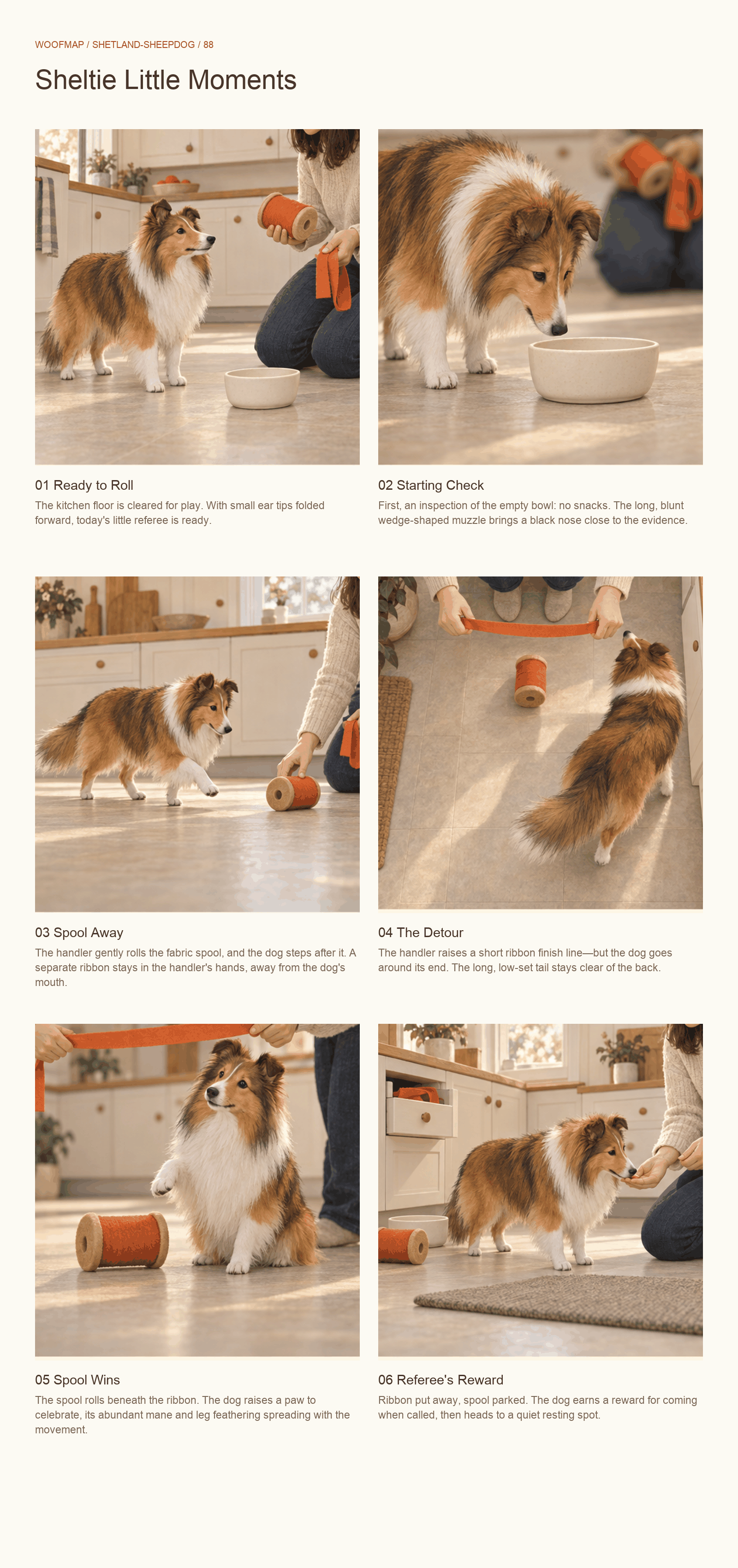
This pack depicts a sable-and-white Shetland Sheepdog: small and balanced, with a long, straight double coat and small, forward-tipped ears. Its kitchen adventures and moods are fictional.
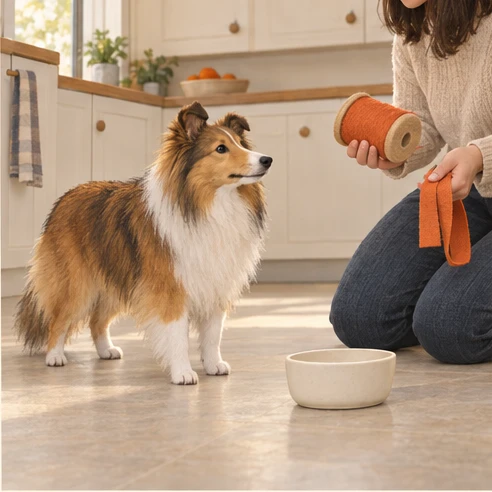
The kitchen floor is cleared for play. With small ear tips folded forward, today's little referee is ready.
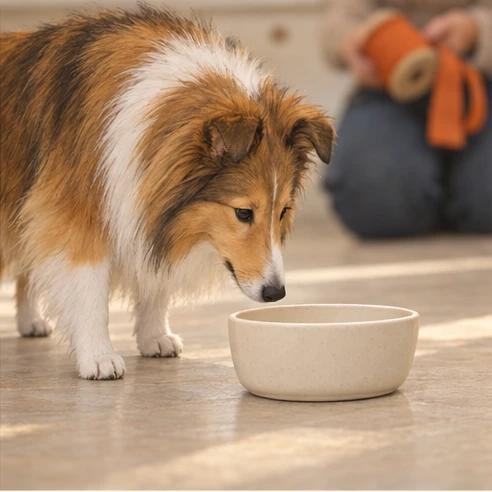
First, an inspection of the empty bowl: no snacks. The long, blunt wedge-shaped muzzle brings a black nose close to the evidence.
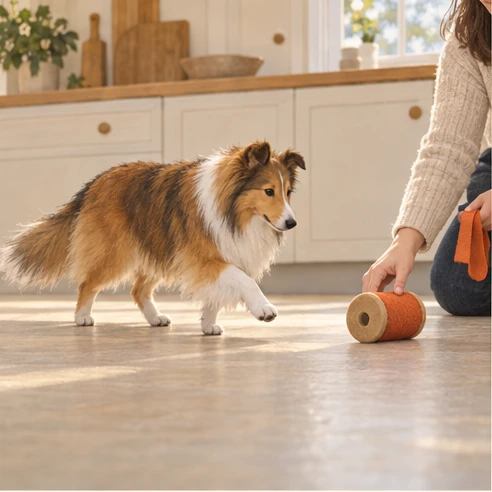
The handler gently rolls the fabric spool, and the dog steps after it. A separate ribbon stays in the handler's hands, away from the dog's mouth.
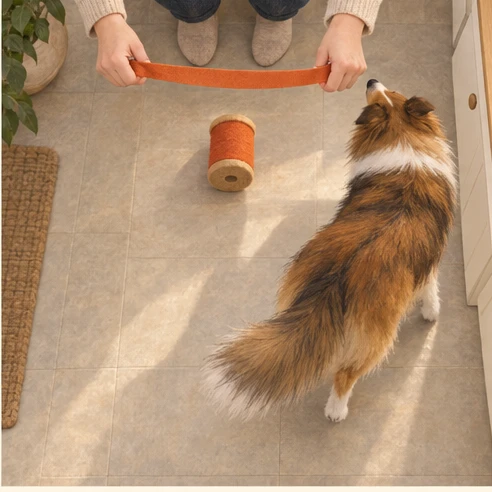
The handler raises a short ribbon finish line—but the dog goes around its end. The long, low-set tail stays clear of the back.
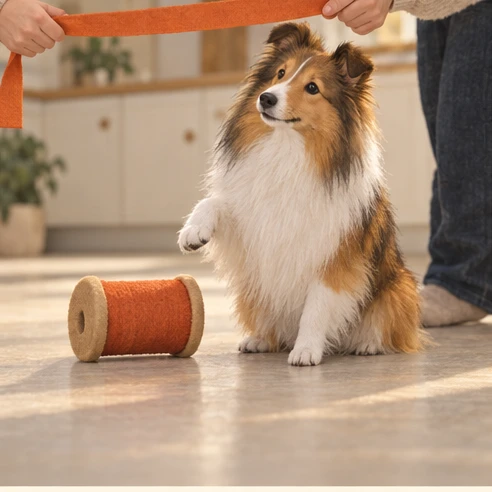
The spool rolls beneath the ribbon. The dog raises a paw to celebrate, its abundant mane and leg feathering spreading with the movement.
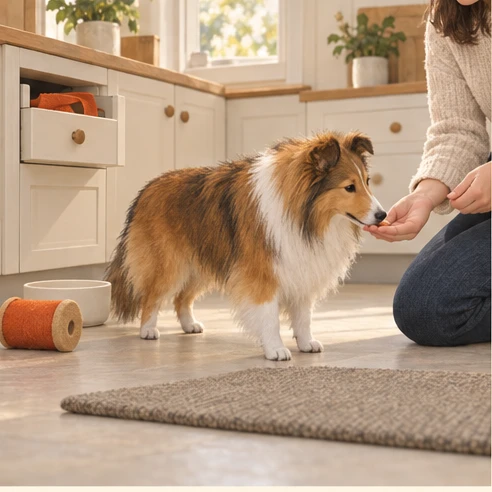
Ribbon put away, spool parked. The dog earns a reward for coming when called, then heads to a quiet resting spot.
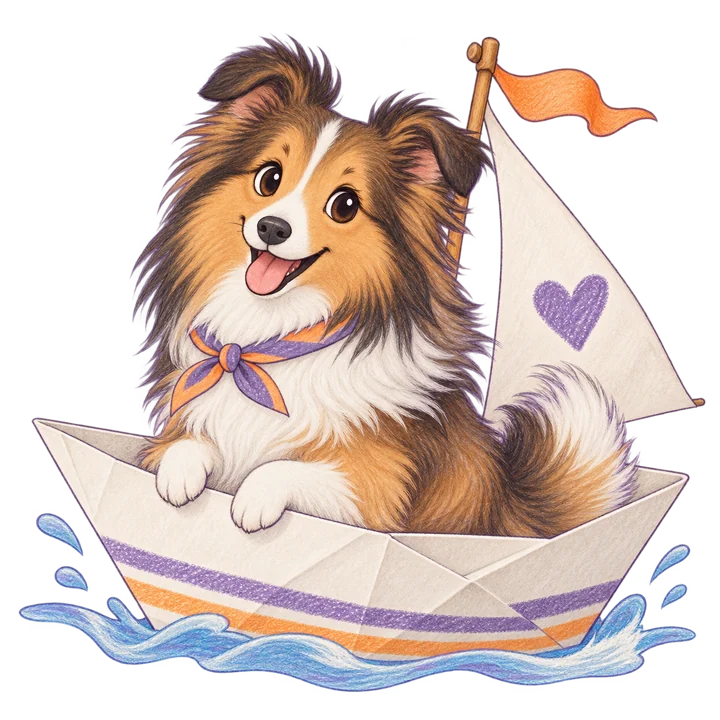
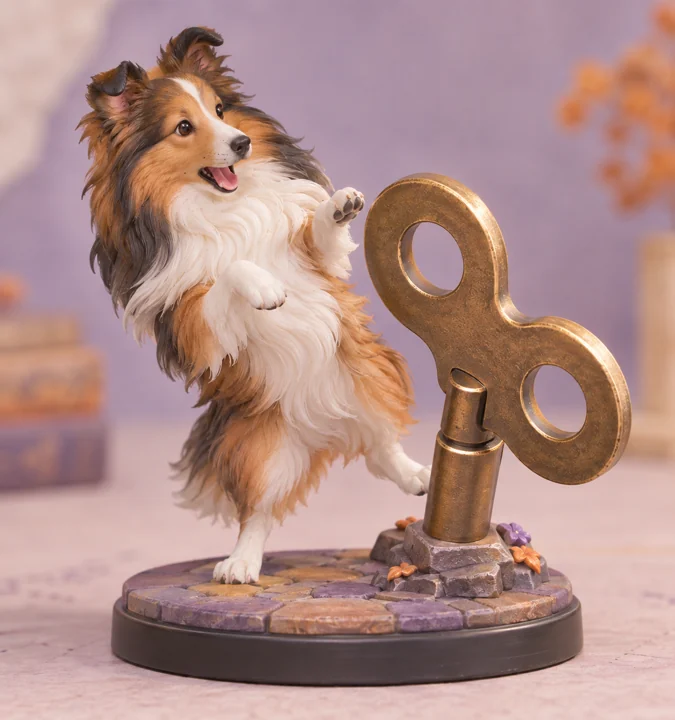

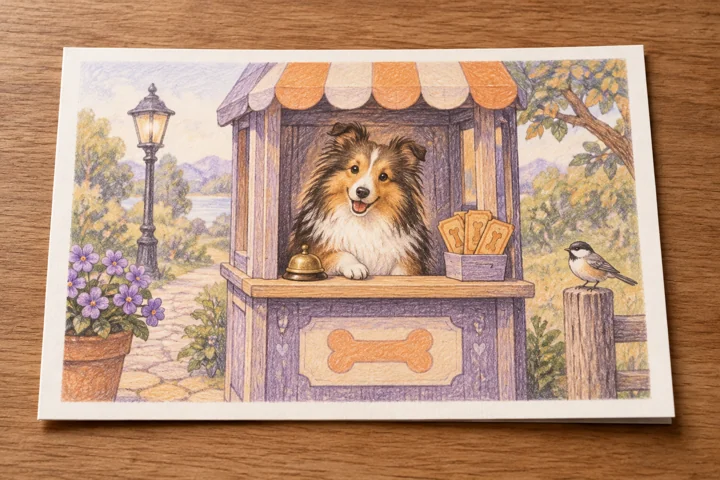
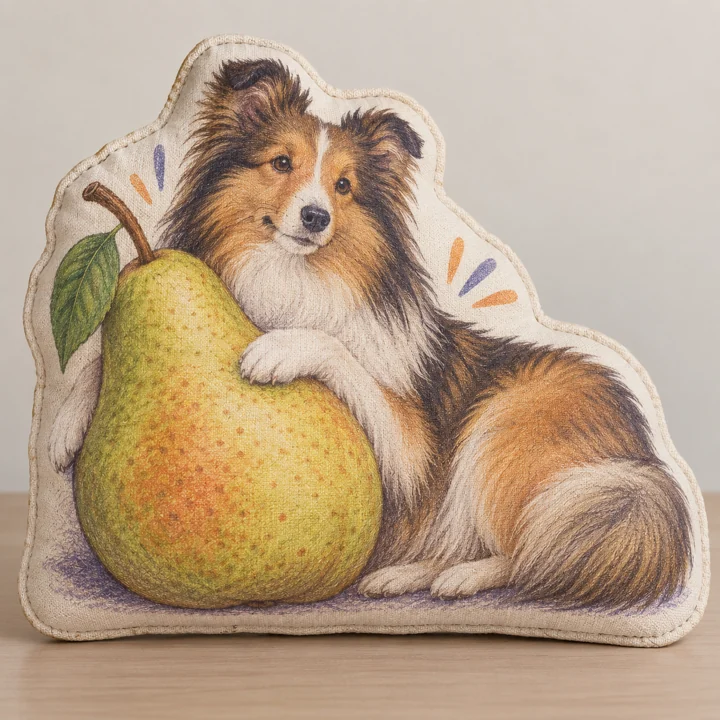
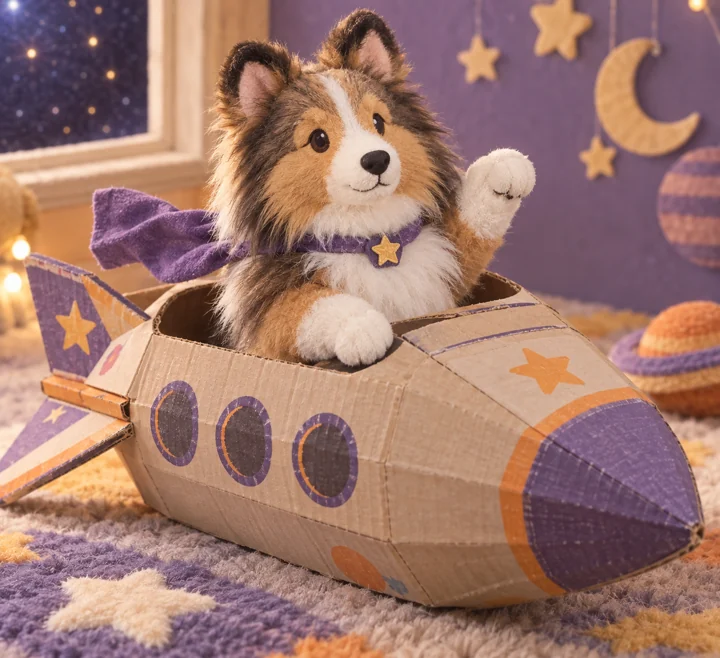
Eight transparent PNGs to save individually. Switch captions on or off for your chats.
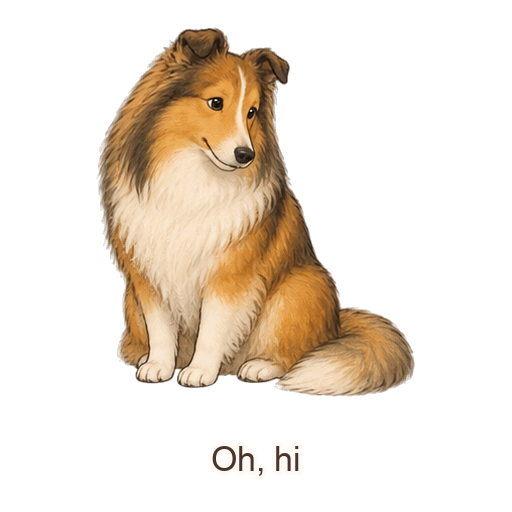 Oh, hi
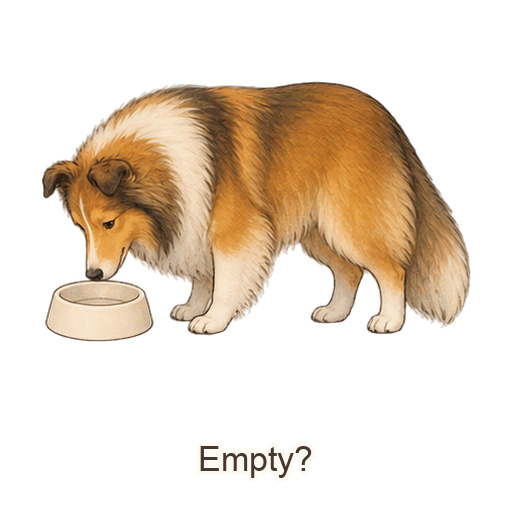 Empty?
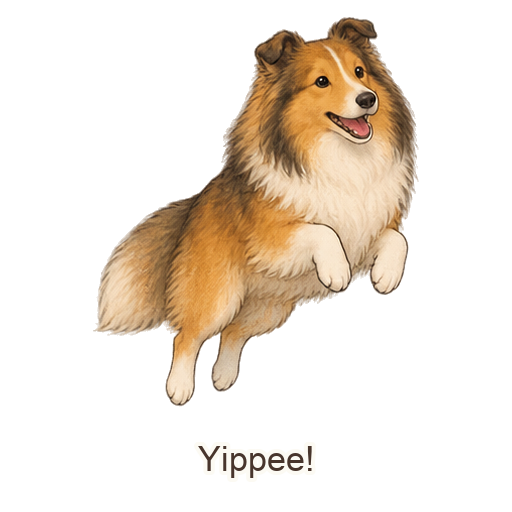 Yippee!
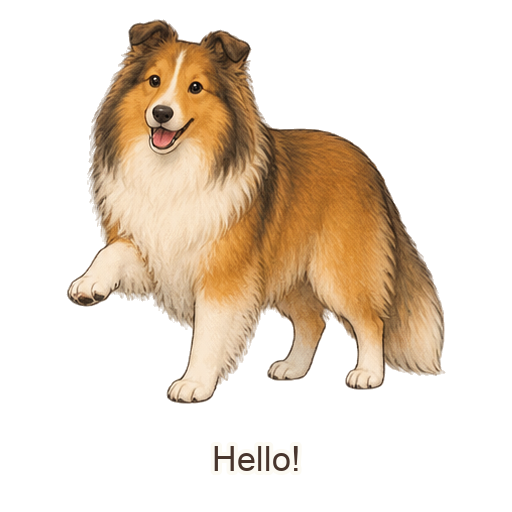 Hello!
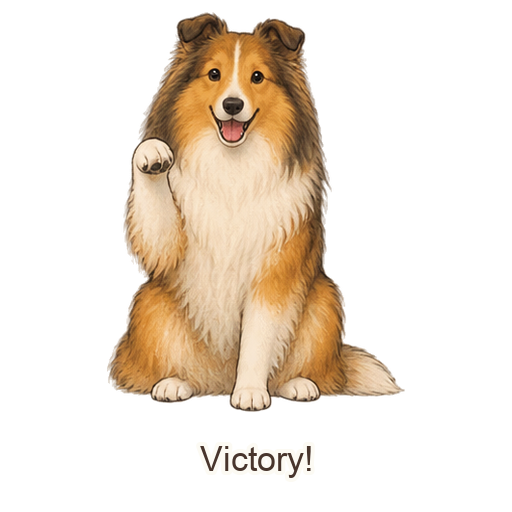 Victory!
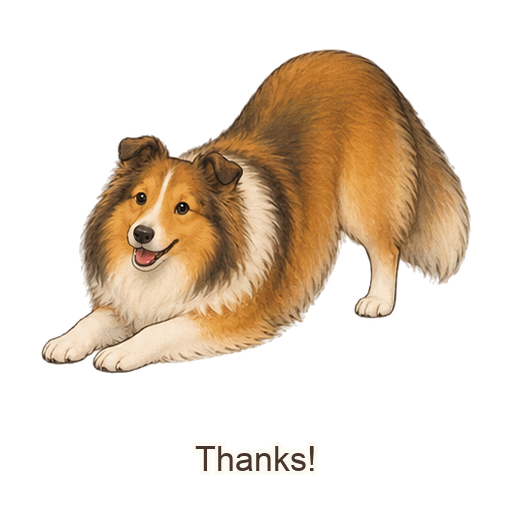 Thanks!
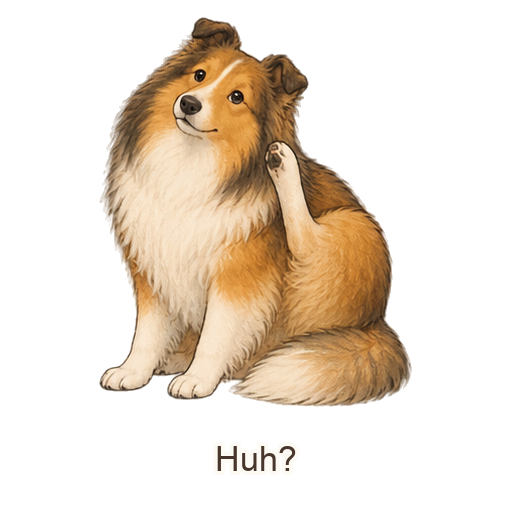 Huh?
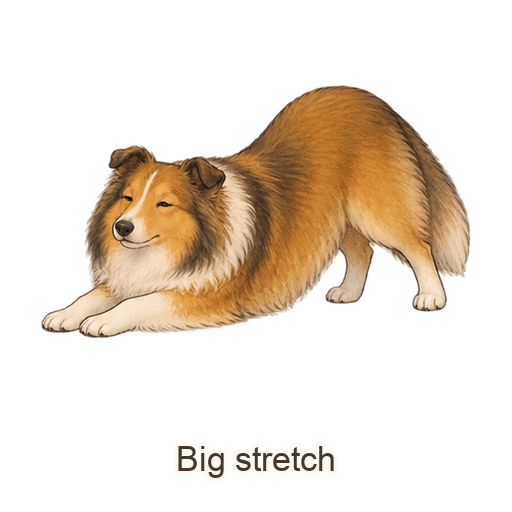 Big stretch
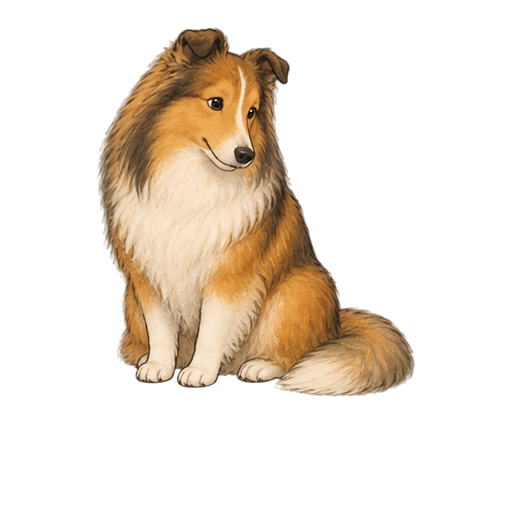 Oh, hi
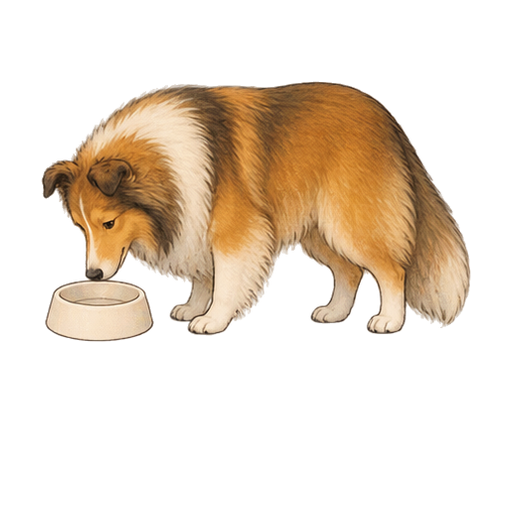 Empty?
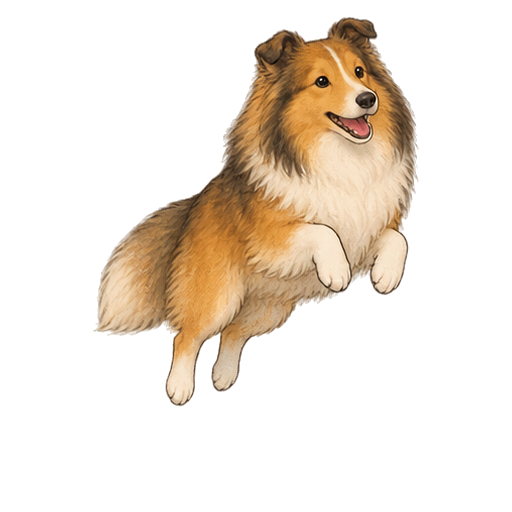 Yippee!
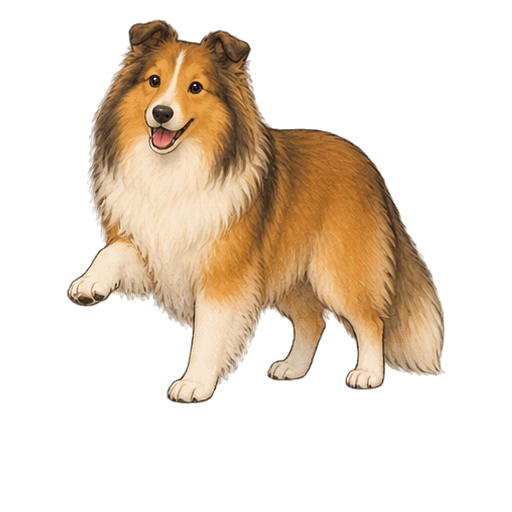 Hello!
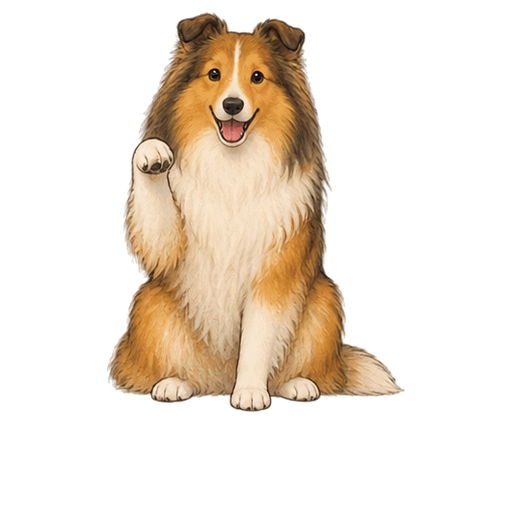 Victory!
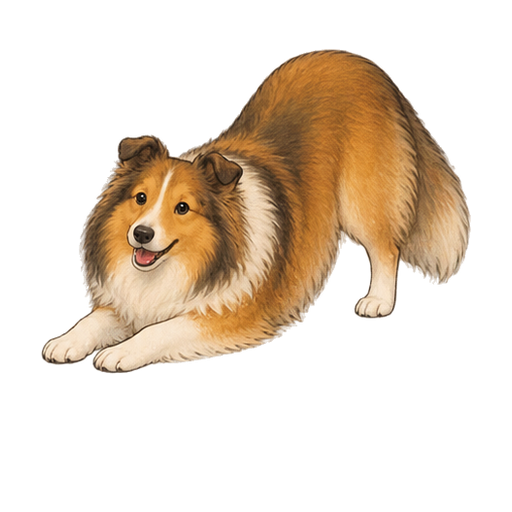 Thanks!
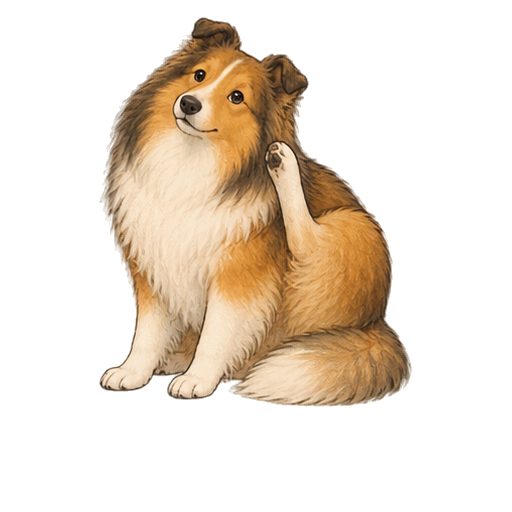 Huh?
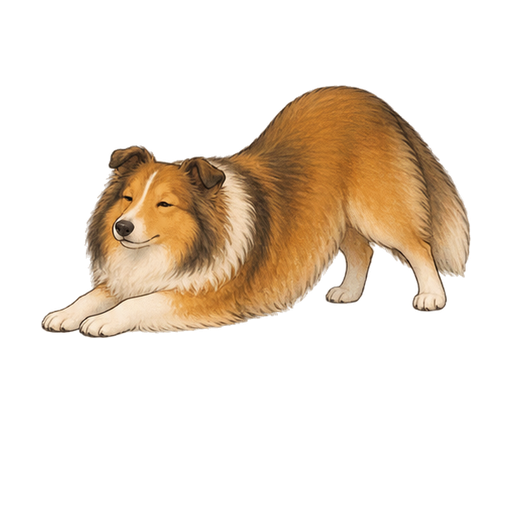 Big stretch
Original woofmap artwork, assisted by GPT Image 2. Free for personal chats and non-commercial sharing with credit to woofmap.com. Fictional moods do not predict every dog’s temperament; see this page’s factual sources.
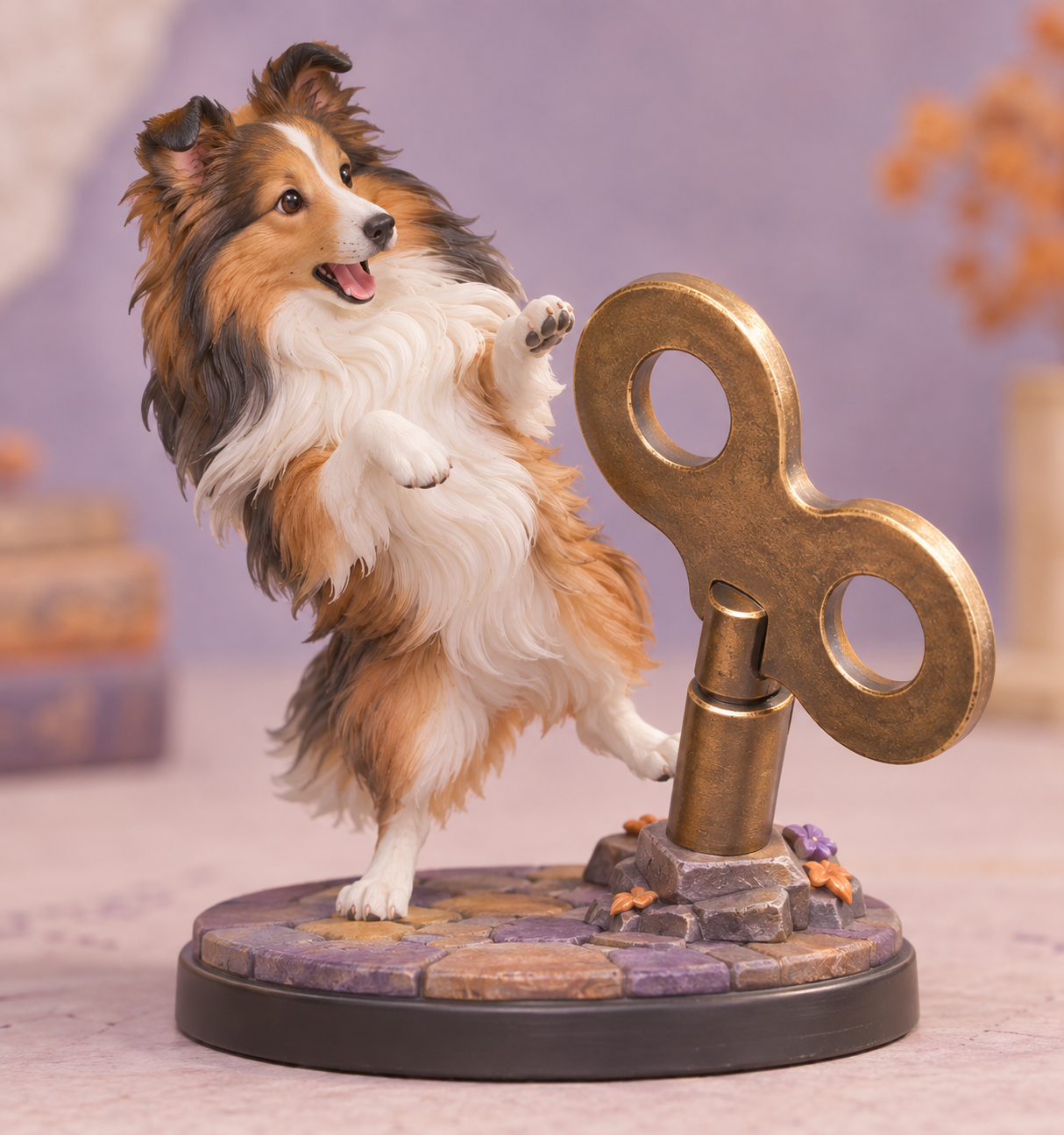
Combine the available parts, choose a name and take a little joy home.
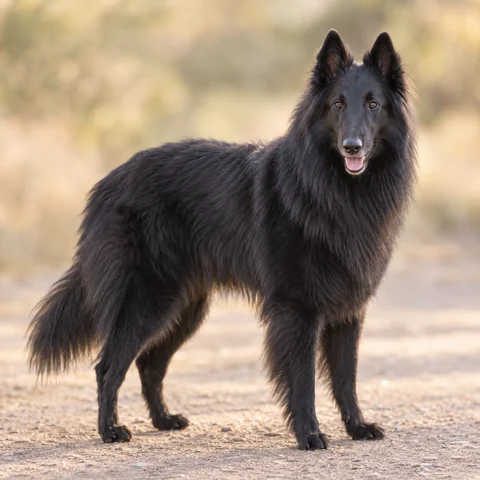 AI realistic image
Sheepdogs and cattle dogs
Belgian Shepherd Dog
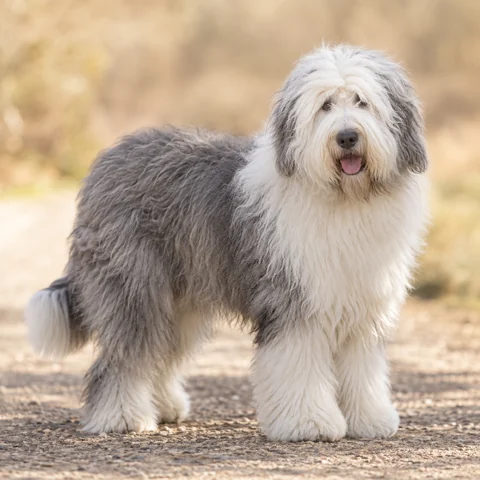 AI realistic image
Sheepdogs and cattle dogs
Old English Sheepdog
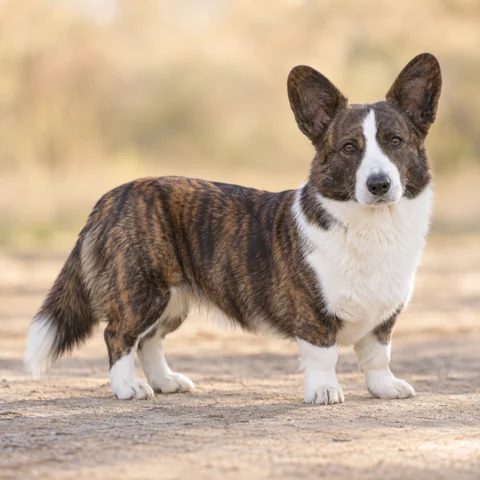 AI realistic image
Sheepdogs and cattle dogs
Welsh Corgi (Cardigan)