WOOFMAP · CANINE ARCHIVENO. 099
Pointing dogs
Weimaraner
Weimaraner
✳ woofmap.comGermany
WOOFMAP · CANINE ARCHIVE · NO. 099
Weimaraner
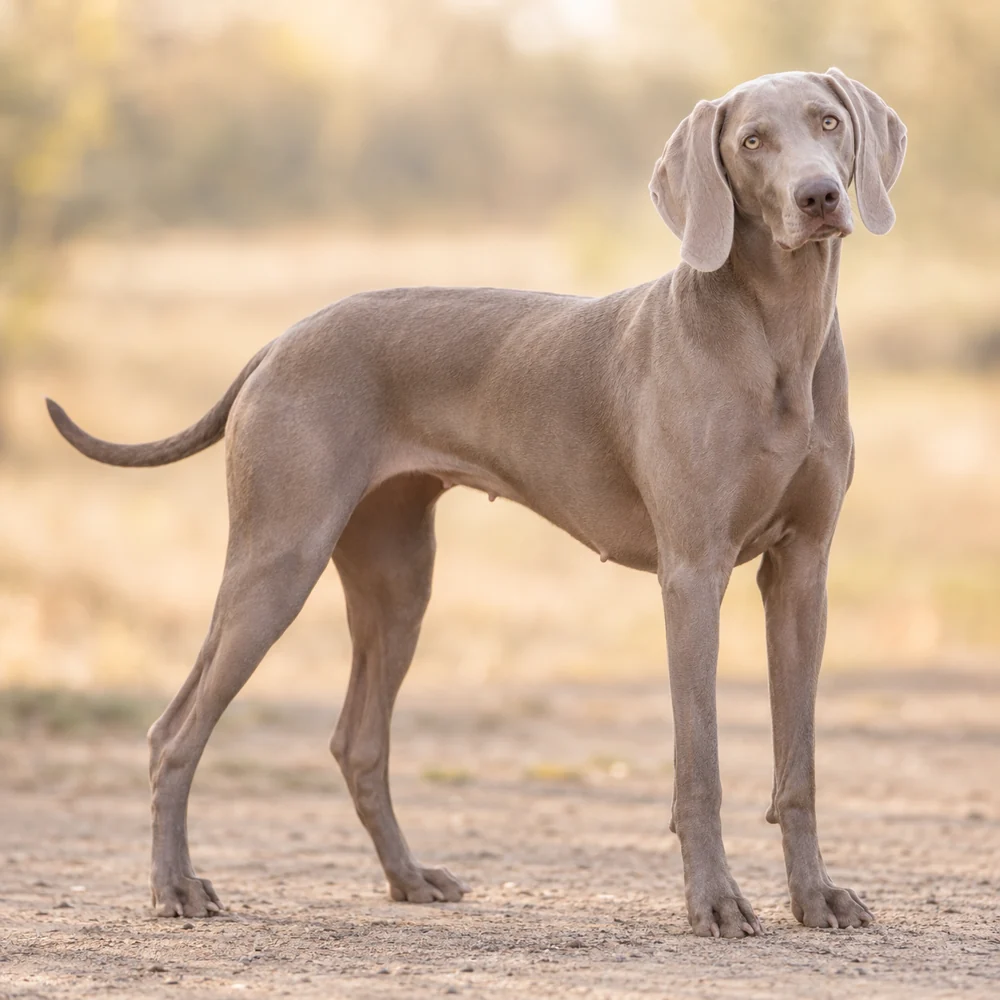
A silver-grey German hunting dog in two coat varieties.
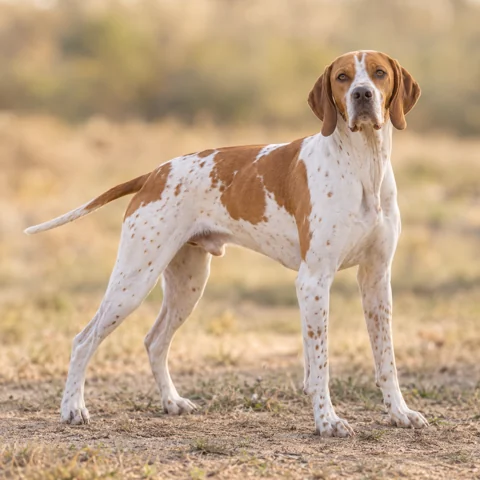
AI-generated realistic breed image, for visual reference.
This Weimaraner page is still waiting for a voice. Live with a Weimaraner? Share a natural bark, howl or whine and let others hear a little of your dog’s everyday life.
If we feature your recording, we’ll credit you or your dog using the name you choose.
A 5–15 second phone recording in a quiet setting is perfect. Capture a natural moment without startling or disturbing your dog. Audio or video with sound is welcome.
Share your dog’s voice ↗[email protected]Attach your recording, breed and preferred credit. Please confirm you recorded it and allow woofmap to feature it.
Thank you for helping us build a playful Woof Planet together. Every little woof deserves to be heard.
Pointing dogs
Weimaraner
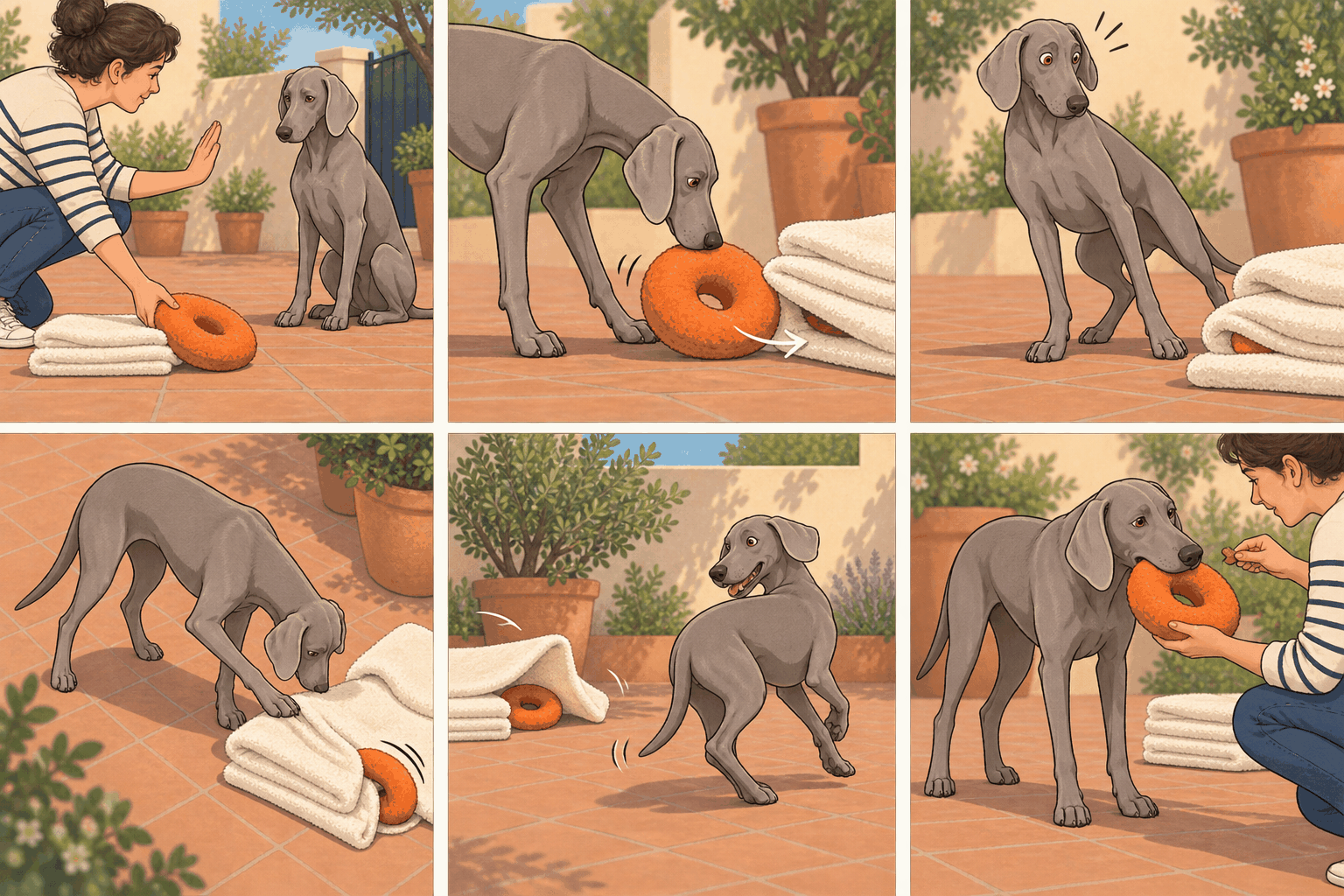
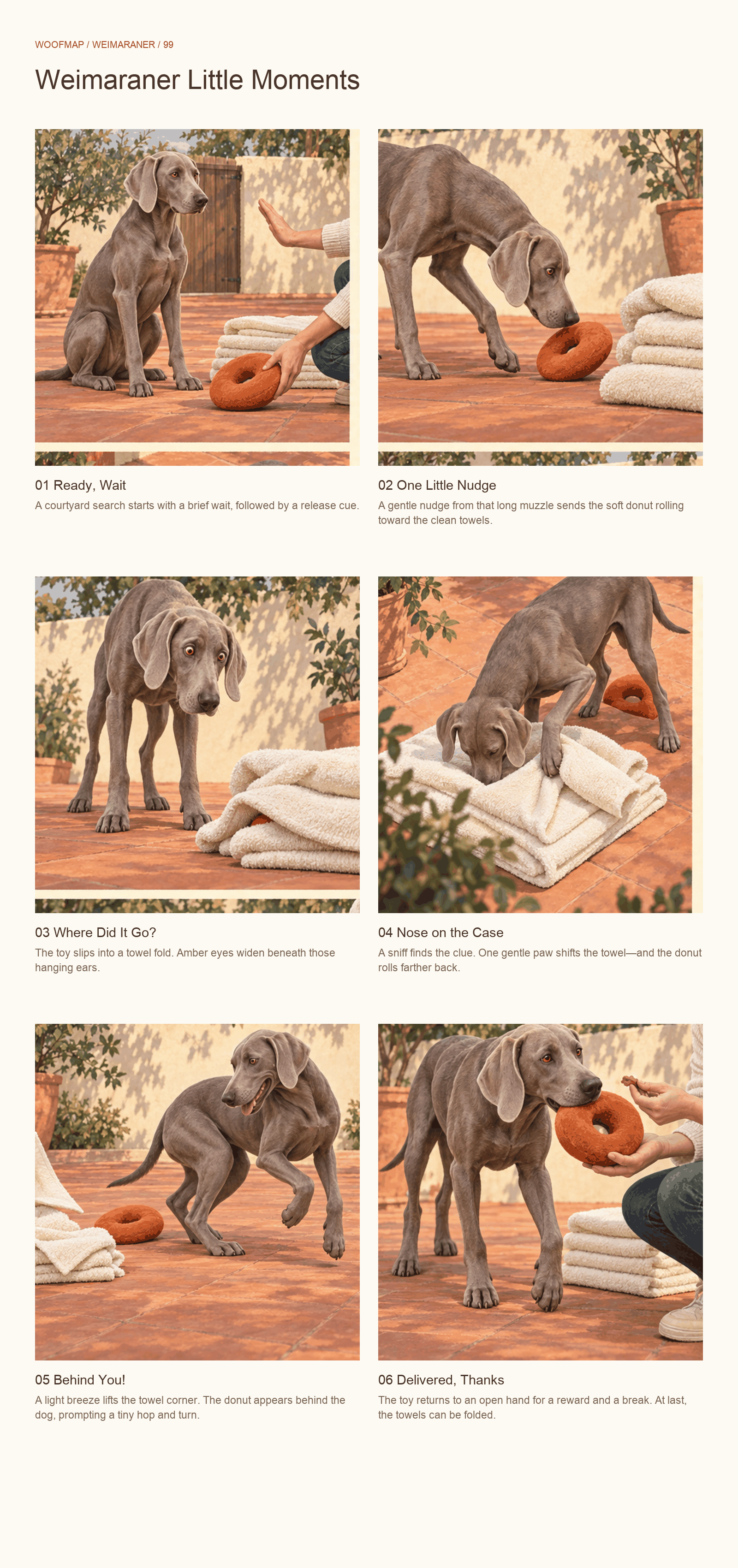
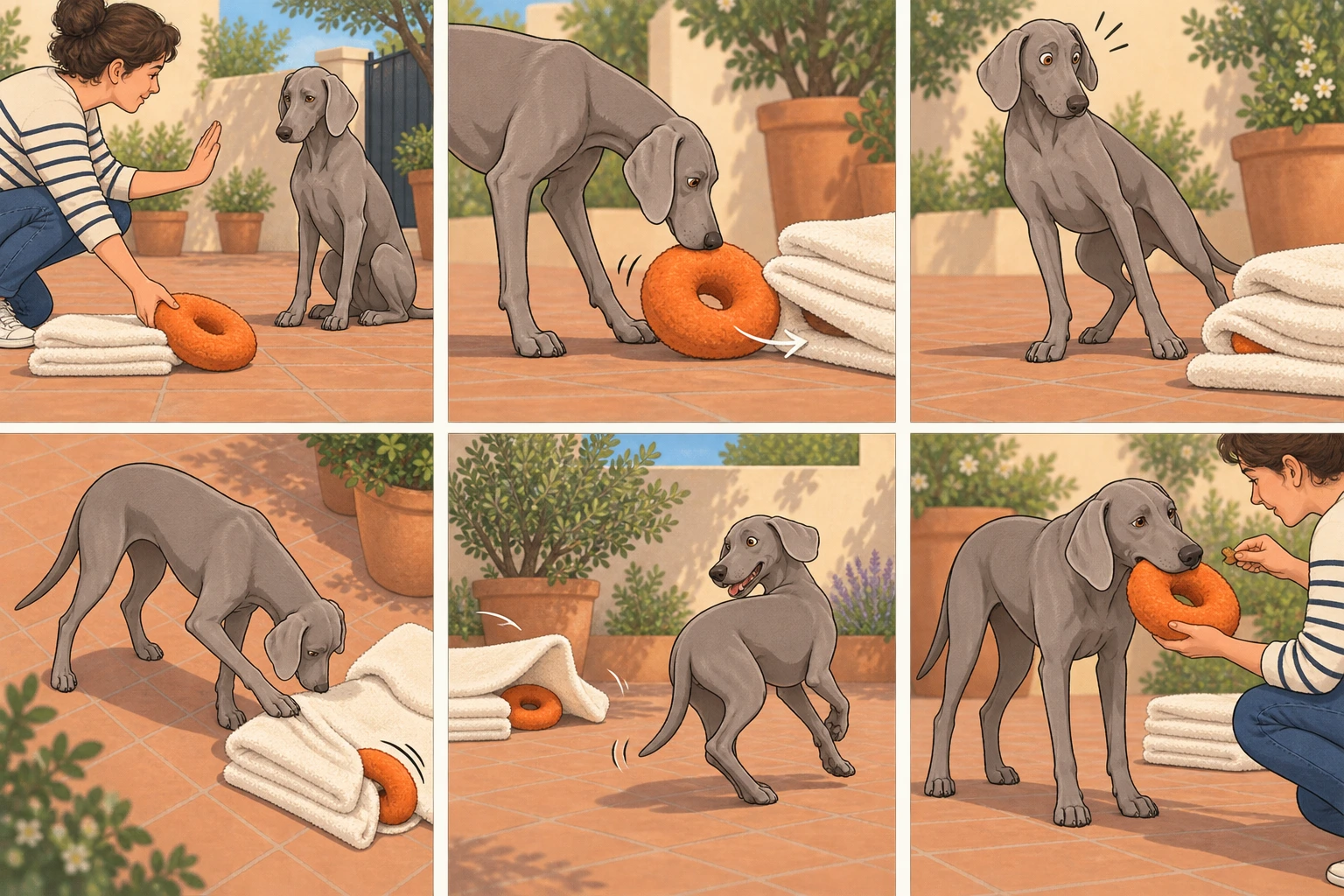
One gentle nose nudge sends a soft donut into a towel fold. The search gets sillier until the prize is delivered back into a waiting hand.
The dogs were kept at the Weimar court in the first third of the 19th century; professional hunters and gamekeepers later bred them around Weimar and Thuringia. Planned breeding began around 1890, and longhaired dogs appeared around the turn of the 20th century. The breed was developed for hunting work in field, wood and water, before and after the shot.
A medium-to-large, sinewy and muscular dog, slightly longer in body than it is tall. Males stand 59–70 cm and females 57–65 cm at the withers; the broad, fairly long ears hang down, and the tail hangs at rest.
Look for grey colouring, amber adult eyes, a long muzzle and broad, fairly long drop ears—not just the familiar short coat. The shorthaired variety has a close coat; the longhaired variety has conspicuous feathering on its ears, legs and tail. Both share a muscular outline slightly longer than tall.
The standard describes a steady, passionate and readily trained versatile hunter, with systematic search and keen scenting ability. It may be watchful and ready to seize prey, so clear cues and reward-based practice matter more than assuming automatic obedience. Activity and responses to unfamiliar situations vary between individuals.
Brush the short coat regularly; check and comb the long variety’s feathering, including around the ears, legs, tail and toes. Pair outings with scent searches and structured retrieving games that suit its hunting work. Teach recall and settling with rewards, and manage access to wildlife because of its prey interest. A home should be ready to provide ongoing activity, company and training.
A committed first-time owner may manage well, but the striking coat should not be the deciding factor. Everyone at home should be prepared to practise recall, leash manners and calm routines consistently.
The short variety mainly needs routine brushing and coat checks. The long variety’s feathering needs more careful combing, especially around the ears, limbs and toes after outings.
This breed was meant to search and work across field, wood and water, so repetitive walking may leave it under-engaged. Add scent tasks, retrieving practice and brief training, while using reliable control around wildlife.
SOURCE NOTES
Breed traits follow the cited official standards; everyday care advice is our editorial interpretation of coat, build and working purpose.
Coat and size varieties can share a standard. The number is an archive reference, not a rarity score. An independent educational atlas, not a registry publication. Temperament varies; consult a veterinarian about health concerns.
WOOFMAP / WEIMARANER / LITTLE MOMENTS
Illustrated here is a silver-grey shorthaired adult with amber eyes, a long muzzle, broad drop ears and a muscular body slightly longer than tall. The courtyard moods belong to this fictional individual.
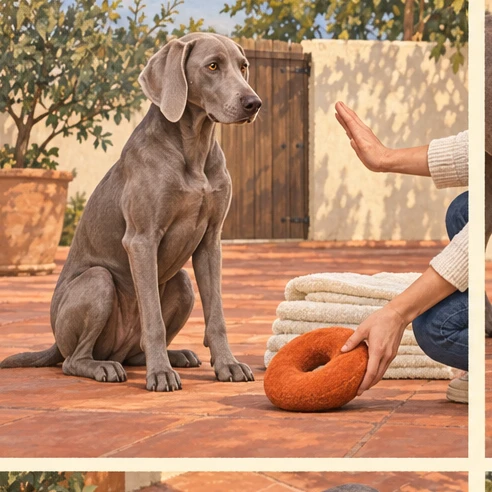
A courtyard search starts with a brief wait, followed by a release cue.
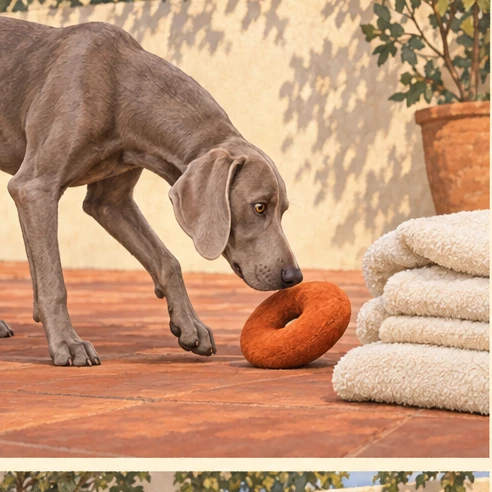
A gentle nudge from that long muzzle sends the soft donut rolling toward the clean towels.
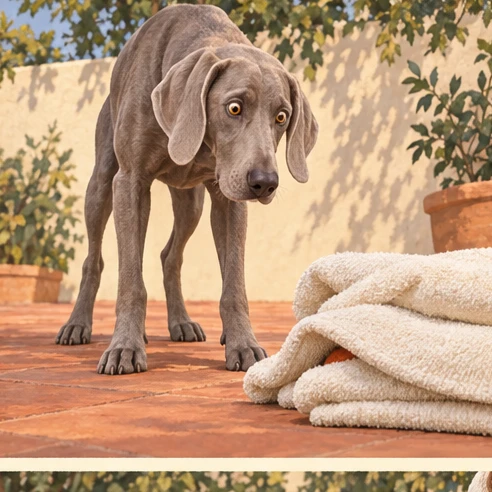
The toy slips into a towel fold. Amber eyes widen beneath those hanging ears.
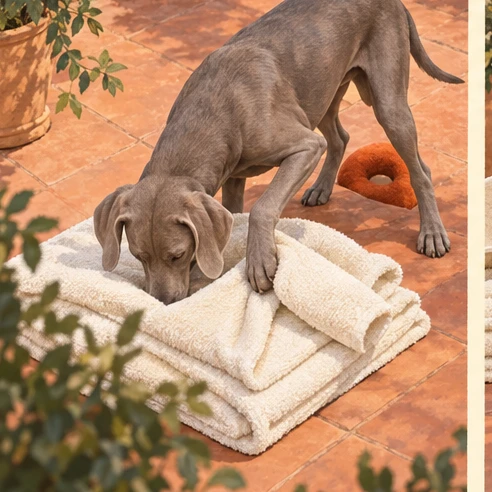
A sniff finds the clue. One gentle paw shifts the towel—and the donut rolls farther back.
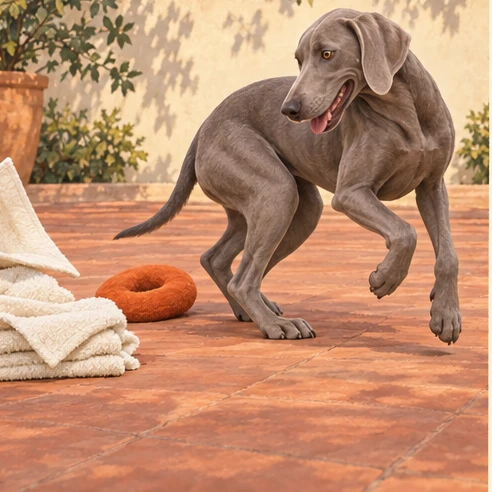
A light breeze lifts the towel corner. The donut appears behind the dog, prompting a tiny hop and turn.
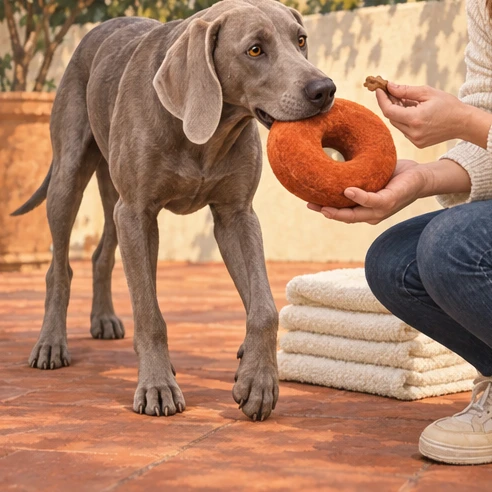
The toy returns to an open hand for a reward and a break. At last, the towels can be folded.
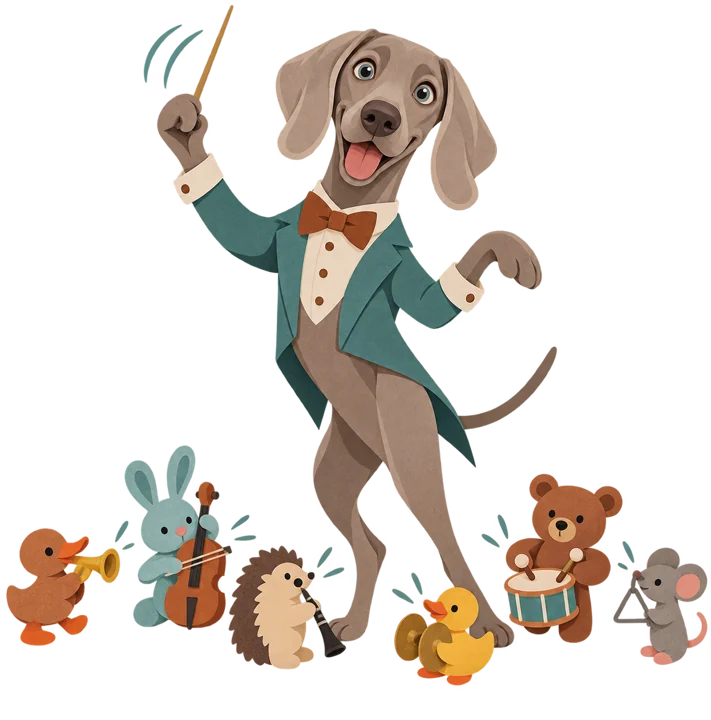
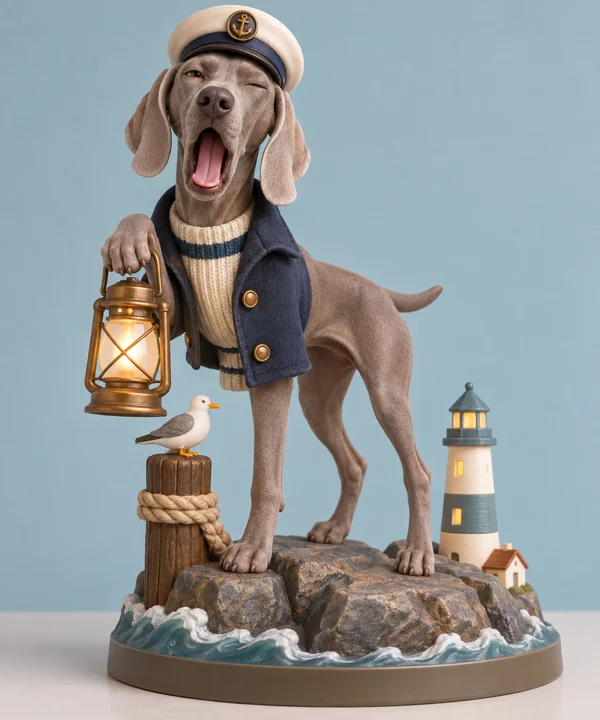

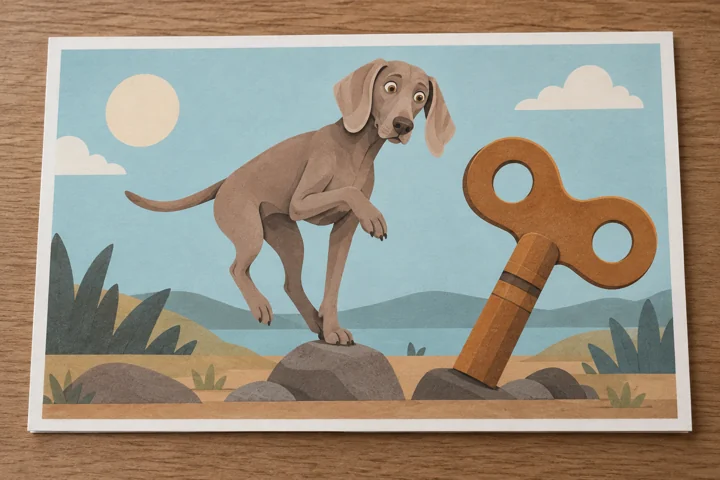
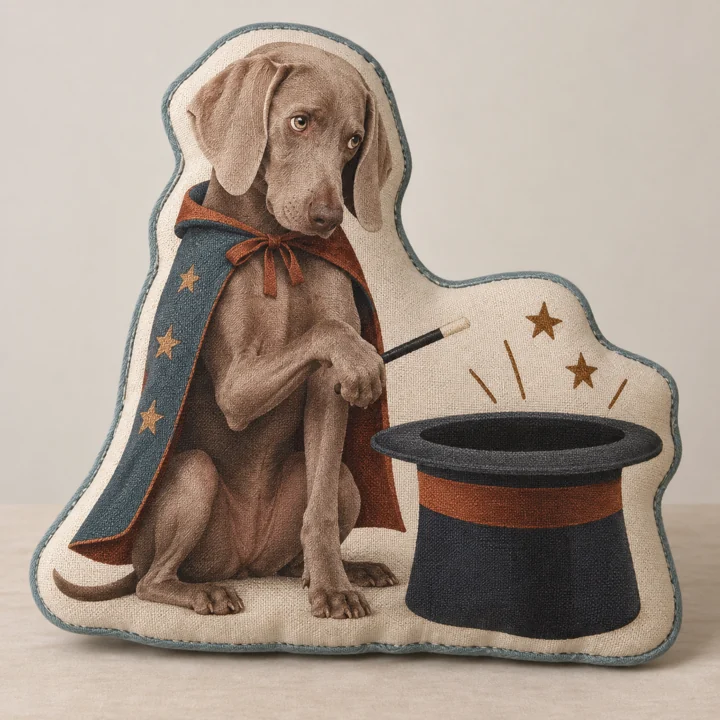
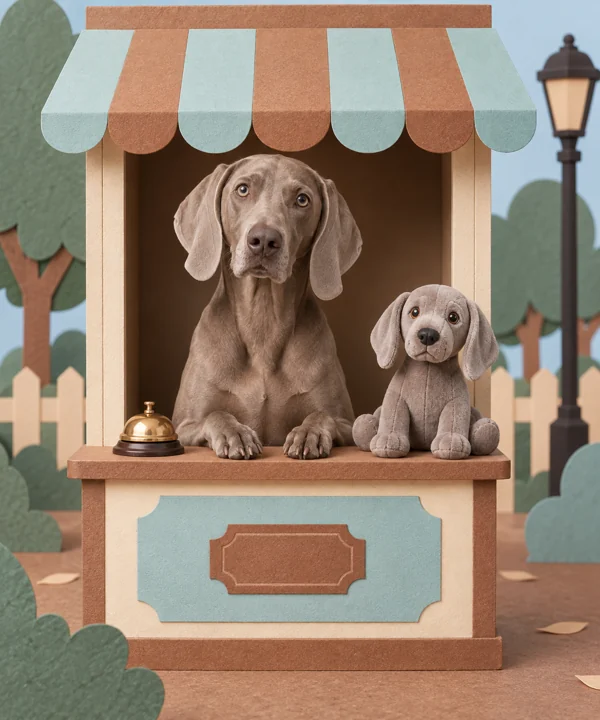
Eight transparent PNGs to save individually. Switch captions on or off for your chats.
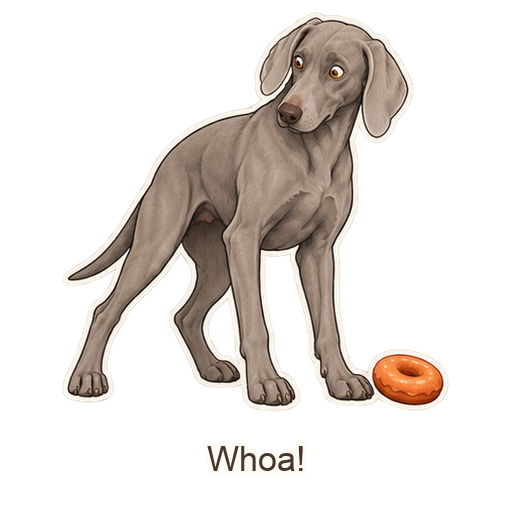 Whoa!
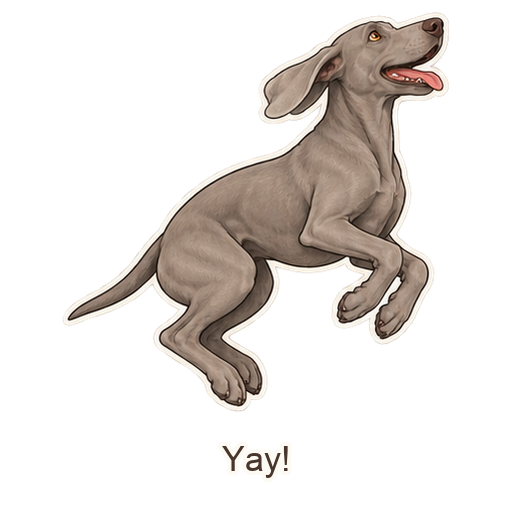 Yay!
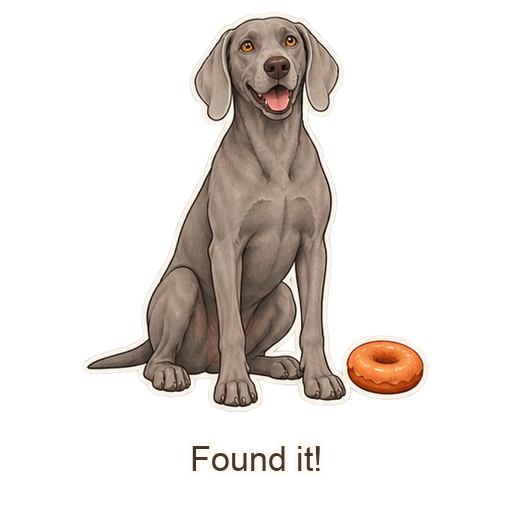 Found it!
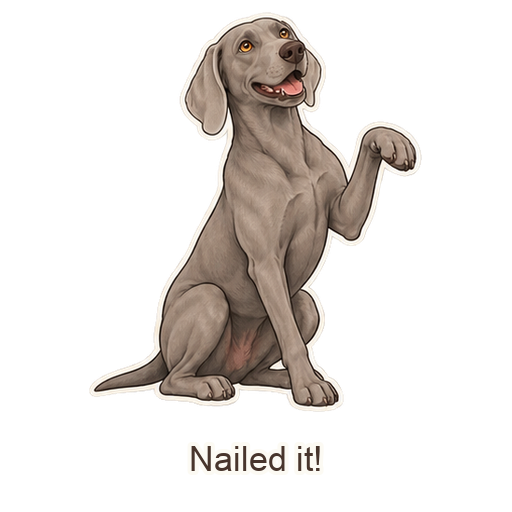 Nailed it!
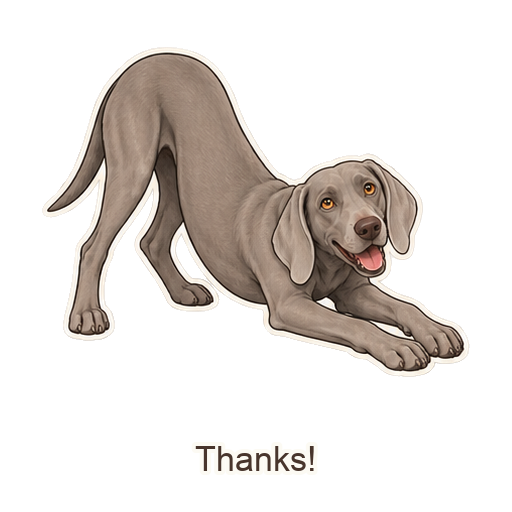 Thanks!
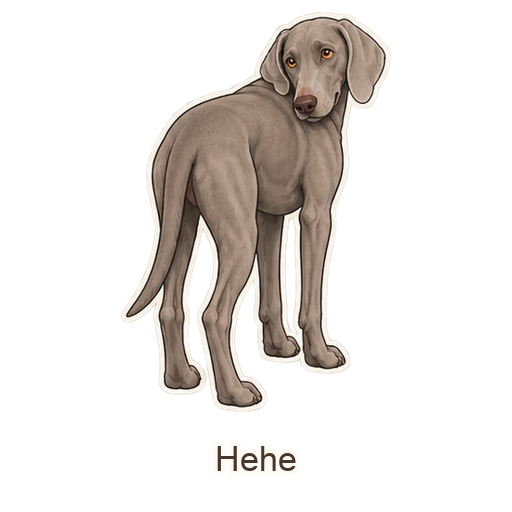 Hehe
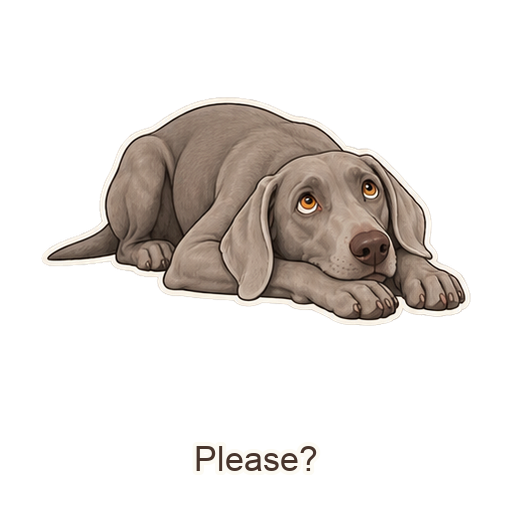 Please?
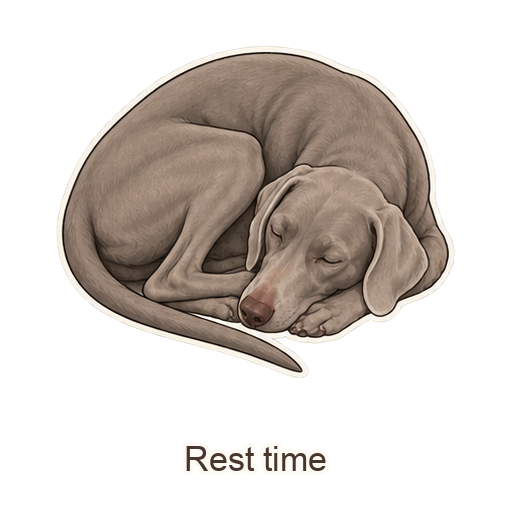 Rest time
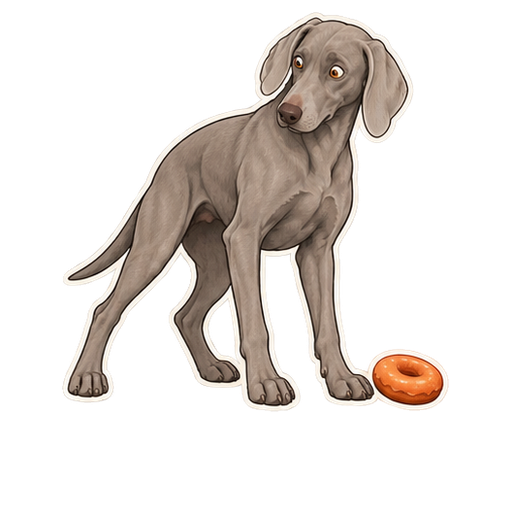 Whoa!
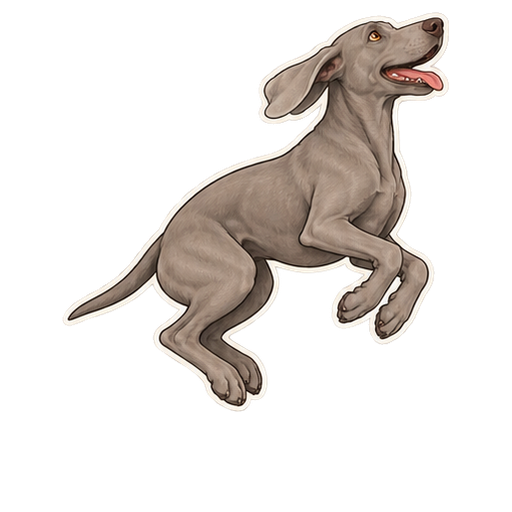 Yay!
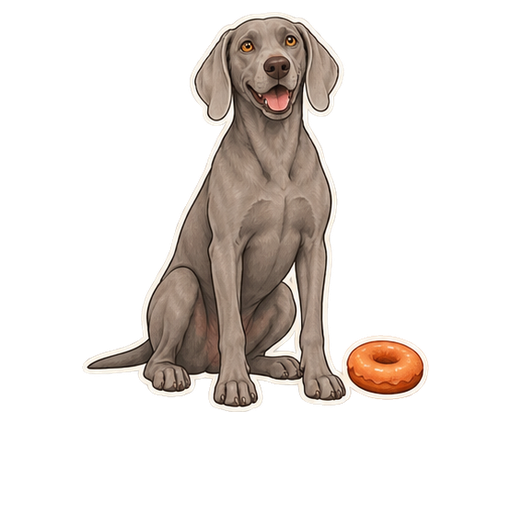 Found it!
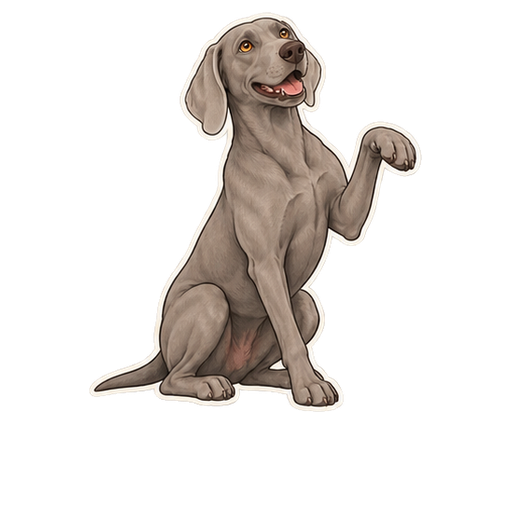 Nailed it!
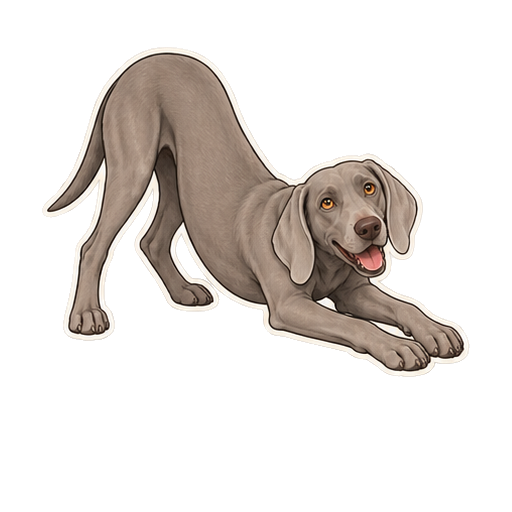 Thanks!
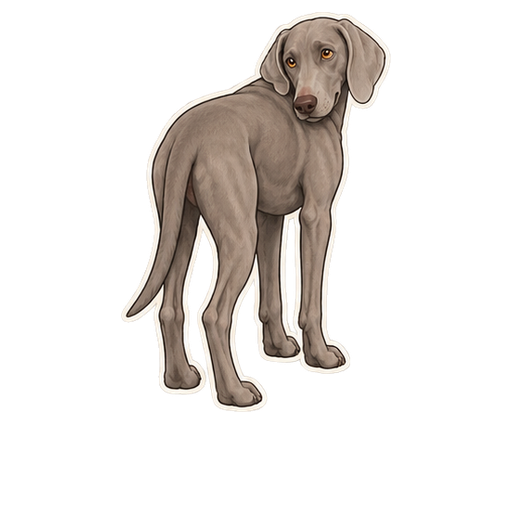 Hehe
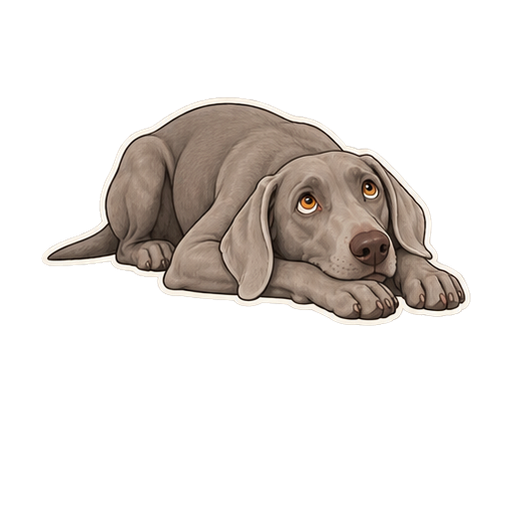 Please?
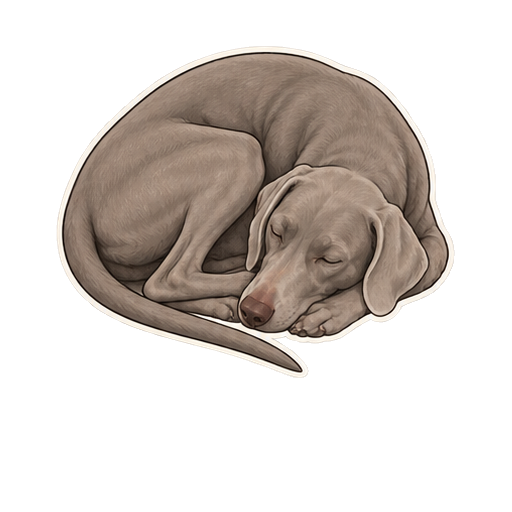 Rest time
Original woofmap artwork, assisted by GPT Image 2. Free for personal chats and non-commercial sharing with credit to woofmap.com. Fictional moods do not predict every dog’s temperament; see this page’s factual sources.
Combine the available parts, choose a name and take a little joy home.